
What’s going on
This fall, Apple is reportedly giving MacBook Pro shoppers a real decision to make for the first time in years: an M6 MacBook Pro, or a brand new MacBook Ultra. This isn’t the usual “same laptop, slightly faster chip” routine Apple has run for the past several generations. It looks like the company is splitting its Pro lineup into two genuinely different philosophies at once.
Worth saying upfront: none of this is official yet. It’s coming from insider leaks via 9to5Mac and Bloomberg, and details could shift before October. But the reasoning behind the split is worth digging into now, because it says a lot about where Apple’s priorities actually are.
M6 MacBook Pro: same body, new engine
At first glance, there’s nothing exciting here. This is a straightforward follow-up to last year’s M5 model. Same design, no high-end chip variants, no redesign in sight.
But there’s a detail worth pausing on: M6 will be the first Mac chip built on a 2-nanometer process. That’s not just a smaller number for marketing’s sake. Moving to a smaller process node usually means a real jump in both efficiency and performance, not the incremental 5% bump you get from a mid-cycle refresh.
If you already like the current MacBook Pro’s design, its excellent battery life, and its familiar port selection — three Thunderbolt ports, HDMI, an SD card slot, MagSafe, a headphone jack — this is the model for you. Though “familiar” cuts both ways here: there’s still no USB-A, still no Ethernet, and anyone still tied to older peripherals or a wired network will keep reaching for a dongle. But if none of that bothers you, you’re getting a proven, well-understood machine with a genuinely new-generation chip inside it.
MacBook Ultra: new design, older chip. But not because Apple cut corners
The MacBook Ultra is where things get more interesting. It’s expected to bring a completely new industrial design — thinner, lighter, an OLED display, a touchscreen, a Dynamic Island, and possibly even a cellular option. A touchscreen on a Mac has been off the table for Apple for years, so the fact that the company is finally doing it says something about how serious this push is.
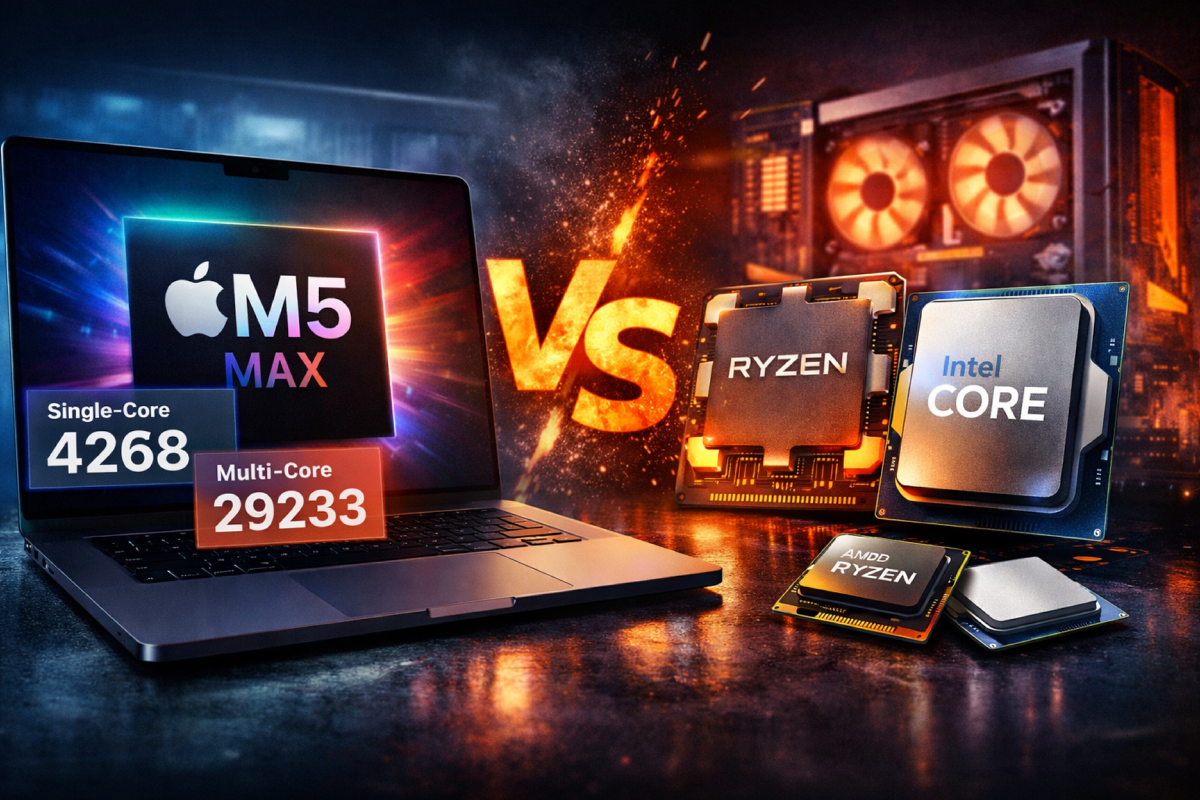
Here’s the catch, though: the MacBook Ultra won’t launch with M6. It’ll ship with the existing M5 Pro and M5 Max chips instead.
It’s easy to read that as Apple cheaping out on the chip to fund the new design. That’s not actually what’s happening. According to Bloomberg’s Mark Gurman, Apple is skipping the Pro and Max tiers of an entire chip generation for the first time since the M1 launched. M6 Pro and M6 Max simply aren’t coming — not for the MacBook Ultra, not for any Mac. There won’t even be an M6 Ultra.
The reason is AI. Apple has decided that the Neural Engine upgrades planned for the next generation, M7 — the part of the chip that handles on-device AI processing — are significant enough that finishing out a full M6 lineup first doesn’t make sense. In other words, Apple thinks a more capable M7 will do more for users than another incremental M6 Pro or Max, so that’s where the engineering resources went instead. Rumors point to M7 Pro and M7 Max arriving in late 2027, with an M7 Ultra following in 2028 — the same chip that, according to some reports, could end up powering Apple Intelligence’s servers starting in 2029.
So the MacBook Ultra getting M5 Pro and M5 Max this fall isn’t a cost-cutting move. It’s shipping with those chips because M6 Pro and Max were never going to exist. You’re not missing out on performance compared to some hypothetical MacBook Ultra running M6 Pro — that chip was never real to begin with. But if you’re waiting for a real leap in on-device AI, that leap has been pushed to M7, which means waiting until at least late 2027.
Why Apple is splitting the chip from the design
One explanation is simply timing: a new Mac design and a new chip rarely finish development at the same moment, so something had to give in one direction or the other. But there’s a strategic angle here too.
Apple is effectively splitting the MacBook Pro audience into two camps. One group values stability and proven hardware — they get the newest chip in a familiar body, without the risk of dealing with the growing pains that come with any brand-new form factor in its first year: cooling issues, battery quirks, hinge durability, all the usual suspects. The other group wants the most modern look and features right now, and is willing to wait a generation or two for the chip to catch up.
Instead of forcing everyone to wait for one model that does everything at once, Apple is selling two different trade-offs, and letting people pick which one fits them.
What this actually means if you’re buying
The usual “just buy the more expensive one, it’s better across the board” logic doesn’t really apply this time. You’ll actually need to decide what matters more to you.
Want maximum performance and aren’t interested in gambling on a first-generation redesign? Go with the M6 MacBook Pro. It’ll likely be cheaper than the Ultra and deliver the biggest real-world speed gain thanks to the new process node.
Want the touchscreen, the new look, and you’re fine with on-device AI catching up a generation or two later? That’s the MacBook Ultra. Just go in knowing you’re paying for design and display, not for peak performance or the newest AI silicon.
When to expect it, and how much to trust the rumors
Based on Apple’s usual release pattern, both models will most likely land in late October. The “MacBook Ultra” name itself could still change — Apple may end up keeping it under the MacBook Pro brand as a separate tier rather than spinning it off entirely.
All of this comes from insider sourcing, and the final specs could differ from what’s described here. But the underlying pattern — splitting “familiar and powerful” from “new and feature-rich” within the same lineup while the AI-focused chip finishes cooking separately — holds together well enough to be the most likely scenario for this fall.
Editor’s note: This article reflects the opinion and analysis of the author, based on publicly available leaks, rumors, and reviews. It does not represent official statements from Samsung or Apple, and details about unreleased products remain speculative until confirmed by the companies themselves.
Більше новин в телеграмі