
Trump’s Tariffs That Shook the U.S. Economy
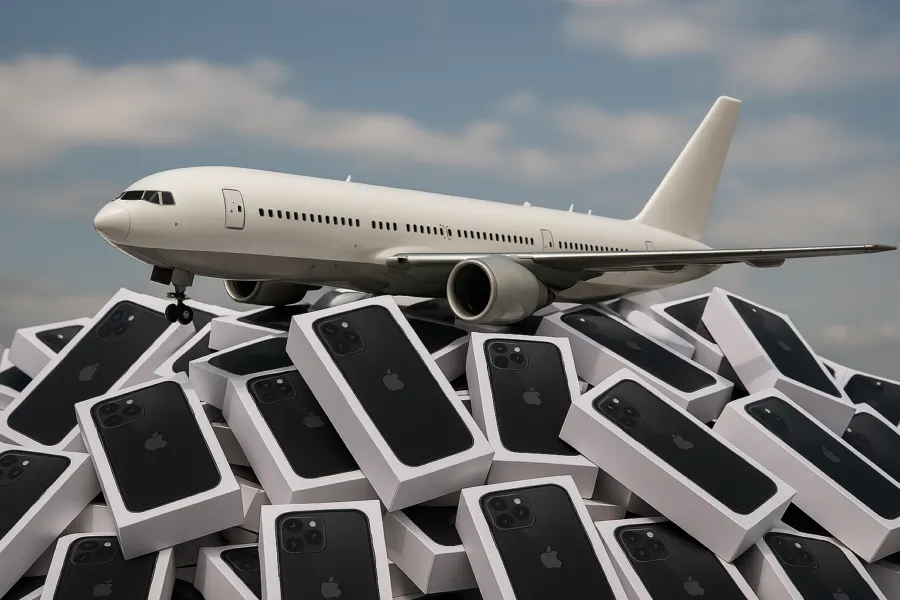
The American tech giant Apple has launched a large-scale operation to airlift more than 600 tons of iPhones from India to the United States. That’s roughly 1.5 million smartphones. The reason? New import tariffs announced by Donald Trump — and they could significantly impact pricing.
Apple has traditionally produced most of its devices in China. However, newly imposed tariffs on Chinese imports have now risen to 125%, making logistics from China economically unfeasible. In contrast, tariffs on goods from India stand at 26%, and those have been temporarily suspended for 90 days.
Apple’s urgent strategy to avoid the new tariffs
In an attempt to minimize financial losses and prevent a sharp rise in the price of flagship iPhones, Apple quickly implemented several key measures:
- Chartered special cargo flights from India to the U.S. for expedited delivery.
- Reached an agreement with Indian authorities to simplify customs procedures — reducing clearance time from 30 hours to just 6.
- Increased production in India by 20%, including weekend shifts for workers.
- Engaged manufacturing partners like Foxconn to boost output volumes.
- Lobbied to delay tariff enforcement on Indian shipments to take advantage of the 90-day grace period.
- According to expert forecasts, if Apple hadn’t acted swiftly, the price of the iPhone 16 Pro Max in the U.S. could have jumped from $1,599 to $2,300. And that’s only the beginning of what these tariffs might trigger.
We previously reported on how tariffs have affected many companies
Apple is rapidly reworking its supply chains and logistics strategy to reduce reliance on China and secure its position in the U.S. market. This situation highlights how geopolitical decisions can instantly impact global tech prices.
Більше новин в телеграмі