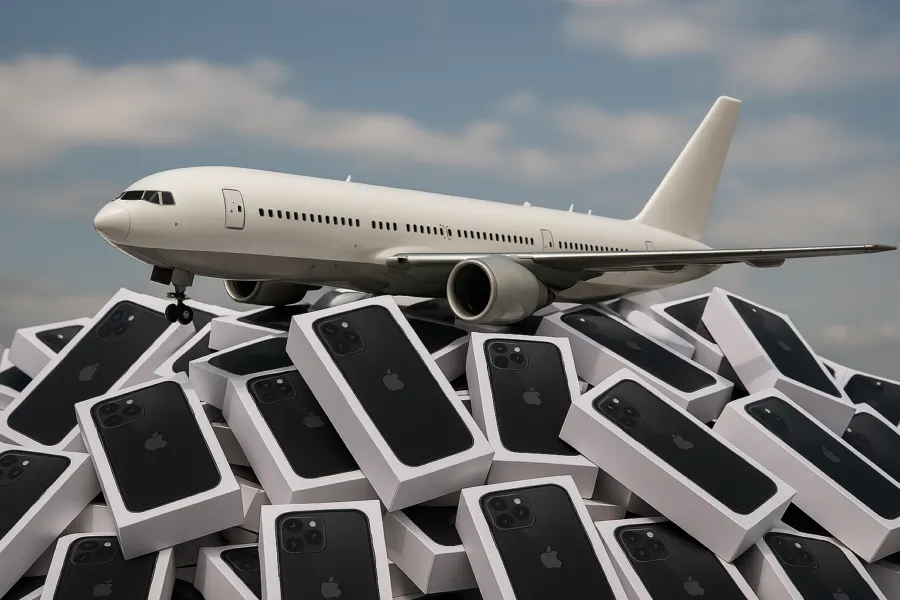

Meta’s new AI agent, Muse, can browse, book, and buy things on its own. Bank of America says that’s exactly the kind of thing that could quietly eat into Apple’s revenue, even if iPhone sales stay strong. Apple shares dropped more than 2.5% on the news.
What Muse actually is
 Muse is Meta’s new AI agent, built into its own app and inside WhatsApp. Unlike a chatbot that just answers questions, it’s designed to take real action on your behalf. Give it a goal, and it can send emails, book travel, fill out forms, manage your calendar, and complete purchases from start to finish, including checkout. It can also keep working on something after you’ve closed the conversation, checking back in only when it actually needs your decision.
It’s new, but it’s already popular. Muse overtook ChatGPT to become the No. 1 free app on the US App Store, and it did that in just ten days, racking up more than 3.4 million downloads along the way.
Why this is a problem for Apple
At first glance, this doesn’t sound like Apple’s problem. People will keep buying iPhones either way. But Bank of America analyst Wamsi Mohan laid out why it matters anyway.
Right now, when someone searches for something, picks a product, and buys it through their phone, that whole process runs through Apple’s ecosystem in some way, and Apple earns from it: through the App Store, through referrals, through its broader services business.
But if someone just tells an AI agent “book me a hotel” or “buy me new headphones,” the agent is the one deciding where to book and who to buy from. Apple still sold the phone. It just doesn’t get a cut of everything that happens on it anymore.
Mohan put it simply: whoever owns the agent collects the money that used to go to the operating system, the search engine, or the app store.
How real this already is
Muse isn’t just a demo. It already works with real checkout and booking partners, including Shopify, Shop Pay, Expedia, and PayPal. People can genuinely use it to complete a purchase today, not just browse for one.
Mohan also pointed out that modern iPhones already have plenty of processing power to run agents like this themselves. Apple’s real problem isn’t hardware. It’s that the software isn’t there yet.
Where that leaves Siri
Compared to Muse, Siri still falls short in a few specific ways. It can’t run long tasks in the background. It doesn’t work as deeply with outside apps and services. And it has no built-in way to actually pay for something on a user’s behalf.
There’s also a pace problem. Apple tends to ship major software updates once a year. AI agents like Muse can get better on a near-daily basis.
Is Apple actually losing here
Not necessarily. Despite laying out the risk, Bank of America kept its “Buy” rating on Apple, with a price target of $370. The reasoning: Apple still has real advantages that are hard to copy, mainly its enormous user base and its reputation for privacy, which matters a lot when you’re asking people to hand an AI their money and personal information.
The catch is that Apple’s own teams, the ones working on services, chips, payments, privacy, and Siri, need to start moving together faster instead of on separate timelines.
The bottom line
Meta built an AI that doesn’t just talk, it acts: searching, booking, buying, all with minimal input from the user. It caught on fast, and that was enough to remind investors that in the future, the AI agent, not the phone itself, might be the one deciding where people spend their money. That’s why Apple’s stock dropped. It’s not why analysts are writing the company off.
Більше новин в телеграмі