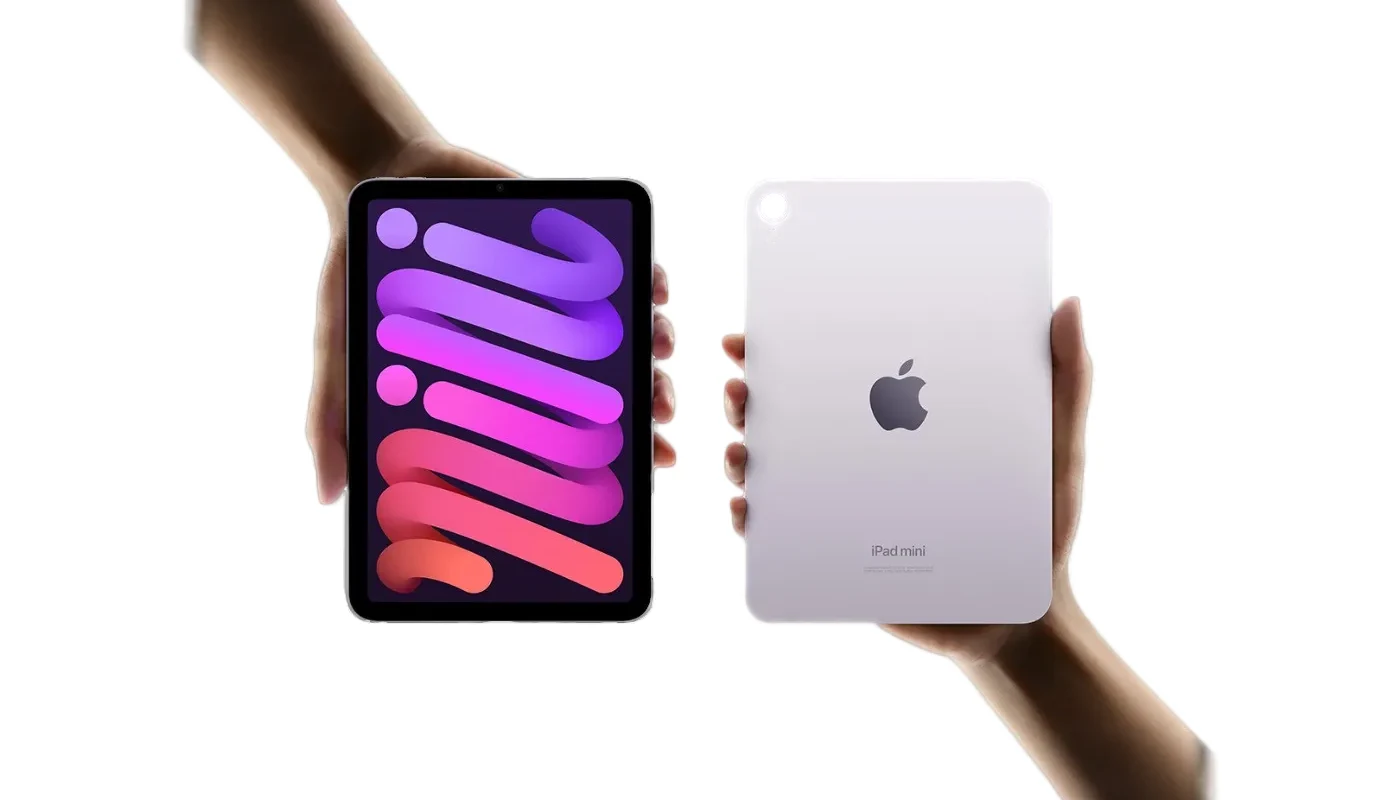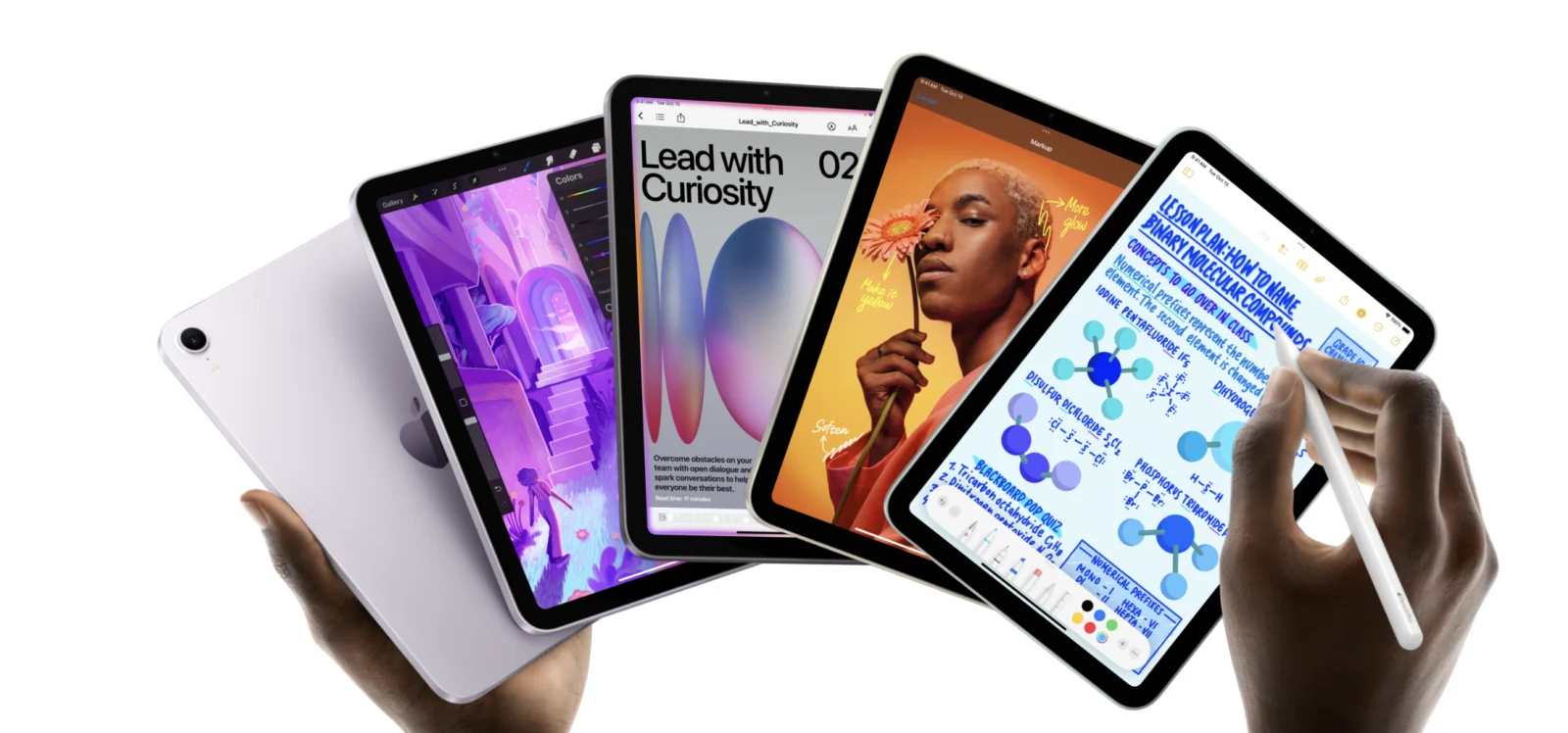
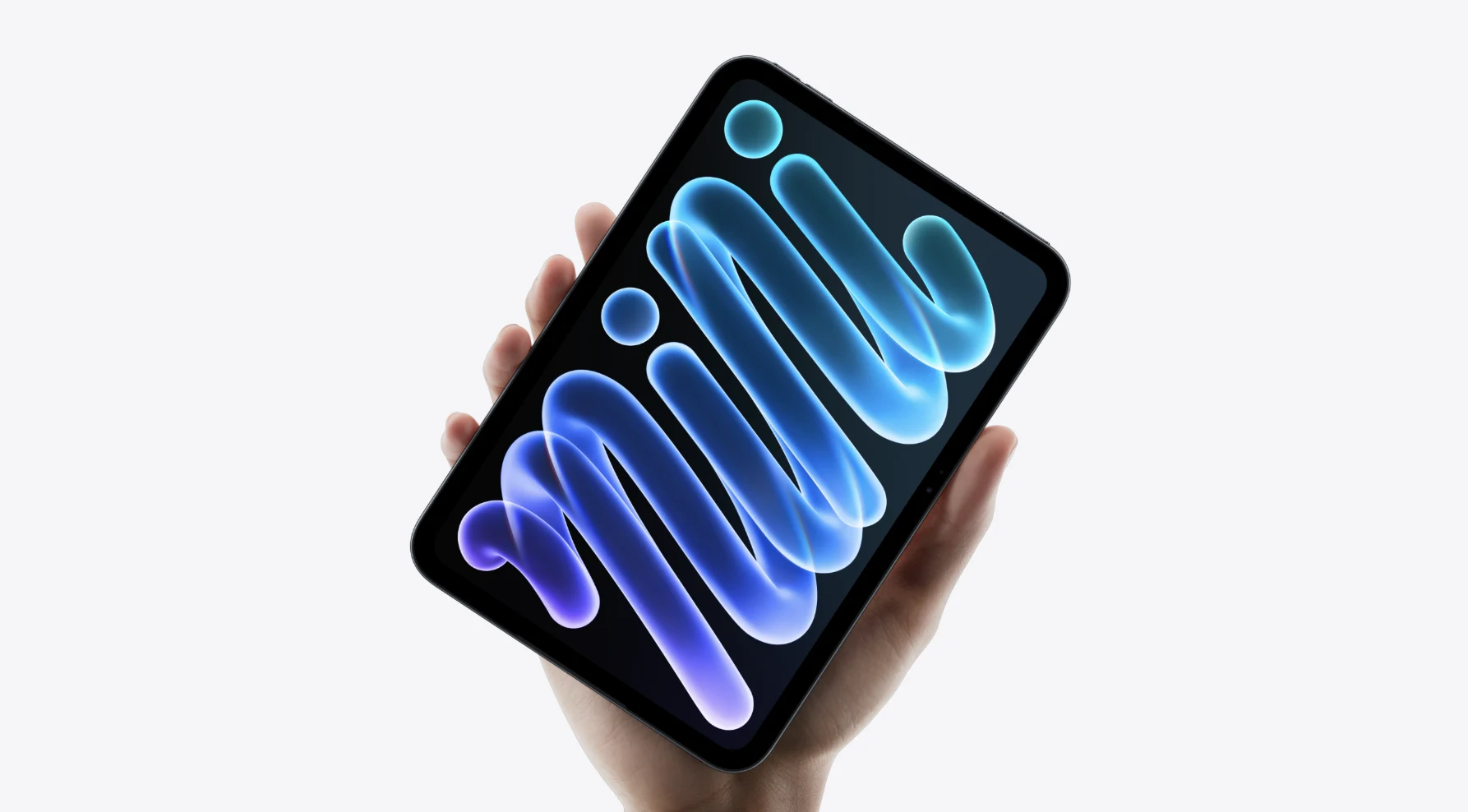
What did we expect from the new small iPad? Above all, a proper display, slimmer bezels, and a form factor that finally feels like a real, premium tablet. Apple just unveiled the new iPad mini featuring an 8.5-inch OLED screen, the A20 Pro chip, and IP67 water resistance. Since we don’t have the device on hand yet, everything below is based entirely on Apple’s official specs and early press announcements. Real-world performance will have to wait for hands-on reviews and benchmark tests.
OLED Display: Finally, True Blacks
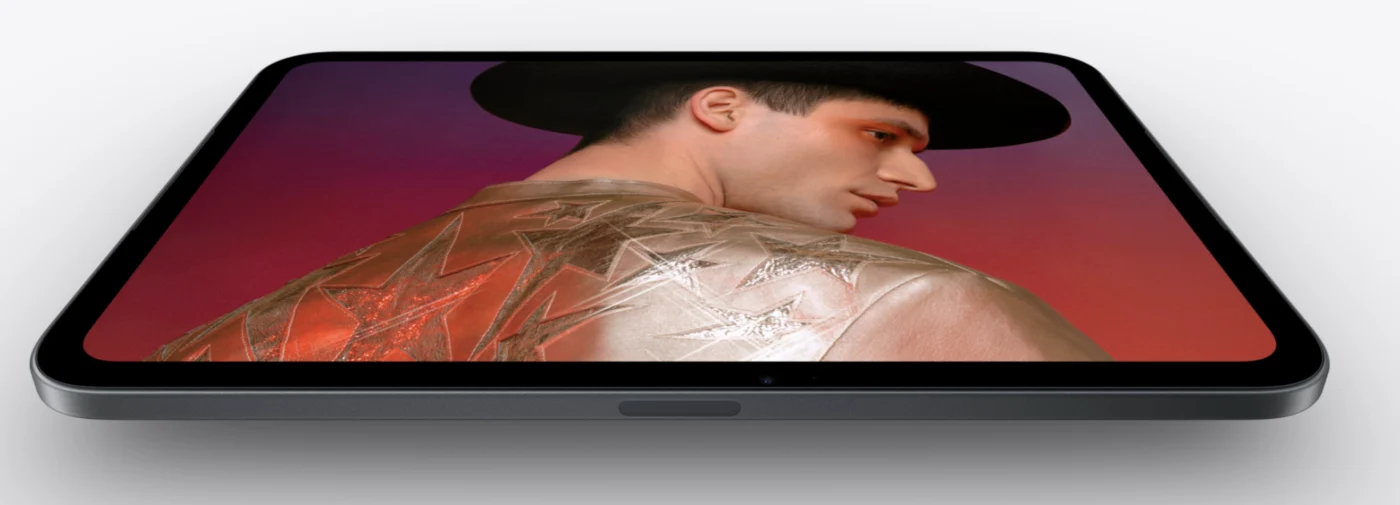
According to the specifications, it’s a Super Retina XDR OLED panel measuring 8.5 inches with a resolution of 2316×1512, packing 326 pixels per inch. Because individual pixels can be completely turned off, expect infinite contrast and deeper blacks—Apple claims a stellar 2,000,000:1 contrast ratio. Typical brightness reaches up to 600 nits, peaking at 1200 nits for HDR content. It features full lamination, an anti-reflective coating, P3 wide color, and True Tone.
For the 256GB and 512GB configurations, you can opt for the nano-texture glass finish to dramatically cut down glare. The display fully supports Apple Pencil Pro, Apple Pencil (USB-C), and Apple Pencil hover. While it isn’t a 4K panel, the tablet natively plays 4K video and supports comprehensive HDR formats (Dolby Vision, HDR10+, HLG).
Design & Bezels: Slimmer Profiles and Water Resistance
Apple doesn’t specify exact bezel dimensions in the tech specs, but press materials indicate a 24% reduction in bezel size alongside the expanded screen. We’ll have to wait to see how it feels in real life. The physical dimensions are 195.3 × 132.6 mm with a remarkably thin 5.4 mm profile, weighing in at just 255 grams (263 grams for the Cellular model)—down from the previous generation’s 293 grams. It also adds IP67 water and dust resistance (surviving up to 1 meter for 30 minutes). Face ID is absent; Touch ID remains integrated into the top power button. It comes in two finishes: Midnight and Starlight.
The A20 Pro Chip
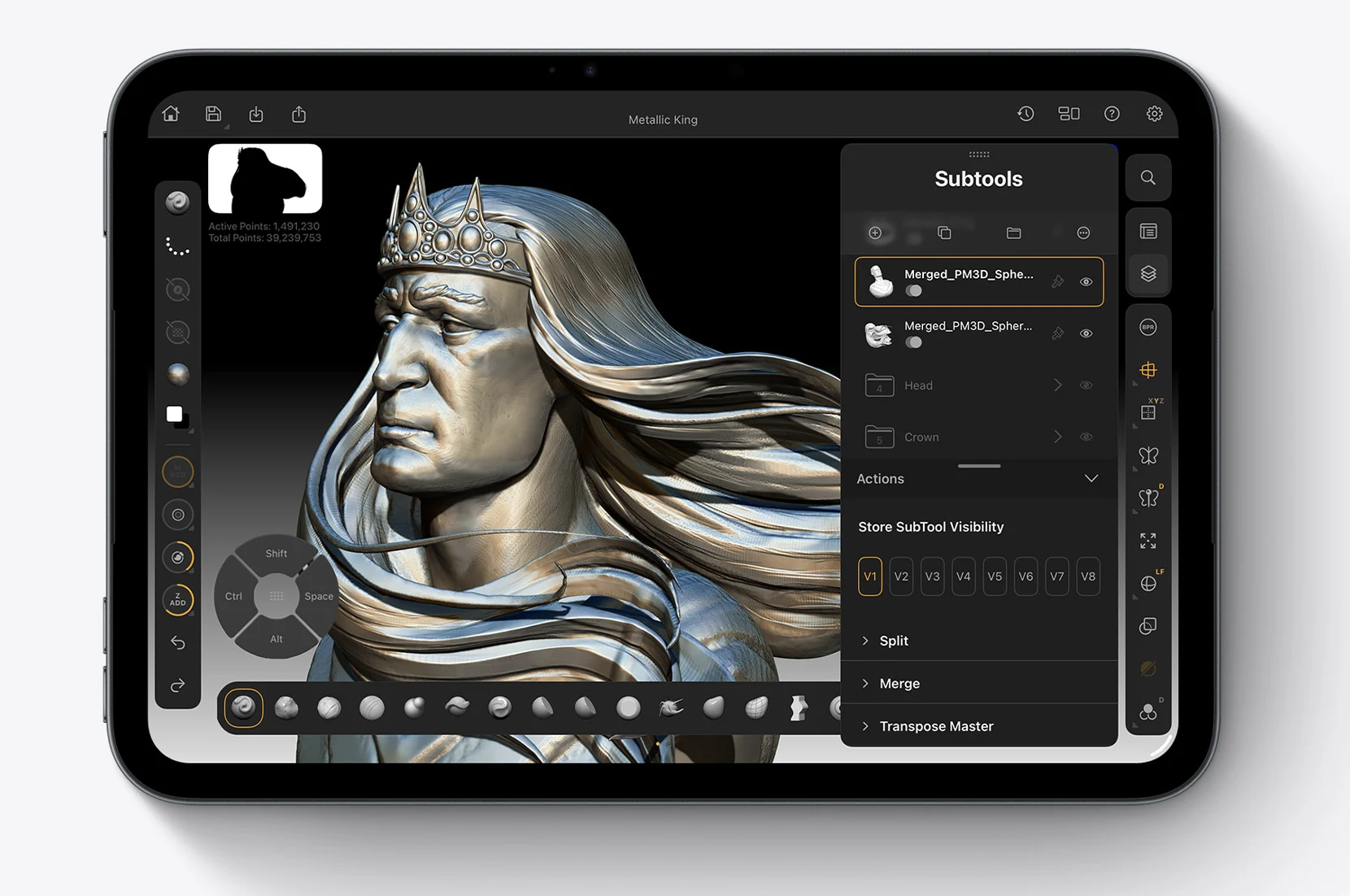
Apple hasn’t disclosed clock speeds, but the official breakdown is here. The 128GB and 256GB models feature a 5-core CPU (2 performance cores and 3 efficiency cores), while the 512GB version steps up to a 6-core CPU (2 performance and 4 efficiency). The 7-core GPU includes dedicated Neural Accelerators per core and hardware-accelerated ray tracing. The Neural Engine is a 16-core block, doubling up on the 512GB tier.
What does this mean in practice? Ray tracing calculates realistic light reflections and shadows in 3D environments, making mobile games and complex graphics look significantly more lifelike. Neural Accelerators turbocharge machine learning tasks locally on the device.
Performance-wise, Apple states that built on a cutting-edge 2-nanometer process, the A20 Pro delivers up to 60% faster CPU performance, up to 2.7x faster graphics, and up to 4.5x faster AI processing compared to the A17 Pro in the predecessor. Keep in mind these are manufacturer claims—independent benchmarks will verify the real-world gains. Industry reports also suggest that unified memory bandwidth has more than doubled.
The tablet fully supports Apple Intelligence and Siri AI. A few important caveats regarding Siri AI: it is currently available in beta via iPadOS 27, launched initially in English, French, Japanese, Korean, Portuguese, and Spanish. It will not work in the EU at launch, and certain heavy server-side processing functions carry daily usage caps.
Storage Tiers: 128GB, 256GB, or 512GB
There are three capacity options, and the differences go beyond just storage space:
- 128 GB: Entry-level capacity, 5-core CPU, no nano-texture glass option.
- 256 GB: Same 5-core processor, but unlocks the option for nano-texture glass.
- 512 GB: Upgraded 6-core CPU, double Neural Engine, and nano-texture glass included.
Apple notes that actual formatted capacity is slightly lower due to system software and pre-installed apps. RAM capacity remains omitted from official spec sheets. There is no microSD card slot, just a fast USB-C port supporting speeds up to 10 Gbps. For comparison, the previous iPad mini started at 128GB as well, but the lineup now tops out at a roomier 512GB.
Connectivity, Cameras & Battery Life
Apple’s custom N1 wireless chip brings Wi-Fi 7, Bluetooth 6, and Thread protocol support for smart home integration. Cellular models feature the Apple C2 modem with 5G and gigabit LTE support, though it is strictly eSIM-only—physical SIM cards are no longer supported.
The rear camera is a 12 MP shooter (ƒ/1.8) capable of 4K video recording up to 60 fps and 1080p slo-mo up to 240 fps. The front-facing 12 MP ultra-wide camera features Center Stage in landscape orientation. Audio is handled by stereo speakers paired with dual microphones. The 18.9 Wh battery delivers up to 10 hours of web browsing or video playback, with fast charging capable of hitting 50% in roughly 30 minutes using a 35W power adapter (sold separately). The USB-C port supports DisplayPort output, enabling connection to external monitors up to 4K at 60Hz.
Who Is It For?
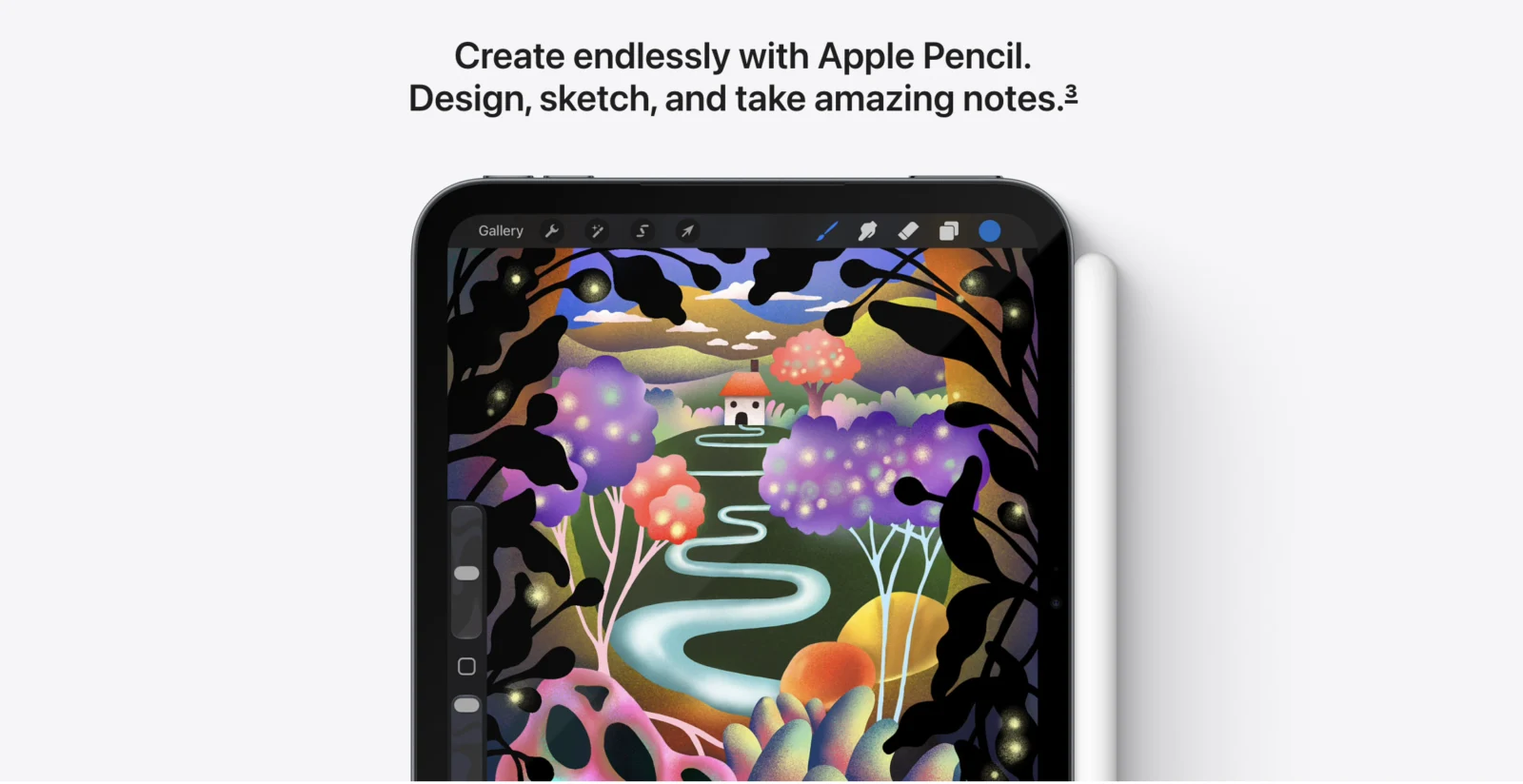
In its presentation, Apple pitches the iPad mini toward digital artists, mobile video editors, and content creators. The central question isn’t whether apps will run—it’s whether working on such a compact screen is genuinely comfortable.
For digital artists, the hardware is compelling: Apple Pencil Pro, pencil hover detection, and the anti-reflective coating make sketching and handwritten notes feel natural, though the canvas can still feel cramped for detailed, large-scale illustrations.
Video editors get access to Final Cut Pro and iMovie. The previous A17 Pro model ran Final Cut with certain limitations, such as missing HDR editing and native ProRes recording support. How the new model handles heavy workloads remains to be seen. For quick on-the-go rough cuts, it’s remarkably portable; for complex, multi-track timelines, most pros will still prefer a larger canvas.
As a capture tool, it’s better suited for b-roll and quick social media snaps than primary photography.
For everyday use, weighing just 255 grams, it’s exceptionally lightweight and portable. Whether it slips into a jacket pocket will depend entirely on your wardrobe, but for reading, streaming video, note-taking, and standard Apple productivity apps (Pages, Numbers, Keynote, Freeform, GarageBand), it makes an unbeatable travel companion.
Pricing & Release Date (US, Pre-Tax)
Pricing is listed before local US sales tax:
- Wi-Fi (from 128GB): $699. This represents a $200 jump over the launch price of the 2024 iPad mini.
- Wi-Fi + Cellular (starting): $849. Educational pricing in the US starts at $649.
- 256GB and 512GB pricing: Specific pricing tiers for higher capacities should be verified directly on Apple’s checkout page.
Pre-orders open on October 28, 2026, with official retail availability starting November 6. The previous model launched at $499 back in 2024, before Apple bumped its base price to $599 in June.
First Impressions Before Full Reviews
On paper, this is a powerhouse of a compact tablet, boasting an exceptional display, a scorching fast processor, and cutting-edge connectivity. For travel, quick edits, sketching, and everyday media consumption, it’s hard to beat this form factor. However, users needing ample screen estate for demanding multi-window workflows might find it restrictive, and the steep $699 starting price means you’ll want to weigh the upgrades carefully. The ultimate verdict will have to wait until real-world reviews and stress tests hit the web.
Більше новин в телеграмі