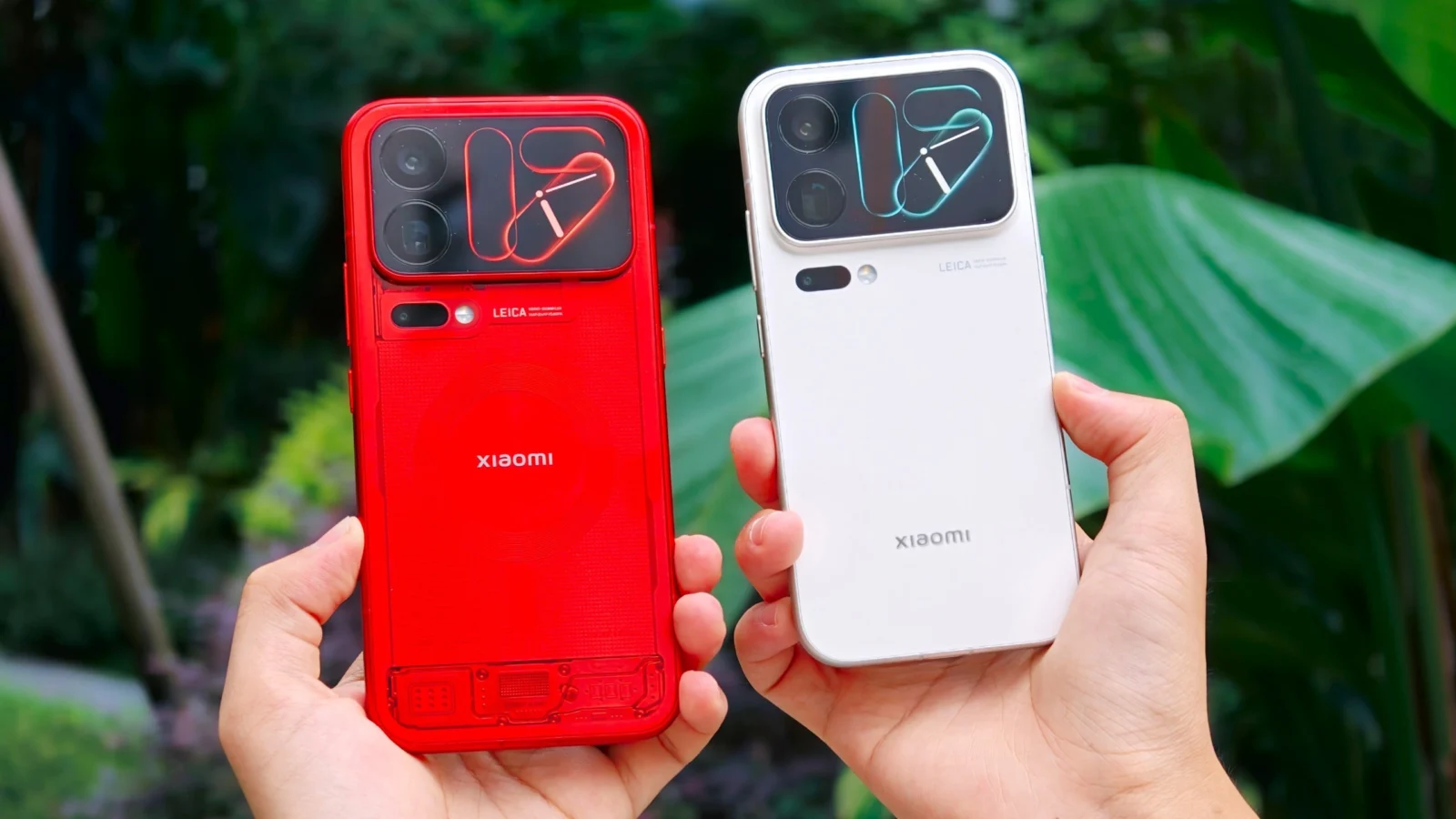
This is the Xiaomi news, and, frankly, Xiaomi is a bit of a disappointment here. The Xiaomi 18 Pro and Xiaomi 18 Pro Max are set to reach the global market, but judging by leaks, the European versions will get noticeably smaller batteries and will be significantly more expensive than the Chinese ones.
These are not mediocre phones, though. The devices are very serious in terms of specifications, especially the cameras.
What is known about the global Xiaomi 18 Pro and Pro Max
According to preliminary information, the international launch of the series is expected in late November 2026. Xiaomi has not yet announced the exact date, the list of countries where the phones will be sold, or the final prices. So the figures below should be treated as preliminary leaked data, not an official price list.
The most unpleasant part: the batteries
According to the leaks, the global versions will get lower-capacity batteries than the models for the Chinese market.
| Specification | Xiaomi 18 Pro (China) | Global Pro | Xiaomi 18 Pro Max (China) | Global Pro Max |
|---|---|---|---|---|
| Battery | 7000 mAh | 6000 mAh | 8500 mAh | 7050 mAh |
| Wired charging | 100 W | 90 W | 100 W | 100 W |
| Wireless charging | 50 W | 50 W | 50 W | 50 W |
So the Xiaomi 18 Pro loses roughly 14% of its battery capacity, and the Pro Max about 17%. For smartphones with such powerful displays and processors, that is a fairly significant difference.
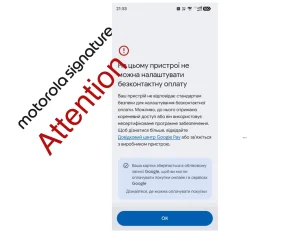
Motorola and Google Broke My $1,000+ Phone’s Google Pay, and Ukraine’s Only Service Center Shrugged
Motorola Signature 2025 can’t add cards to Google Pay after an overnight update. The factory reset failed, and the service center said: “We repair hardware.”
Get breaking news on WhatsApp
The reason is linked to certification peculiarities and the international shipping of high-capacity silicon-carbon batteries. However, there is no official explanation from Xiaomi yet.
Prices in Europe: almost premium luxury
The pricing situation is even more interesting. According to preliminary data from the Italian store Epto, European prices may be as follows:
| Model | Configuration | Preliminary price |
|---|---|---|
| Xiaomi 18 Pro | 12/256 GB | €1,398.90 |
| Xiaomi 18 Pro | 12/512 GB | €1,591.90 |
| Xiaomi 18 Pro Max | 12/512 GB | €1,783.90 |
Other sources cite even higher figures, up to €1,849 for the Pro Max. So the final cost should not yet be considered settled.
For comparison, in China the starting prices are 5,999 and 6,999 yuan respectively. Converted, that is roughly €780 and €910. The difference really does come out to almost double.
And what is actually interesting about them?
This is where Xiaomi has something to surprise people with. And the main intrigue is the photography capabilities of the new flagships.
- Two 200 MP cameras with Leica optics. The main module and a periscope telephoto lens. This is especially interesting for zoom photography, portraits, and macro.
- An additional screen on the rear panel. It can be used for selfies with the main camera, for checking framing, and for viewing notifications.
- A new-generation Snapdragon. The Xiaomi 18 Pro gets the Snapdragon 8 Elite Gen 6, while the Pro Max gets the more powerful Snapdragon 8 Elite Extreme Gen 6.
- HyperOS 4 and Android 17.
- Displays with a refresh rate of up to 120 Hz. The Pro has a 6.4-inch screen, and the Pro Max has a 6.9-inch one.
Is it worth waiting for the global versions?
The Pro Max is larger and has a 7,050 mAh battery, but its price is approaching €1,800. At the same time, the compact Pro also gets a very serious camera system with two 200-megapixel sensors. If the photography capabilities turn out to be identical or close, paying extra for the Max may be justified for far from everyone.
There is one more point: if the global version really costs almost twice as much as the Chinese one, importing the Chinese Xiaomi 18 Pro could be a very attractive option. But you would need to check several things separately: support for mobile network frequencies, interface languages, Android Auto, eSIM, notification behavior, Google Pay compatibility, and firmware peculiarities.
What intrigues me most about this series is precisely the combination of the 200-megapixel Leica periscope module and macro photography capabilities. That is potentially far more interesting than yet another increase in processor power.
And here a perfectly logical question arises: is the Xiaomi 18 Pro worth this much money? For €1,400–1,800, a buyer can already choose among flagships from other brands that offer a premium experience without intrusive advertising in system apps and without dubious questions about the collection and processing of personal data. After all, at this price level, it is not only the cameras, processor, and display that matter, but also privacy, software transparency, and the absence of unnecessary advertising services.
Xiaomi will have to prove that its flagships truly justify a premium price tag. Leica cameras and a powerful processor alone are no longer enough for that.
Більше новин в телеграмі