
Between camping seasons or outdoor adventures, portable power stations often sit idle. However, lithium batteries are not just ordinary gear that can be tossed into a corner. Without proper maintenance, they lose capacity, and internal chemical processes can prevent the device from turning on exactly when you need it for your next trip.
Storage Conditions — Where to Keep Your Device
Electronics are sensitive to the environment. Condensation is the primary enemy of motherboards and inverters. Therefore, garages, unheated sheds, or damp basements are strictly unsuitable for long-term storage.
The ideal environment is a dry indoor room with a relatively stable temperature. It is crucial to avoid proximity to heaters and direct sunlight, as overheating triggers accelerated battery degradation.
The “Golden Mean” of Charging
The most common mistake is leaving a power station either 100% charged or completely depleted.
- Full charge creates high voltage within the cells, which accelerates chemical aging.
- Zero charge carries the risk of deep discharge. Over time, any battery self-discharges; if the voltage drops below a critical point, the Battery Management System (BMS) may lock the device for safety reasons.
The optimal level for long-term storage is 50–70%. This ensures the stability of chemical compounds and provides a buffer for natural self-discharge over several months.
Get breaking news on WhatsApp
Regular Maintenance
To keep the battery in top condition, maintenance should be performed once every three months.
Even when turned off, internal components (BMS) consume a tiny amount of energy. If left unattended for six months to a year, the energy level may drop to a critical minimum, after which the station will refuse to charge.
Three Steps for Verification:
- Level Check. If the charge has dropped below 40-50%, top it up to the recommended range.
- Control Cycle. Every 3–6 months, it is beneficial to discharge the station to about 20% and then recharge it to 70%. This helps the controller display the remaining capacity more accurately.
- Contact Inspection. Ensure the ports are free of dust or oxidation.
This routine is your insurance that your power source will be ready for your next adventure instead of becoming a “brick.”
Grid Safety and Cables
Do not keep the station permanently plugged into a wall outlet. This places a constant micro-load on the battery, and sudden power surges can damage the built-in power supply. Charge the device only when necessary.
Also, pay attention to the condition of the cables. Using low-quality alternatives leads to port overheating. Before storing, ensure all connectors are clean and the wires are not kinked or damaged.
Tech Insights in Your Inbox
Summary: 5 Essential Tips to Extend Your Power Station’s Life
- Maintain the “Golden Mean” of Charge (50-70%) Avoid storing your device at 100% or 0%. Keeping it between 50% and 70% stabilizes the chemical components and prevents stress on the battery cells.
- Avoid Extreme Temperatures and Humidity Store the unit in a dry, climate-controlled indoor space. Keep it away from radiators, direct sunlight, and damp areas like garages to prevent condensation and overheating.
- Perform a Maintenance Cycle Every 3 Months Even when idle, the Battery Management System (BMS) consumes power. Every three months, check the level and perform a “discharge-recharge” cycle (down to 20%, then up to 70%) to keep the battery active.
- Disconnect from the Grid When Not Charging Do not leave the station permanently plugged into a wall outlet. This prevents constant micro-loading on the battery and protects the internal inverter from unpredictable power surges.
- Use Only High-Quality or Original Cables Inspect your cables for kinks and damage before storage. Low-quality or frayed wires can cause port overheating and short circuits, compromising the device’s safety.
If you’re in the market for a new portable power station, you can browse the options here.
Our top pick for an affordable camping power station:
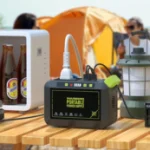
MARBERO Portable Power Station 88Wh – A compact lithium battery solar generator with fast charging and an AC outlet (120W Peak). Ideal for home backup, outdoor camping, and emergency use.
It is currently available at a great discount.
Більше новин в телеграмі