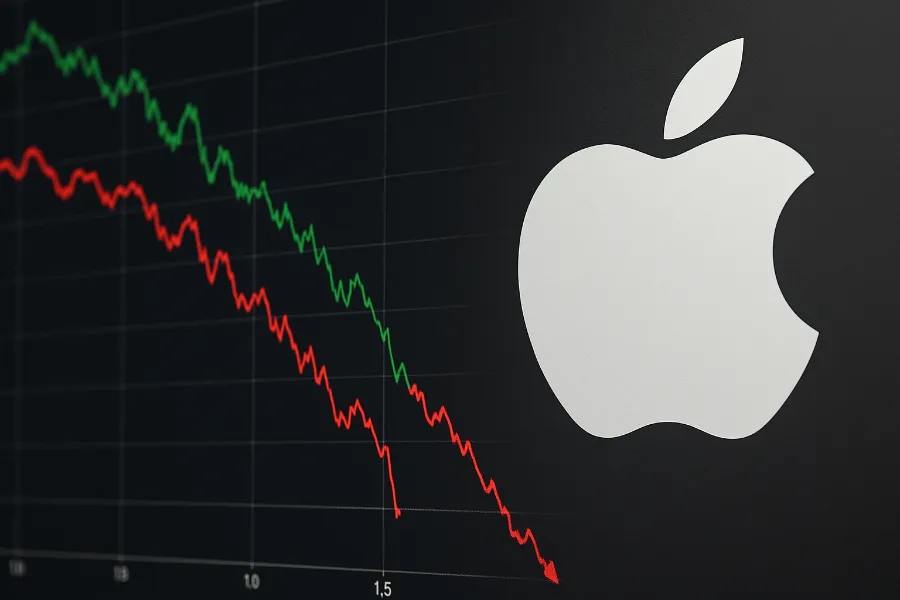
Just three months ago, Apple was the world’s most valuable company, with a market capitalization of nearly $3.7 trillion. Today, that number is closer to $2.7 trillion — a staggering $1 trillion loss in market value. What happened?
The short answer: tariffs, politics, and the realities of a changing global economy.
While Apple has long been considered a “safe haven” stock, the company has been hit hard by the latest wave of U.S. tariffs targeting Chinese imports. Apple’s deep manufacturing ties to China — where most iPhones are still assembled — have become a major vulnerability. As geopolitical tensions intensify and trade policies shift, even tech giants are no longer immune.
In early January 2025, Apple stock was trading at $243.85. By early April, it had fallen to $180. A single-day drop of 5% triggered alarms across global markets. And for good reason: when Apple stumbles, it doesn’t just affect shareholders — it sends a ripple across the entire tech industry.
The Manufacturing Dilemma: Apple’s Weak Spot
Apple has invested years — and billions — in building a tightly controlled, hyper-efficient supply chain, most of it centered in Asia. But that efficiency came at a cost: geographic dependence.
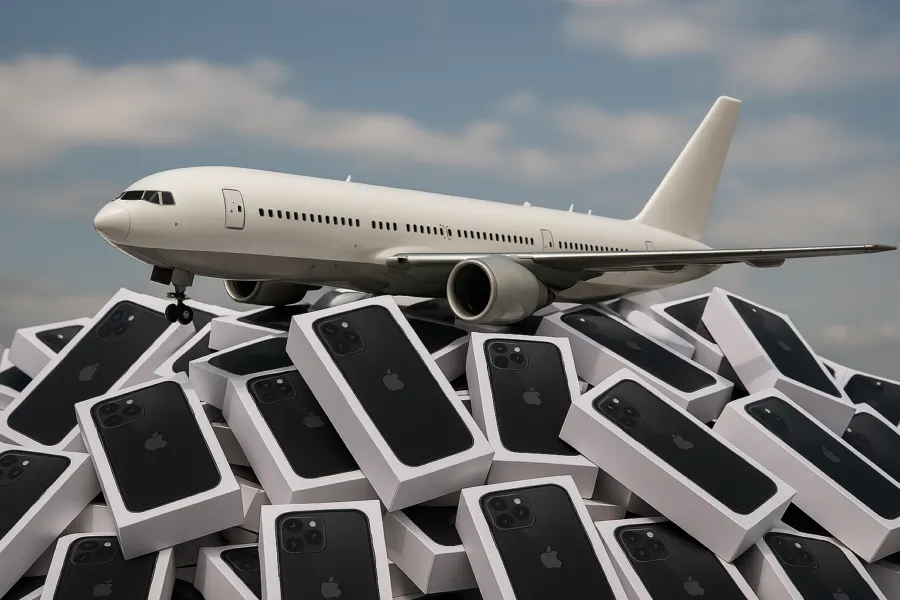
China has borne the brunt of U.S. tariffs under the new trade policy introduced by Donald Trump’s administration. To mitigate risk, Apple began shifting some operations to Vietnam and India. Unfortunately, those countries are now also subject to steep tariffs: 46% and 26%, respectively.
Every iPhone, iPad, and Mac now costs more to build. Shipping delays are up. Supply chain risks are higher. And there’s no indication that Apple will receive any special exemptions from the U.S. government.
Trade policy has become geopolitics. And when America’s largest company loses $1 trillion due to actions by its own government, the message is clear: the global rules have changed.
Falling Sales, Rising Prices: The Double Threat
Tariffs aren’t just a problem on the supply side. Apple’s January earnings report showed a worrying 11% drop in iPhone sales in China — the company’s most critical market.
Worse still, Apple missed Wall Street’s revenue expectations for the iPhone segment. CEO Tim Cook struck an optimistic tone, but the market wasn’t buying it.
And now there’s another concern: price.
- Analysts warn the next iPhone could cross the $2,000 threshold.
- Chinese competitors like Huawei and Xiaomi are offering high-end alternatives at half the price.
- U.S. consumers may also begin to hesitate, especially in a high-inflation environment.
China Strikes Back — and the Market Responds
China didn’t sit quietly. It responded with retaliatory tariffs and a public push to prioritize domestic tech brands. Government agencies are phasing out iPhones. National media are highlighting Huawei’s comeback. And a wave of tech patriotism is turning against Apple.
Meanwhile, Apple’s competitors are moving quickly:
- Huawei is regaining ground fast.
- Xiaomi is expanding aggressively into Eastern Europe.
- Oppo, Vivo, and Honor are filling every price gap Apple leaves open.
Even if Apple shifts production out of China, it risks losing consumer loyalty — something far more difficult to rebuild than supply chains.
No Special Treatment: Apple Stands Alone
At one point, analysts speculated Apple might be granted tariff exemptions, given its role in the U.S. economy. But that hasn’t happened. Apple is playing by the same rules as everyone else — and paying the price.
What’s Next: Can Apple Hold Its Ground?
The global landscape is changing. Supply chains are fragile. Political risk is everywhere. If Apple wants to remain on top, it must rethink how and where it builds its products.
Diversify. Innovate. Adapt.
Apple is no longer just a tech company — it’s a geopolitical player. And if it survives this storm, it won’t just be a corporate victory. It will be proof that innovation can still win, even in a world that’s rewriting the rules.
Більше новин в телеграмі