The global smartphone market in 2026 is being reshaped once again — and the January ranking reflects more than just numbers, revealing the real balance of power between Apple, Samsung, and Chinese manufacturers. If you are planning to buy a new phone or closely follow technology trends, this ranking helps clarify who truly dominates the global market and who is rapidly losing ground. We analyze not only market share, but also the reasons behind brand popularity, ecosystem influence, Android and iOS updates, and consumer behavior across different regions.
Apple Maintains Leadership: Why iPhone Remains Number One Worldwide
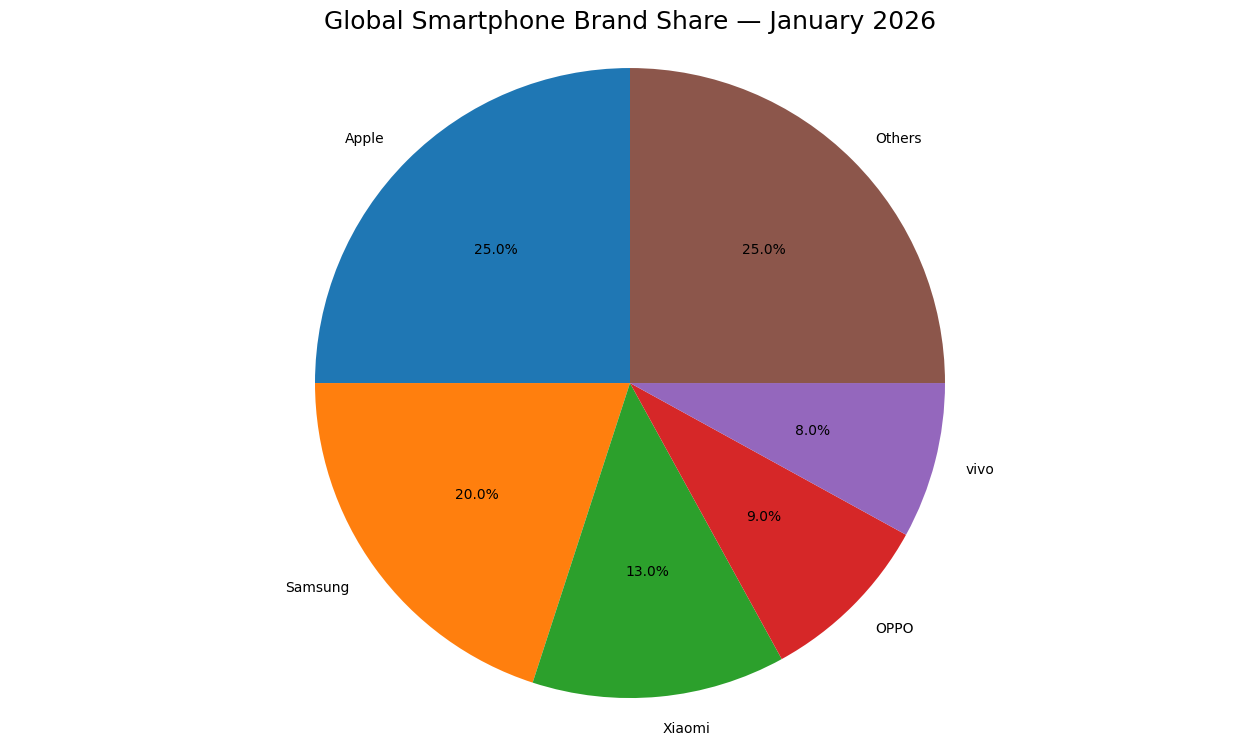
Global active smartphone statistics for January 2026 show that the iOS ecosystem, long-term software support, and strong user loyalty continue to drive Apple’s steady growth. The iPhone maintains the highest share of the global active device base, according to leading analytics firms at the start of the year.
Demand for the iPhone 17, introduced in fall 2025, significantly strengthened Apple’s position in China, India, and the United States. Users continue upgrading within the ecosystem, reducing migration to Android and reinforcing Apple’s active device share.
- apple — approximately 24–25% of the global active smartphone base;
- samsung — around 19–20%;
- xiaomi — about 12–13%;
- oppo — roughly 9%;
- vivo — close to 8%;
- other brands — collectively over 25%.
Apple’s advantage is not limited to new device sales but is also driven by longer product life cycles. Older iPhones remain in active use longer than most Android devices. This stability ensures Apple maintains a strong market share even during slower sales periods.
Samsung Narrows the Gap: Flagships and Mid-Range Working Together
Samsung remains Apple’s closest competitor, controlling roughly one-fifth of the global market. The brand’s position is supported by both Galaxy S flagships and the widely popular Galaxy A mid-range lineup, especially strong in Europe, Latin America, and parts of Asia.
Android update support, Galaxy AI integration, and ecosystem expansion across tablets, wearables, and audio devices play a key role. Samsung balances premium innovation with accessibility, helping it retain a broad consumer base.
- strong mid-range market positioning;
- wide global distribution;
- active focus on ai-powered features;
- in-house displays and chip advantages;
- consistent brand recognition.
Samsung does not show dramatic spikes but maintains systematic global presence. Its scale and diverse product lineup allow it to stay competitive despite intense rivalry from Chinese brands. In 2026, ecosystem strength and long-term support remain decisive.
Xiaomi, OPPO, vivo: Chinese Brands Hold a Third of the Market
Chinese manufacturers continue competing aggressively in the Android segment, particularly in Asia and emerging markets. Xiaomi, OPPO, and vivo collectively account for a significant share of active global devices, though each brand follows a different strategic direction.
Xiaomi emphasizes value for money, OPPO invests heavily in design and fast charging, while vivo focuses on camera innovation and regional partnerships. Software updates and support longevity remain critical factors for user retention.
- xiaomi — focus on affordability and scale;
- oppo — design and charging innovation;
- vivo — strong presence in Asian markets;
- intense mid-range competition;
- high price sensitivity.
Despite substantial market presence, Chinese brands face intense internal competition. None has yet reached the global dominance of Apple or Samsung. In 2026, competition in the Android segment remains extremely intense.
What This Ranking Means for Consumers in 2026
The January brand ranking is more than a statistical update — it signals consumer behavior shifts and trust patterns. Buyers increasingly prioritize long-term software support, security updates, and ecosystem integration alongside hardware performance.
The market is gradually moving from pure performance competition toward stability and ecosystem loyalty. Brands offering extended software support gain an advantage in the global active device base.
- long-term updates are becoming critical;
- ecosystems influence repeat purchases;
- artificial intelligence integrates into core functions;
- brand switching is declining;
- competition shifts toward services.
If early 2026 trends continue, the market will remain largely bipolar, dominated by Apple and Samsung, with fierce competition across the Android ecosystem. For consumers, this means broader choice but greater emphasis on brand strategy and support policies. These factors will shape market share redistribution throughout the year.
The January 2026 ranking confirms that the global smartphone market is stabilizing around a few major players. Leaders are not changing dramatically, but the competitive battle within segments remains constant. Support, ecosystem strength, and trust define success in 2026.
Більше новин в телеграмі