What makes a large smartphone worth buying in 2026
In 2026, large smartphones are no longer a niche choice. Displays larger than 6.7 inches are no longer associated with poor ergonomics. On the contrary, these devices now offer the best screens, battery life, and camera systems available on the market. For many users, a large display is not a preference but a practical tool for work, content consumption, and photography.
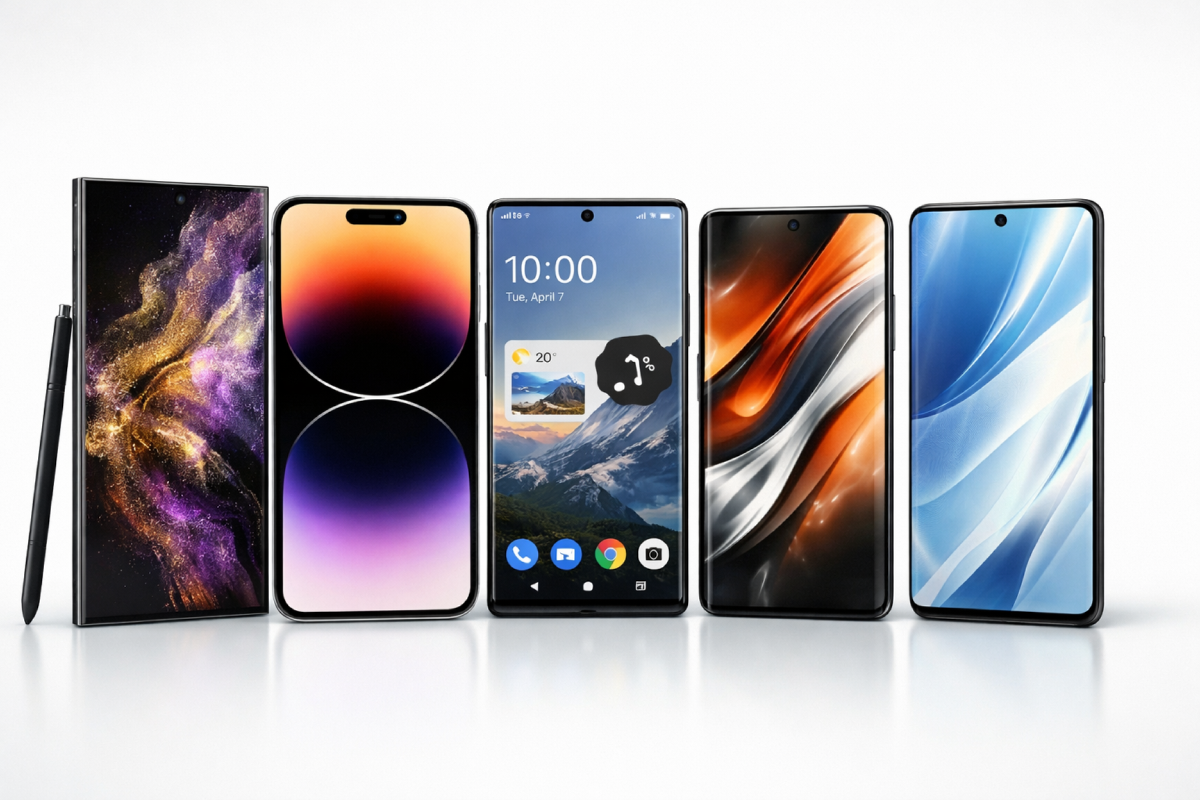
We selected five large-screen smartphones you can confidently buy in 2026, based on real-world performance, long-term software support, battery endurance, and everyday usability.
Samsung Galaxy S25 Ultra
Samsung’s flagship remains a reference point among large smartphones. The Galaxy S25 Ultra features a 6.9-inch display with high peak brightness, stable LTPO refresh rates, and minimal bezels. It works equally well for reading, watching video, and multitasking across multiple apps.
This is a device designed for long-term use. Software support is planned years ahead, and the hardware offers a comfortable performance margin. Battery life is another strong point: even with heavy screen usage, the phone consistently lasts through a full day of intensive work.
iPhone 17 Pro Max
Apple continues to reserve its largest display for the Pro Max model. In 2026, this remains one of the most balanced options for users who work with video, photography, or consume a lot of content on their phone. The display is large, bright, and consistent across different lighting conditions.
The key advantage is system optimization. Despite its size, the iPhone 17 Pro Max delivers predictable battery life and stable performance. For users already invested in the Apple ecosystem, it remains one of the most comfortable large-screen smartphones available.
Google Pixel 10 Pro XL
The Pixel 10 Pro XL shows how a large smartphone can still feel manageable. Google focused not only on screen size but also on software experience. Clean Android, long-term update support, and deep system integration make this model appealing for users who value stability and consistency.
The large display is used efficiently for multitasking, photo editing, and document work. Pixel cameras continue to be a strong selling point, and the larger screen enhances the overall shooting and editing experience.
Xiaomi 15 Ultra
Xiaomi continues to target users who want maximum screen size and flagship-level hardware. The 15 Ultra offers a large, bright display paired with powerful internals designed for demanding workloads.
This model is well suited for video streaming, gaming, and users who rely on their smartphone as a primary multimedia device. Strong battery life and fast charging remain important advantages, especially for phones with large displays.
OnePlus 13 Pro
The OnePlus 13 Pro is a less obvious but compelling option for fans of large screens. The focus here is on system speed, smooth interface performance, and reliable battery life.
Despite its large display, the relatively slim body makes the phone easier to use day to day. It is a good choice for users who want a big screen without an excessive emphasis on camera hardware or marketing-driven features.
Is a large-screen smartphone worth it in 2026?
Modern large smartphones have become truly versatile devices. A big display no longer means compromises in battery life or usability. In fact, these models are usually the first to receive advanced display technologies, larger batteries, and longer software support cycles.
If a smartphone is used not only for calls and messaging but also for work, video, navigation, or photography, a large display in 2026 is more of an advantage than a drawback.
Більше новин в телеграмі