Backstory
Earlier this year, Samsung “accidentally” showed off a new foldable display at CES 26. The panel sat right next to a regular Z Fold 7, and the difference was obvious at a glance: the crease that’s been the trademark flaw of every foldable screen for years was almost gone. It was shown for a moment, then quickly pulled from the floor, with a company rep calling it just an R&D concept with nothing to do with future models. But the photos and videos had already spread across the internet, kicking off a wave of speculation.
It’s no secret that Samsung manufactures the displays Apple uses. Which is exactly why we figured this crease-free panel wasn’t really meant for the Z Fold at all — it was meant for Apple. Rumor has it Apple has been looking for a way to ship a foldable iPhone without that visible crease for a while now, and there’s no getting there without a screen from Samsung.
Where things stand now
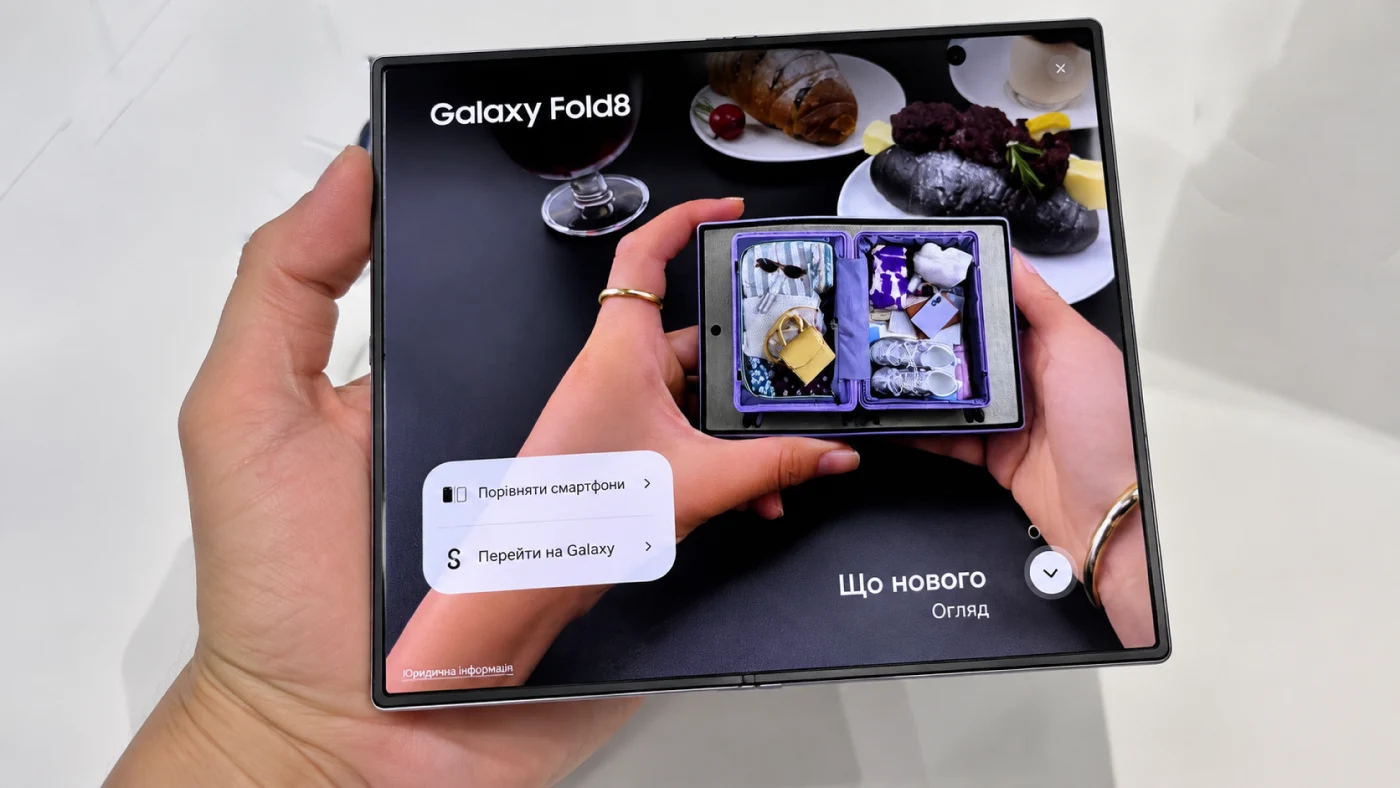
On August 7, Samsung put the Galaxy Z Fold 8 up for sale everywhere — ahead of Apple. And on the surface, that move makes sense: staying ahead of the tech means grabbing market share before the competition is even ready to fight for it. Plenty of insiders had guessed this wider, book-style form factor would show up in the Apple Ultra — the foldable Apple hasn’t released yet.
You can say all you want that Apple is slow, that the company doesn’t listen to what people actually want. But we think that’s not really what’s going on here.
Apple is simply learning from Samsung’s mistakes. Right now, today, Apple gets to watch real demand for a foldable in this wider format play out in public, see every misstep, and spend a month studying exactly what people don’t like. And there’s turned out to be a fair amount to study.
The loud, excited first reactions have already died down, and what’s left now is what’s actually bothering people. To be fair, there aren’t a ton of these complaints yet, and they’re more scattered than widespread — but they’re specific, and that’s what matters. The Fold 8 dropped S Pen support — a feature it didn’t have last year either, but one people were expecting this time around now that the screen is bigger and better suited for notes. The main camera got cut down to 50 megapixels from 200MP on last year’s Fold 7, and the telephoto lens is gone entirely. There aren’t even Qi2 magnets for wireless charging — something that’s already standard on competing phones. So while people get a more convenient form factor, they’re also losing functionality they’d already gotten used to.
Expectations don’t always match up with what you actually get — and these are the exact, concrete complaints Apple gets to study right now, in real time, for free, just by watching how the market reacts.
Did Apple lose anything by letting Samsung go first?
Of course not. Even if the new Apple Ultra (assuming that’s really what it’s called) ends up costing more — and it almost certainly will — Apple fans will buy it, not a Samsung. Because this fight was never really about hardware. It’s about the system itself, and that’s a system that’s genuinely hard to leave.
If you’re already inside the Apple ecosystem, if you’ve lived with everything iOS 26 and 27 have to offer, you’re not going to walk away from it — because leaving means giving up everything at once, not swapping out one piece at a time. This isn’t just about switching phones. It’s giving up iMessage, where years of your conversations live in blue bubbles. It’s giving up AirDrop, which lets you send a photo from your iPhone to your MacBook in a second. It’s giving up Handoff, where an email you started on one device picks up instantly on another. Your watch, your earbuds, your laptop — all of it works together so seamlessly that swapping out one piece basically means swapping out the whole chain.
And Apple knows this perfectly well. That’s exactly why switching ecosystems is made to be as painful as possible — not out of malice, but because keeping people locked inside the system is the real asset here, worth protecting far more than the hardware itself. Even the talk of proper file transfers between Android and Mac finally becoming a thing doesn’t really change anything: from what’s out there, that’s not expected to happen before 2028. Until then, anyone already inside Apple’s ecosystem is staying put — no matter who ships the first crease-free foldable.
Editor’s note: This article reflects the opinion and analysis of the author, based on publicly available leaks, rumors, and reviews. It does not represent official statements from Samsung or Apple, and details about unreleased products remain speculative until confirmed by the companies themselves.
Більше новин в телеграмі