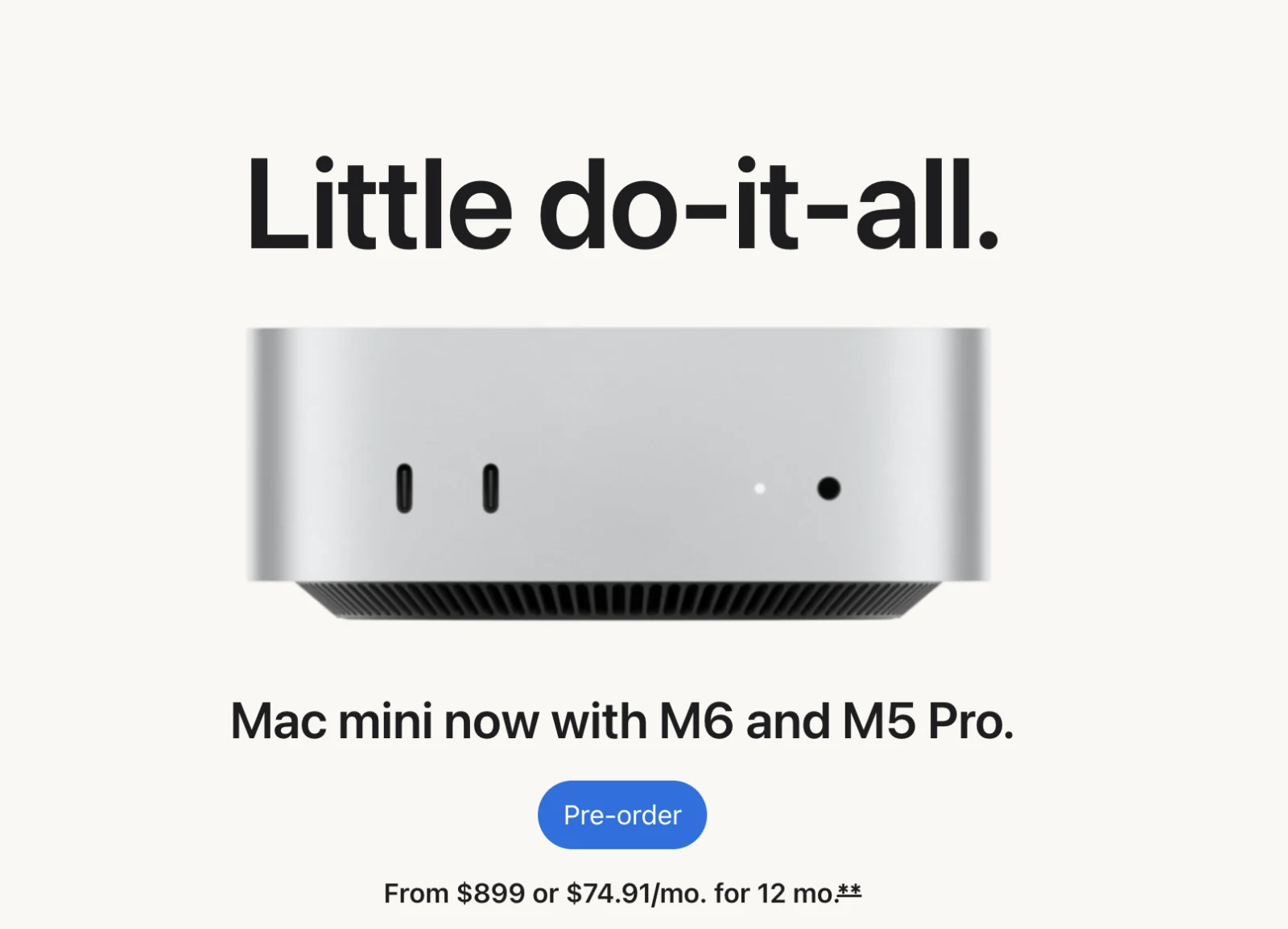
Apple has released a new Mac mini with M6 and M5 Pro chips through a press release alone. There was no stage, no livestream, no countdown clock — just a product page update and an open order book. Pre-orders opened on August 25, and Apple says units start shipping September 22.
No event, but a real launch
This wasn’t a leak or a rumor turning true weeks later. Apple confirmed pricing, specs, and a ship date on day one. The timing lines up with reports that the company wanted this refresh out before its iPhone event in September, and a persistent memory-chip shortage that has been squeezing supply across the industry may explain why Apple skipped the usual show entirely. Whatever the reason, the practical result is the same: the Mac mini is real, orderable right now, and priced.
The base model with M6 starts at $899, configured with 16GB of unified memory and a 256GB SSD. The higher-end model with M5 Pro starts at $1,699, with 24GB of unified memory and a 512GB SSD. Both can be configured up further — M6 up to 32GB of memory, M5 Pro up to 64GB — but those higher configurations push the price well past the starting figures.
What’s actually new inside
The M6 chip brings a 12-core CPU and 12-core GPU, up from the 10-core CPU and GPU in the outgoing M4. The bigger structural change is the Neural Engine: M6 is the first Apple silicon chip with two 16-core Neural Engines running in tandem, rather than one. Apple pairs that with faster unified memory bandwidth (up to 170GB/s) and a GPU built around what it calls Neural Accelerators — dedicated hardware inside each GPU core meant to speed up on-device model inference alongside graphics work.
The M5 Pro chip goes further for people who need it: up to an 18-core CPU, a 20-core GPU, 64GB of unified memory, and 307GB/s of memory bandwidth. It also carries Thunderbolt 5, with transfer speeds up to 120Gb/s.

- Apple Puts a New Mac Mini Up for Pre-Order
Why this matters if you run AI models locally
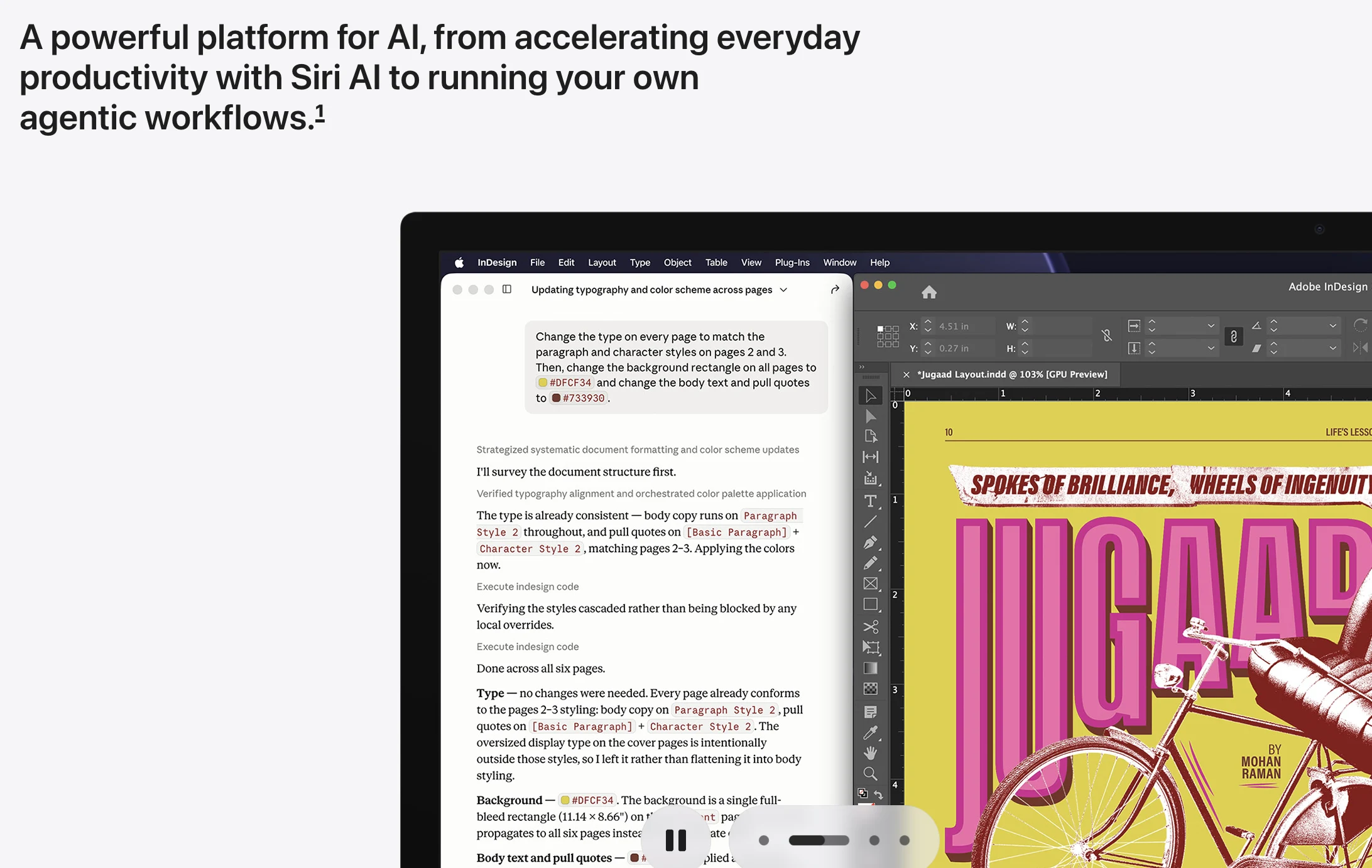
This is the part that’s easy to skim past and shouldn’t be. Apple is explicitly positioning this Mac mini as hardware for running AI models on your own machine, not just for using AI features baked into apps.
A few concrete things this chip generation is built to do?
Run larger local language models without a cloud connection.
More unified memory means a bigger model fits in memory at once. The M5 Pro’s 64GB ceiling, in particular, opens the door to running mid-sized open models entirely on-device in tools like LM Studio or Ollama, with no data leaving the machine.
Process prompts faster.
Apple’s own benchmarks put time-to-first-token — how long you wait before a local model starts responding — at up to 13.5x faster on M6 than on the original M1 Mac mini, and up to 22.3x faster on M5 Pro than an M1 model, using an 8K-token prompt against a 14-billion-parameter model in LM Studio.
Chain multiple Mac minis together for bigger workloads. Thunderbolt 5 on the M5 Pro model supports clustering several Mac mini units to run larger local AI models than a single machine could handle — the kind of setup previously associated with far more expensive workstation-class hardware.
Run agents, not just chatbots.
Apple points to tools like Claude Cowork, OpenClaw, and Perplexity’s Personal Computer running natively on this hardware, alongside developer-facing agent tools like Claude Code. The pitch is a machine built to keep an AI agent running continuously in the background, handling tasks without routing everything through someone else’s server.
For anyone who has priced out a dedicated local-AI box — extra GPU, extra RAM, a case, a power supply, the whole build — a sub-$900 machine with dedicated neural acceleration and a real memory ceiling is worth pausing on, particularly with a memory shortage currently pushing RAM prices upward across the entire PC and Mac market. The chips already used in this Mac mini were sourced and locked in before that shortage fully hit component pricing; a similar configuration announced later, or built from separately purchased parts today, could easily cost more.
The tradeoff to know about
None of this is free lunch. This is still Apple’s most expensive starting price for a Mac mini to date, and Siri AI — the more conversational, agent-capable version of Siri that Apple has been previewing — isn’t shipping with the machine yet. Apple says it will arrive in English later this year as a beta, layered on top of the hardware that’s shipping now. Buyers are getting the hardware ahead of some of the software Apple built it for.
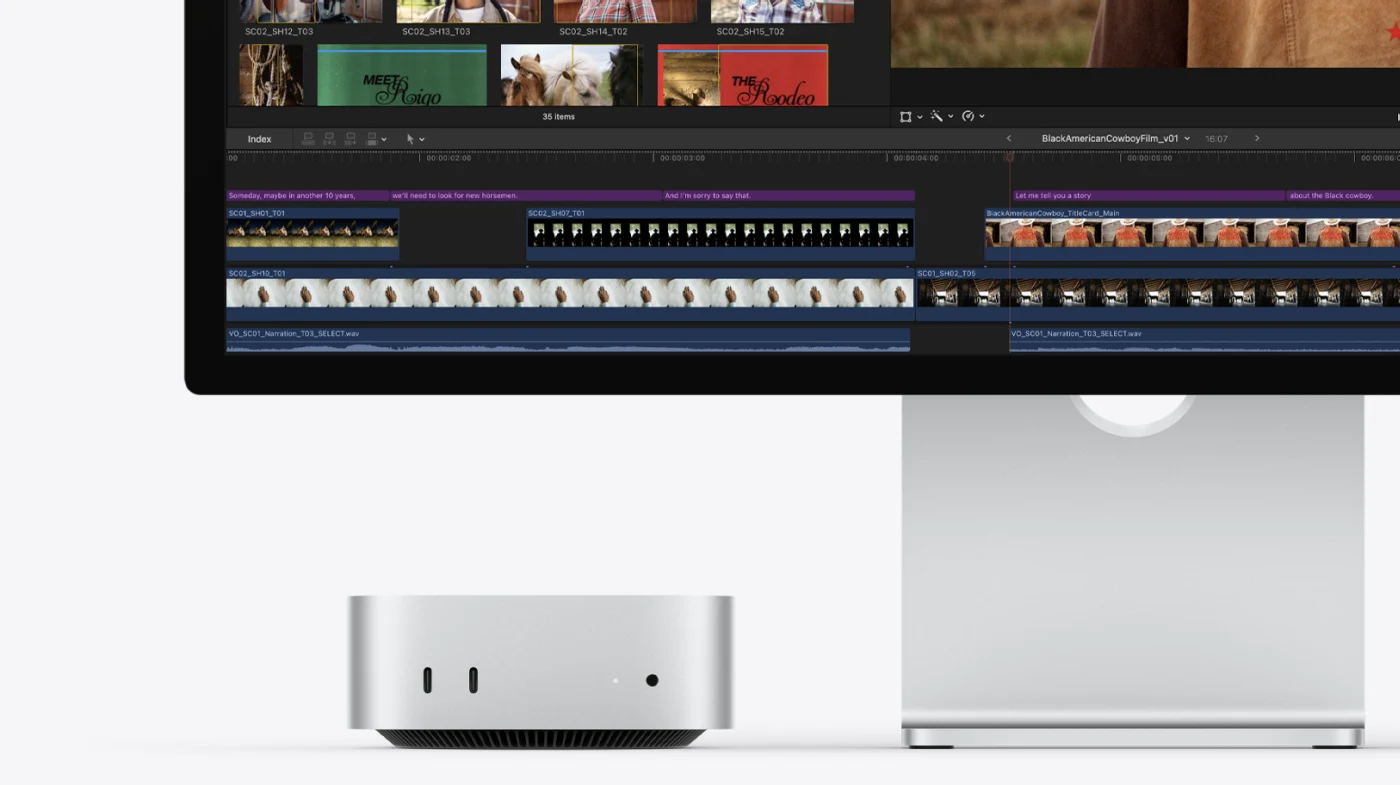
Ports also differ by chip: the M6 model has three Thunderbolt 4 ports on the back, while the M5 Pro model steps up to three Thunderbolt 5 ports. Both include 2.5Gb Ethernet, front-facing USB-C and headphone jack, and support for Wi-Fi 7 and Bluetooth 6.
Більше новин в телеграмі