The foldable iPhone Fold is not even out yet, and Samsung is already preparing a rival
That is how it works: if you want to stay in place, you have to run fast. And if you do not want to end up behind, you have to run twice as fast. Against that backdrop, one name popped up in the news that sounds like Samsung is not building just another Fold, but a separate branch: Wide Fold.
Samsung Wide Fold: what this phone is about
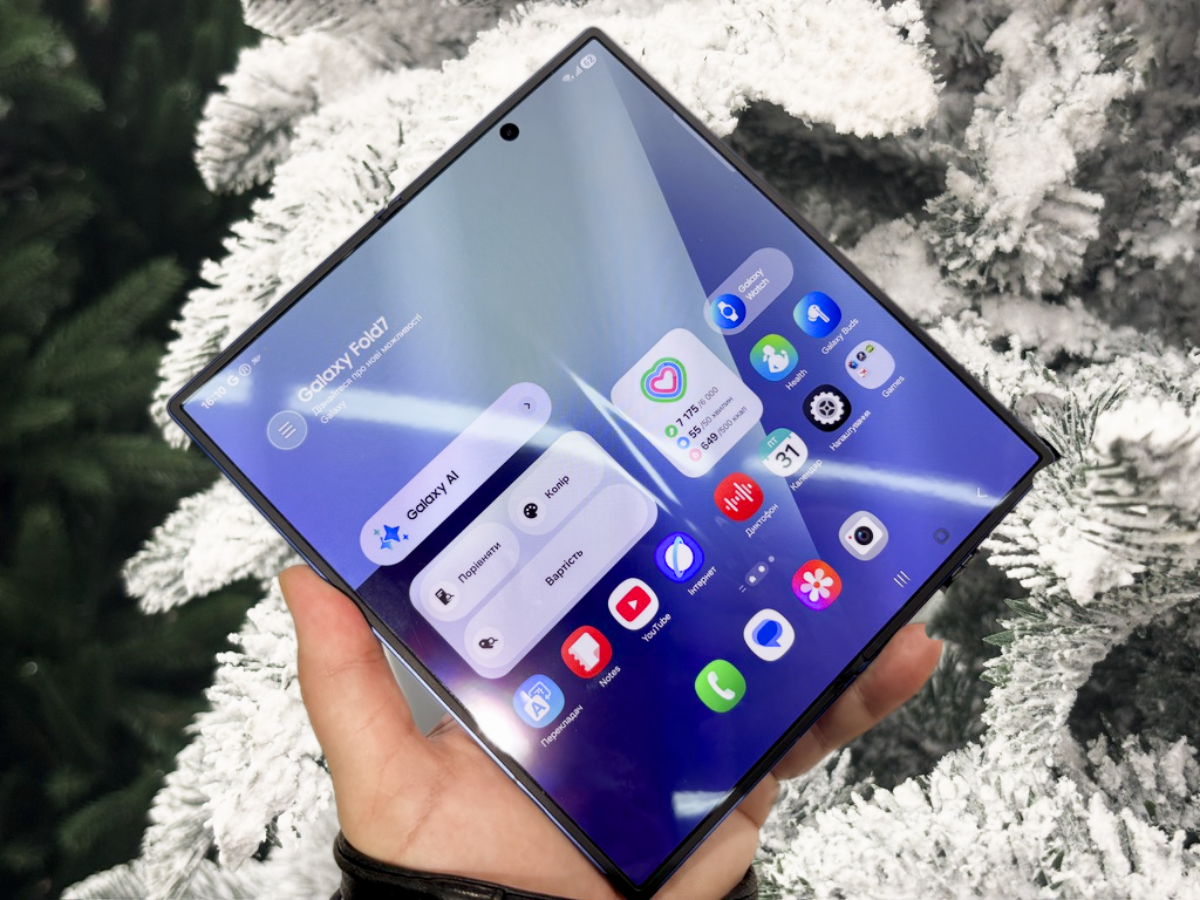
According to The Verge citing South Korea’s ET News, Samsung is working on a foldable phone in a wider format than recent Galaxy Z Fold generations. The idea is simple: less “long door,” more “passport,” meaning a wider, shorter shape when unfolded. That matters because it hints at a fight for scenarios where a foldable phone starts replacing a small tablet.
In leak language, the Wide Fold is said to have a 5.4-inch outer display and a 7.6-inch inner display. The key point is the 4:3 aspect ratio, close to an iPad in landscape. This is not “nice on a spec sheet.” It is an attempt to make the interface more comfortable for reading, photos, documents, and sketching—places where extra width actually helps.
Why 4:3 is not a detail, but a bet
4:3 sounds boring until you remember how many apps behave on tall, narrow foldable screens: some feel too cramped, some get stretched, and some force constant resizing. A squarer format is often more comfortable for text, feeds, notes, email, and side-by-side windows because you get real “room to live.” That is why this ratio keeps showing up around both the future iPhone Fold and Samsung’s Wide Fold.
There is a trade-off, though: video in classic formats (16:9 and similar) more often ends up with black bars on 4:3. That is not a problem, just an honest compromise. Wide Fold looks less like “a movie machine” and more like “a device for reading, browsing, working, and viewing photos without getting annoyed.” If Samsung is truly betting on this geometry, it likely sees demand in exactly those scenarios.
Why it reads as a direct answer to Apple
The most interesting detail in The Verge’s piece is the Apple comparison. The same story mentions rumors that a future iPhone Fold could be around 5.3 inches outside and around 7.7 inches inside, also with a 4:3 ratio. That makes the picture feel almost symmetrical: Samsung and Apple, according to leaks, may be heading toward the same form factor because it is closer to a “mini tablet” than a “very strange phone.”
Market logic is straightforward. If Apple really enters in 2026, Samsung benefits from meeting that launch not with “an even thinner Fold,” but with something that psychologically signals: we are already in this category. That is why Wide Fold looks less like a random clickbait leak and more like an attempt to pre-position a new type of foldable in people’s heads. The rumored timing also points to fall 2026, roughly the same window many sources associate with Apple’s first foldable iPhone.
What we still do not know, and where surprises usually hide
One important note: so far, leaks are most concrete about screens and the overall format. Camera, battery, materials, thickness, pricing, and whether there will be stylus support are not confidently described in this wave, so we will not invent details. In real life, those are exactly the factors that decide whether a device goes mainstream or stays an expensive toy for form-factor fans. This is also where the usual compromises start: thickness, endurance, or price.
Another detail many people miss: a 5.4-inch outer display in this kind of shape might feel more usable than the narrow strip on classic Fold-style phones, but it still has to be tested in hand. A wider outer screen is typically better for typing and normal scrolling, yet it also changes grip and the way the phone sits in your palm. If Samsung is truly moving toward a “passport” format, it is also accepting the risk of retraining users.
Why the Wide Fold information surfaced right now
Editorial opinion
Important context: everything below is purely an editorial hypothesis. It is not a leak, not an insider claim, and not confirmed information. We are not saying this is true, and we do not take responsibility for whether it matches reality. This is simply an attempt to connect events we are seeing in the market right now.
The timing itself feels interesting. For years, Samsung has been evolving the Galaxy Z Fold line in a familiar tall, narrow direction, gradually improving the build, panels, and hinges. And then, suddenly, there is talk of a completely different approach: a wide foldable with a 4:3 ratio. No teaser campaign. No marketing buildup. No gradual conditioning.
On its own, that could look like another experiment. But if you consider that Samsung Display is a key supplier of flexible OLED panels for Apple—especially for future products—a different logic appears.
Apple rarely moves spontaneously. If a foldable iPhone is truly planned, the display parameters must be locked in long before an announcement. That means the panel maker is already working with concrete requirements: diagonal sizes, aspect ratio, and how the screen behaves when folded and unfolded.
In that scenario, Samsung, as a company sitting inside that supply and technology chain, can hardly be blind to the direction Apple’s foldable form factor is taking. If Wide Fold starts surfacing now, it could be Samsung’s way of planting a flag in the same category—before Apple officially steps in.
This is not about copying. It may simply be that both companies are converging on the same format, driven by the same technology constraints and user scenarios. A 4:3 canvas is practical for text, photos, documents, and interfaces. If that ratio becomes the default for next-gen foldables, it may not be accidental.
Again, this is only an editorial version. A year from now it may not hold. Wide Fold could end up as a niche experiment. Or we could be watching the start of a new category where a phone gets closer and closer to the role of a compact tablet.
More to read
Більше новин в телеграмі