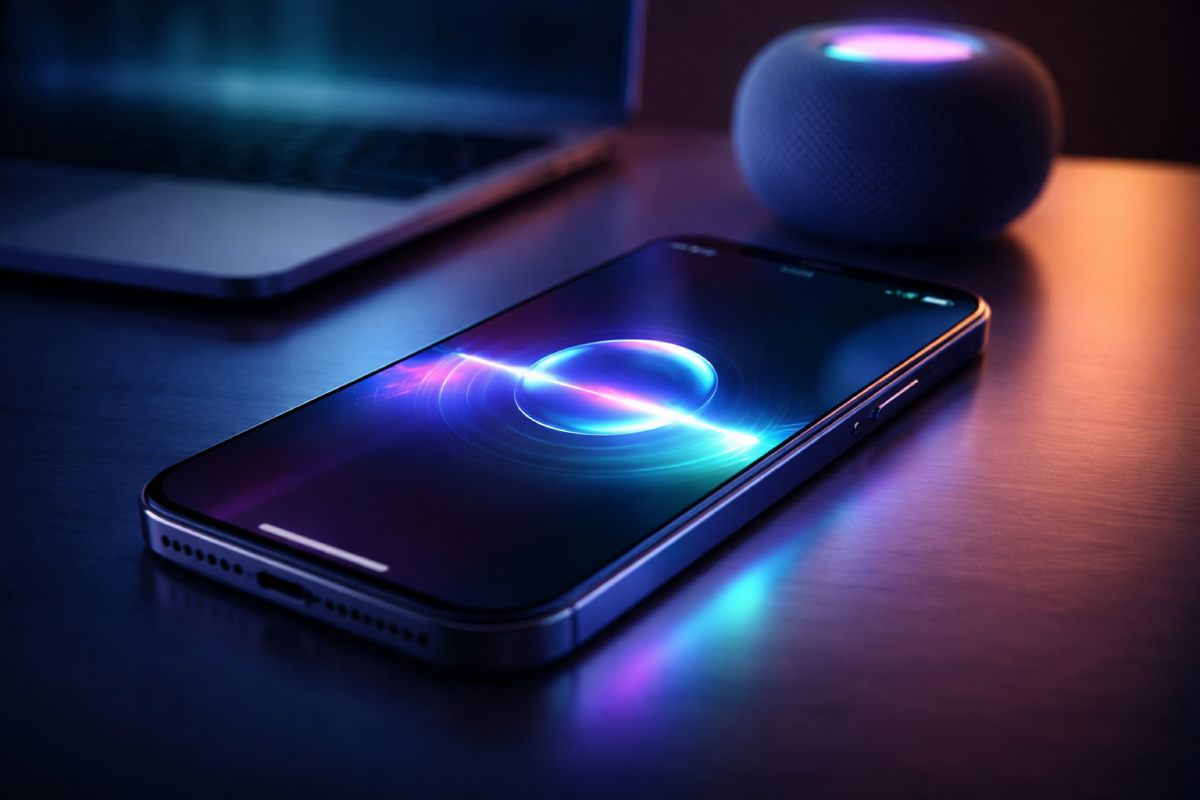
Apple is once again postponing the release of its updated Siri — the voice assistant with expanded artificial intelligence capabilities. Despite previous announcements and strong user expectations, the launch of the new features will not take place within the originally planned timeframe.
Why Siri Is Being Delayed
Apple first announced the major Siri upgrade in the summer of 2024. The new AI-powered version was expected to become part of one of the major iOS updates. The initial plan suggested a launch alongside iOS 26.4, but due to technical difficulties, the timeline has shifted once again. There were also rumors that it could appear in iOS 26.3.
According to the latest reports, Apple may distribute the new features across several updates. Some capabilities could arrive in iOS 26.5, while deeper AI integration is expected in iOS 27.
Testing Issues
During internal testing, Apple discovered that the new version of Siri operates inconsistently. The assistant does not always understand complex queries correctly, sometimes responds slower than expected, and shows limited accuracy in contextual analysis. For Apple, which traditionally releases features only after reaching a high level of stability, this became a key reason for delaying the rollout.
The Technical Complexity of the Upgrade
The updated Siri is designed to offer significantly broader capabilities. This includes deeper access to user data for better contextual understanding, improved interaction with apps, and the ability to handle complex requests at the level of modern AI assistants.
Such changes require a substantial restructuring of Siri’s architecture. Integrating large language models while simultaneously ensuring data privacy is a technically demanding task that has not yet reached the required stability level.
What the New Siri Was Supposed to Be
The upgraded Siri was meant to become more natural in conversation and better at understanding complex requests. It was expected to remember previous context, work with on-screen information, and integrate more deeply with both system and third-party apps.
Essentially, this marks a shift from a traditional voice assistant to a full-fledged next-generation AI assistant. Apple is approaching this transition cautiously to avoid technical issues and reputational risks.
The delay of the new Siri comes as Apple continues to dominate the smartphone market and set record iPhone sales.
Market Reaction
The repeated postponement of Siri’s launch has raised concerns among analysts. Amid rapid AI development by competitors, the delay may appear as a sign of falling behind. However, some experts believe Apple’s cautious approach aligns with its long-standing strategy of releasing features only after thorough refinement.
What Will Change for iPhone Users in the Near Term
For iPhone and other Apple device users, this means waiting longer for a dramatically improved Siri. The current version will continue to function as usual, while new capabilities are likely to be introduced gradually.
Apple has not officially announced a final release date for the fully AI-powered Siri. Most likely, key changes will arrive during the next major system update cycle.
Apple is once again delaying the launch of a deeply upgraded Siri with artificial intelligence integration. The primary reasons are technical challenges and the need for additional refinement. The new features will likely roll out gradually in future iOS versions, and the complete transformation of Siri will take more time than initially expected.
Більше новин в телеграмі