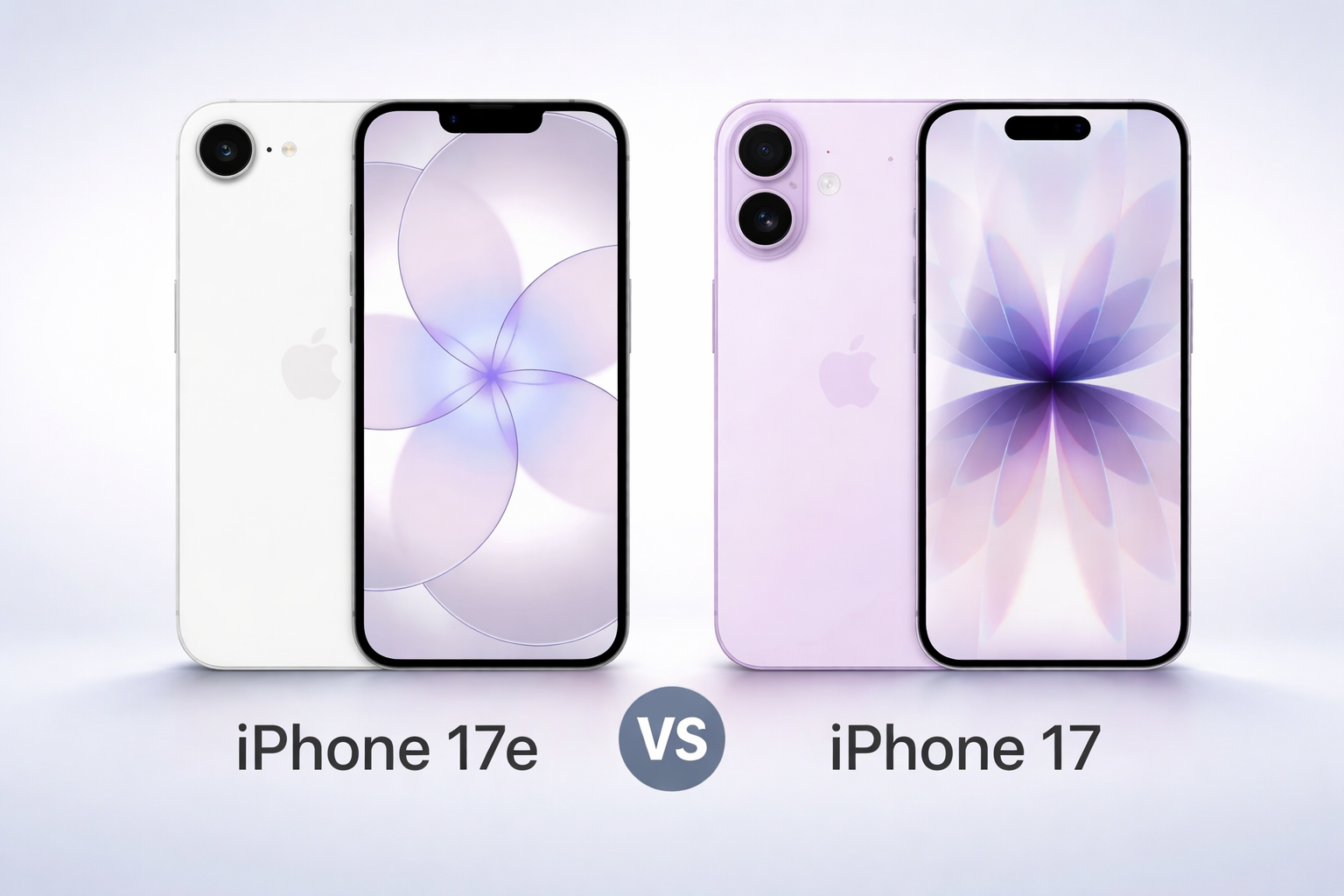
Is it worth paying $200 more for the base iPhone, or is the iPhone 17e enough? The iPhone 17e turned out to be much better than the previous 16e. Both devices now start with 256 GB of storage, both support Face ID unlocking, and MagSafe is finally included. So what is the real difference between the iPhone 17e and iPhone 17?
Display comparison
iPhone 17e features a 6.1-inch Super Retina XDR display. It is about 0.3 inches smaller than the screen on the iPhone 17. However, the bigger difference is the refresh rate.
For the first time, the base iPhone 17 comes with a 120Hz adaptive ProMotion display. It feels smoother and more responsive, especially when scrolling.
Apple did a good job optimizing the screen, and even 60Hz still looks very good. If you switch from 60Hz to 120Hz you may not notice the difference immediately. But once you get used to the smoother display, going back to 60Hz becomes noticeable.
Overall, both phones still use the same bright and high-quality Super Retina XDR panel. If you do not care about ultra-smooth scrolling, the display on the iPhone 17e will feel very familiar and comfortable.
Processor comparison
The iPhone 17e uses the Apple A18 chip, the same processor previously used in the base iPhone 16. Instead of diving into benchmarks and numbers, one simple fact explains its power: the Pro version of this chip is used in the new Apple Mac Neo laptop introduced in 2026.
This is a modern Apple silicon chip that will likely receive software support for up to seven years and remain fast for much longer.
| Specification | iPhone 17e | iPhone 17 |
|---|---|---|
| Display | 6.1″ OLED | 6.3″ OLED |
| Refresh rate | 60 Hz | 120 Hz ProMotion |
| Brightness | ~1200 nits | up to ~3000 nits |
| Display cutout | classic notch | Dynamic Island |
| Processor | Apple A19 (4-core GPU) | Apple A19 (5-core GPU) |
| Neural Engine | 16-core | 16-core |
| RAM | 8 GB | 12 GB |
| Base storage | 256 GB | 256 GB |
| Storage options | 256 / 512 GB | 256 / 512 GB |
| Main camera | 48 MP Fusion | 48 MP |
| Secondary camera | none | 48 MP ultra-wide |
| Optical zoom | 2× crop zoom | 0.5× + 1× |
| Front camera | 12 MP | ~24 MP |
| Video | 4K Dolby Vision | 4K Dolby Vision |
| Wired charging | up to ~20 W | up to ~40 W |
| MagSafe | 15 W | up to ~25 W |
| Modem | Apple C1X | Apple C2 |
| Body | aluminum + glass | aluminum + glass |
| Water resistance | IP68 | IP68 |
| Starting price | ~$599 | ~$799 |
RAM and real performance
8 GB of RAM may sound modest, but thanks to iOS optimization it still performs well. Apple also promises Apple Intelligence support even on these devices.
The base iPhone 17, however, includes 12 GB of RAM — significantly more.
RAM affects how many apps stay open in the background, how smoothly heavy tasks run, and how well the phone handles multitasking.
Video editing, large photo processing, gaming, and AI features all benefit from additional memory.
In real-world usage, the difference between 8 GB and 12 GB is not about benchmarks. It is about how long apps stay open and how smooth the phone feels during heavy workloads.
Do you need more cameras
The iPhone 17e has a single camera, but it is still a full 48-megapixel sensor with Apple’s processing algorithms, night mode, stabilization and portrait features.
The iPhone 17 adds an ultra-wide camera, allowing you to capture wider scenes. If you do not use that often, the single camera on the 17e is still very capable.
For social media, the image quality is more than enough.
Key hardware differences
MagSafe is finally present on the iPhone 17e, which was missing on the 16e.
Dynamic Island is not available on the 17e. However, connectivity has improved with satellite messaging support, the Apple C1X modem and up to 26 hours of battery life.
The iPhone 17 lasts slightly longer, reaching up to 30 hours.
Charging speeds are also different. The iPhone 17 can reach 50% in about 20 minutes, while the iPhone 17e needs around 30 minutes.
Everything else — aluminum frame, system stability and reliability — remains very similar.
So who is the iPhone 17e for? It is a great option for users who do not need a second camera or always-on display and want to save $200. It also works well as an entry point into the Apple ecosystem, especially if paired with a base iPad or the new Apple Mac Neo.
Більше новин в телеграмі