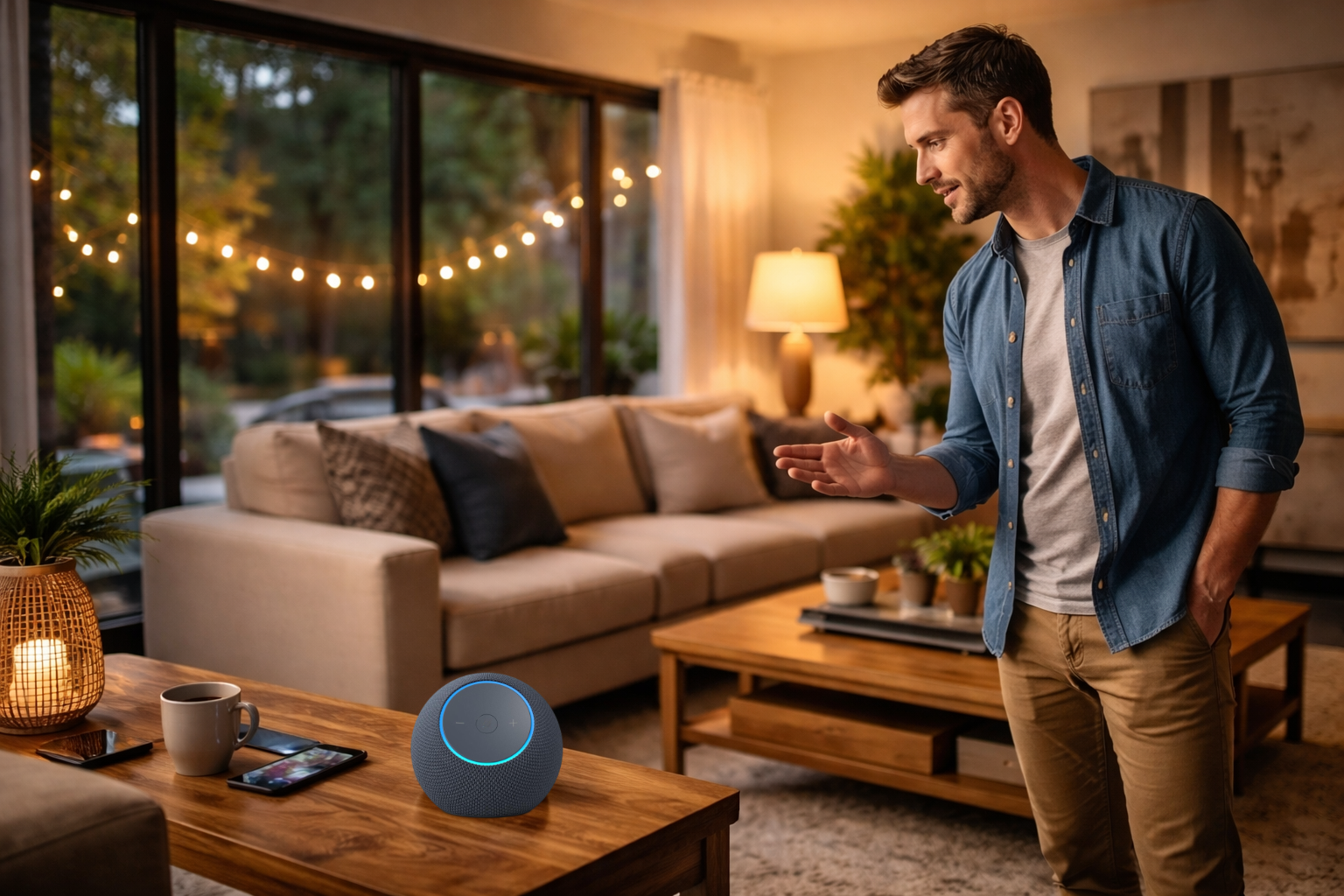
Amazon Alexa just became more personal. You can now choose whether it answers in short, efficient replies, calm neutral tones, or full-on motivational mode — and that small change could reshape how we interact with voice assistants in 2026.
In 2026, Amazon did something Echo users have quietly wanted for years: Amazon Alexa got new communication styles. This isn’t just a cosmetic tweak — it changes how the voice assistant interacts with you day to day. Instead of responding the same way every time, Alexa now adapts to your mood, your schedule, and the kind of interaction you want in the moment.
This update introduces personality-level personalization inside Amazon Alexa 2026. You can now choose how your assistant speaks — short and direct, calm and neutral, or upbeat and encouraging. If you’ve ever used Alexa brief mode, this goes several steps further. It’s not just about shorter responses anymore — it’s about tone, energy, and emotional framing.
What personality modes are available in Amazon Alexa?
Amazon added three distinct response styles that can be adjusted in Alexa settings. This isn’t just about length — the wording, pacing, and overall tone shift depending on the mode you select. The goal is to make the Amazon voice assistant feel less robotic and more aligned with how you prefer to communicate.
- brief — short, direct answers with no extra commentary;
- chill — relaxed, neutral tone without emotional emphasis;
- cheerleader — upbeat, supportive responses with positive energy.
You can switch between these modes depending on the day or even your mood. In the morning, you might want concise commands and fast confirmations. In the evening, a calmer interaction may feel more natural. Alexa is starting to function less like a generic smart speaker and more like a customizable digital assistant inside the Amazon Echo ecosystem.
What this changes in everyday use
Functionally, Amazon Alexa hasn’t lost any capabilities. It still controls your smart home, answers questions, plays music, checks the weather, and manages reminders. But the experience of using the AI Amazon assistant feels different — more intentional and more personal.

Amazon Echo Studio with Alexa: 7 Things That Actually Change Daily Life
It’s easy to call Amazon Echo Studio just another smart speaker — until you start using it. From hands-free reminders and real room-filling sound to voice-controlled lights and instant home announcements, this device quietly changes how you live every single day. Here are seven features that don’t just sound impressive — they actually make daily life easier.
Some users prefer efficiency and minimalism in voice responses. Others appreciate a more engaging or encouraging tone. That’s where Alexa personalization becomes meaningful — it gives users control over how their voice assistant communicates inside the smart home environment.
- fewer unnecessarily long responses;
- more control over communication style;
- tone that adapts to mood and context;
- a more human-like AI interaction;
- stronger engagement with Amazon Echo devices.
These adjustments may seem subtle, but they directly affect user retention. In a competitive space with Google Assistant and other AI platforms, emotional interaction matters. Amazon is clearly investing not only in features, but in the experience of interacting with Alexa.
Why Amazon is moving toward personalized AI
Voice assistants have evolved beyond simple command execution. In 2026, users expect personalization, flexibility, and adaptive AI behavior. A voice assistant isn’t just about getting answers — it’s about how those answers are delivered.
This Amazon Alexa update reflects a broader shift in AI development: making digital assistants feel more natural and responsive to human preferences. While this is an early step, it signals Amazon’s long-term strategy to strengthen Amazon Alexa 2026 as a more emotionally intelligent voice assistant.
- increased competition with Google and Apple;
- deeper personalization in AI Amazon systems;
- longer interaction time with devices;
- stronger user attachment to the Amazon ecosystem.
Over time, tone and communication style may become as important as raw functionality. The real differentiator won’t just be what Alexa can do — but how Amazon Alexa does it for each individual user.
Amazon Alexa 2026: personalization, new modes, and the future of voice assistants
This Amazon Alexa update isn’t about changing the voice — it’s about changing the interaction model. Users gain control over response style, and the Amazon Echo ecosystem becomes more flexible and adaptive. Alexa personalization, including brief, chill, and cheerleader modes, sets a new benchmark for voice assistant behavior and strengthens Amazon Alexa’s position in the smart home market.
It’s important to clarify: at launch, the new Amazon Alexa personality modes are available only in English.
Specifically, the feature is supported in U.S. English and U.K. English, as those markets remain the primary focus for Amazon Echo devices and AI development. The brief, chill, and cheerleader styles are not currently available in Russian, Ukrainian, Polish, or other languages.
This limitation exists because personality adjustments require more than simple translation. They involve tone modeling, emotional phrasing, and natural language nuance. Amazon is rolling out the feature first in English-speaking markets, with potential expansion to additional languages depending on future updates.
More interesting articles
Більше новин в телеграмі