Xiaomi has introduced the new Xiaomi Pad 8 tablet, and it has already appeared on the Indian market. The company held the launch on March 10, although the presentation had previously been planned for March 11. India often becomes one of the first markets where Xiaomi begins selling new tablets, which is why the new device is shown there earlier than in many other countries.
The new Xiaomi Pad 8 continues the company’s lineup of large tablets. The device received a large display, a powerful mobile processor, and a battery designed for long operation. The tablet was created as a universal device for everyday tasks — from watching videos to working with documents or studying.
Special attention was drawn to the version with a nano-texture screen coating. This coating reduces reflections and makes the display more comfortable to use in bright lighting. Previously, similar solutions were mainly used in professional monitors or expensive tablets.
Xiaomi Pad 8 prices on the Indian market
Xiaomi Pad 8 immediately went on sale on the Indian market in several memory configurations. The company offered different options for those who need a tablet for basic tasks and for users who plan to actively work with large files, games, or multitasking. That is why the difference between the versions is mainly related to the amount of RAM and storage.
The base version of Xiaomi Pad 8 with 8 GB of RAM and 128 GB of storage costs around 39,999 rupees in India. If converted, this is about 480 dollars or roughly 18–19 thousand hryvnias. For a tablet with a flagship processor, this price looks quite competitive.
The version with more memory — 12 GB of RAM and 256 GB of storage — is priced at around 42,999 rupees. It is designed for users who plan to work with large files, run heavy applications, or actively use multitasking.
The most expensive configuration comes with 16 GB of RAM and 512 GB of storage. Its price is around 46,999 rupees. This version looks the most interesting for those who plan to use the tablet not only for multimedia but also for working with photos, videos, or complex software.
Separately, Xiaomi also introduced a version of the tablet with a nano-texture display coating. This option costs a bit more than the standard model but handles reflections much better in bright light. This modification may be especially interesting for people who often work with a tablet outdoors or near a window.
Xiaomi Pad 8 specifications
Xiaomi Pad 8 received hardware that is more typical of flagship smartphones than of ordinary tablets. The company used the Snapdragon 8s Gen 4 mobile platform, a large display with a high refresh rate, and a high-capacity battery. As a result, the tablet is designed not only for watching videos or social media but also for more demanding tasks — working with documents, multitasking, or running heavy applications.
The central element of the device is a large 12.1-inch display with a resolution of 3000 × 1876 pixels. A refresh rate of up to 144 Hz makes page scrolling, interface animations, and app usage significantly smoother. For the user, this means the tablet responds quickly and the eyes get less tired during long use.
Performance is powered by the Snapdragon 8s Gen 4 processor. This is one of Qualcomm’s most powerful mobile platforms, usually used in flagship smartphones. Thanks to this, Xiaomi Pad 8 easily handles heavy applications, large documents, or several open programs at the same time. Combined with up to 16 GB of RAM, the tablet can operate without noticeable slowdowns even in complex scenarios.
For data storage, Xiaomi offers several memory options — from basic configurations to versions with larger storage capacity. This allows the tablet to be used not only for multimedia but also for working with large files, photos, or videos. The device runs on HyperOS, which is optimized for a large screen and multitasking mode.
Another important element is the battery with a capacity of about 10,000 mAh. Such a battery allows the tablet to operate for a long time without recharging even during active use. Fast charging support allows the device to quickly restore energy levels, which is especially important for a device often used for work or study throughout the day.
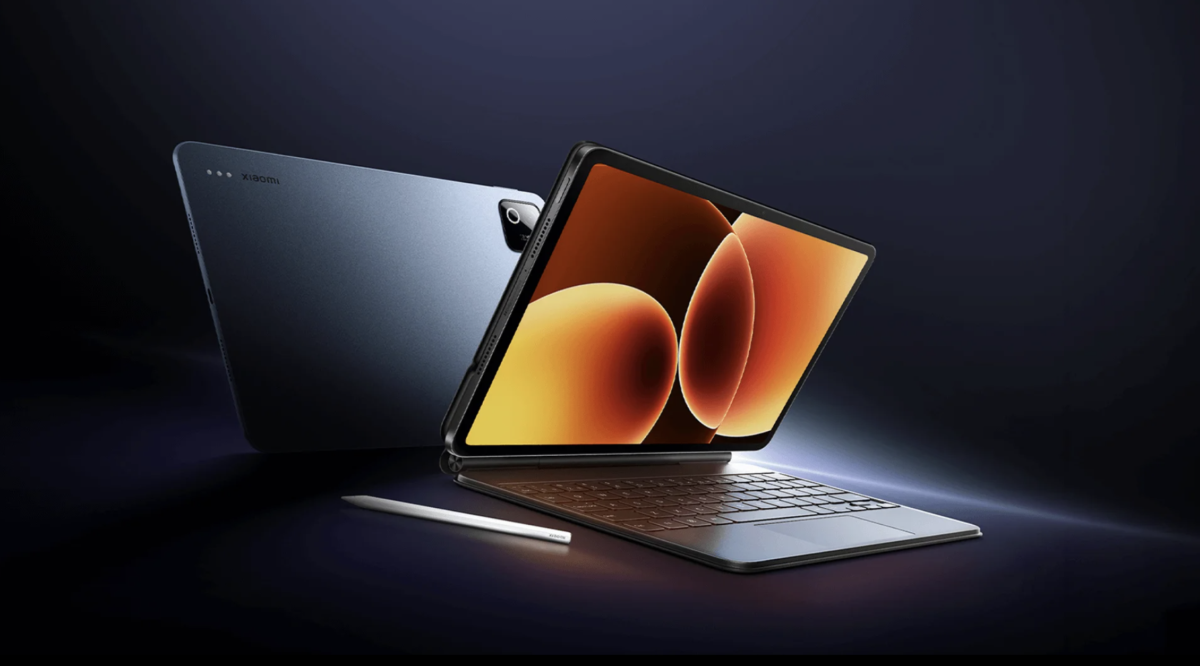
The tablet also supports a stylus and a proprietary keyboard, expanding the possible usage scenarios. Thanks to this, Xiaomi Pad 8 can be used for note-taking, drawing, editing texts, or working with documents. Combined with a large display, this makes the tablet a universal tool for everyday tasks.
| Specification | Xiaomi Pad 8 |
|---|---|
| Display | 12.1-inch LCD |
| Resolution | 3000 × 1876 |
| Refresh rate | up to 144 Hz |
| Processor | Qualcomm Snapdragon 8s Gen 4 |
| RAM | 8 / 12 / 16 GB |
| Storage | 128 / 256 / 512 GB |
| Operating system | HyperOS (Android) |
| Main camera | 13 MP |
| Front camera | 8 MP |
| Battery | 10,000 mAh |
| Fast charging | 67 W |
| Audio | 4 speakers |
| Wireless technologies | Wi-Fi, Bluetooth |
| Stylus support | Xiaomi Stylus |
| Keyboard support | Xiaomi keyboard |
| Body material | aluminum |
| Thickness | ≈ 6.5 mm |
| Weight | ≈ 590 g |
Xiaomi Pad 8 battery
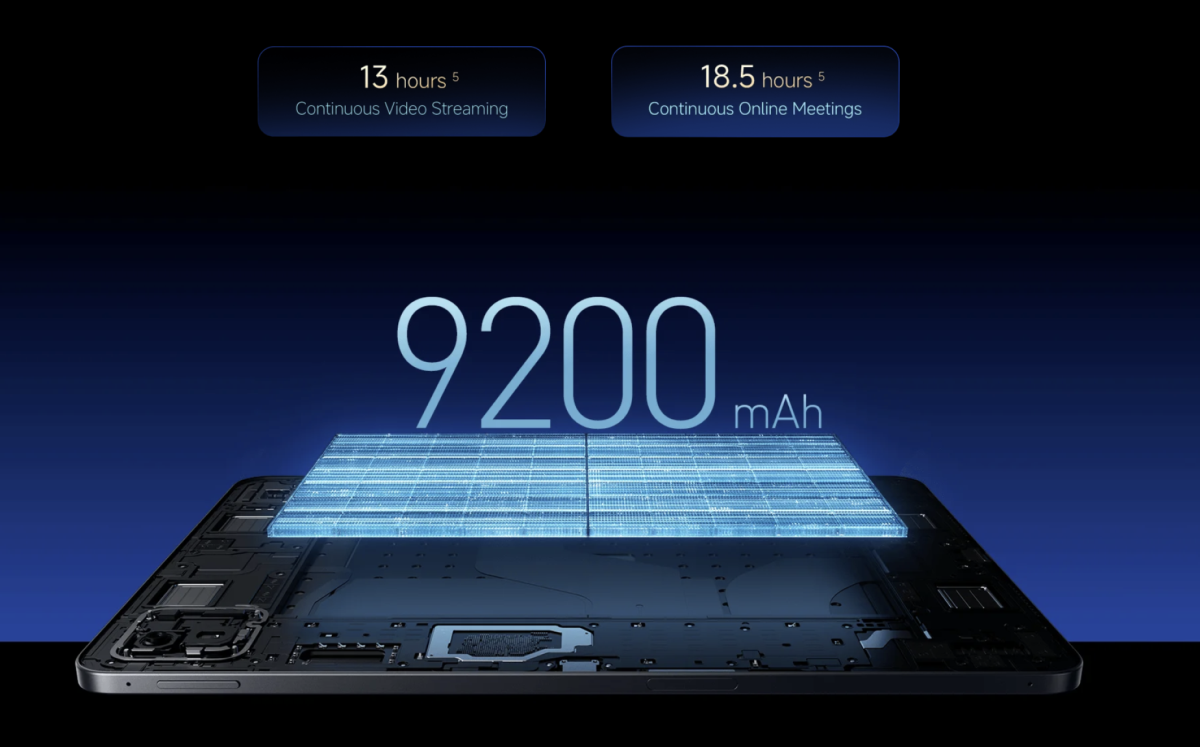
One of the most important aspects of any tablet remains battery life. How long the device can work without recharging determines whether it will be convenient to use throughout the day. Xiaomi Pad 8 received a 9200 mAh battery, and for a large tablet this is a key element of the entire design.
In everyday use, the battery determines how suitable the device is for work, study, or travel. According to Xiaomi, the tablet can work up to 13 hours during continuous video playback. If we talk about online meetings or video calls, battery life can reach about 18.5 hours.
These figures are explained not only by the battery capacity but also by HyperOS optimization and the energy efficiency of the mobile processor. As a result, the tablet can handle long periods of work without recharging even during active use.
Eye comfort during long use
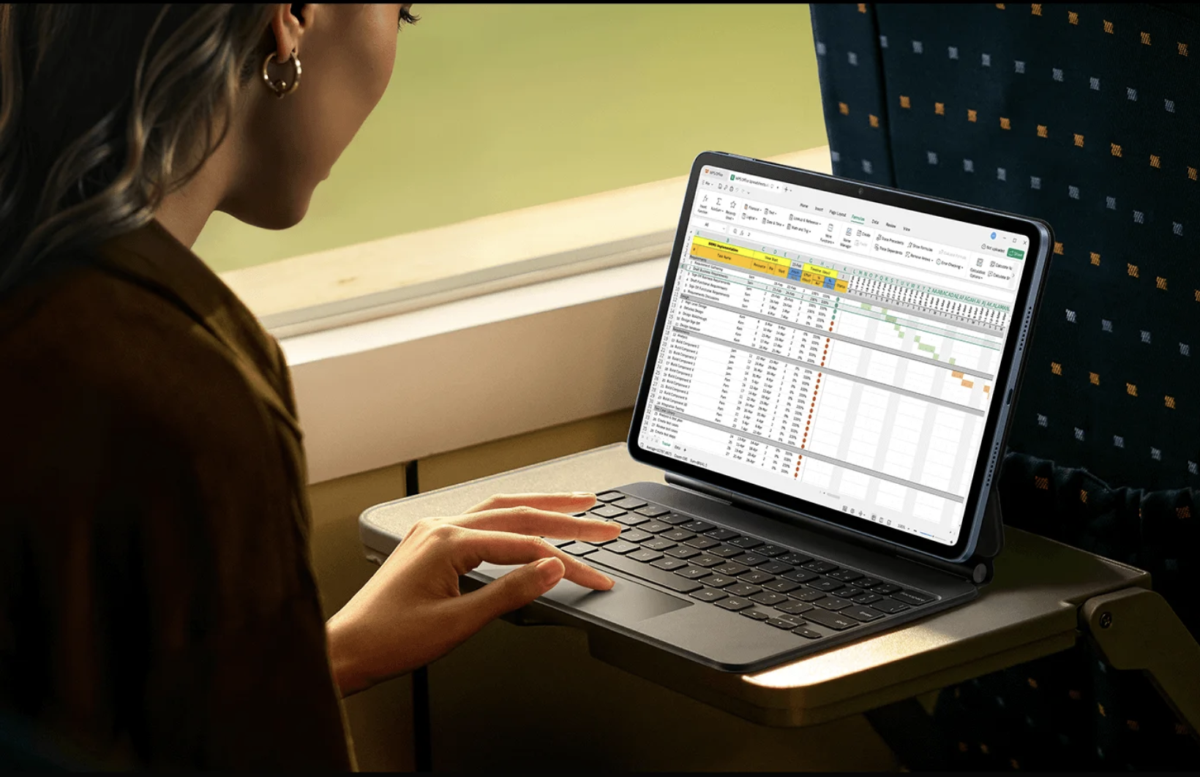
During the development of Xiaomi Pad 8, the company paid special attention to eye comfort. The tablet is often used for reading, studying, or watching videos for several hours, so the display is optimized to reduce strain on the eyes.
The screen remains comfortable even during prolonged use. This is important for both adults and children who may spend a lot of time using the tablet for learning or watching educational content.
- reduced eye strain;
- comfortable reading;
- convenient video viewing;
- suitable for long use by children.
As a result, the Xiaomi Pad 8 display is suitable for everyday tasks when the tablet is used for long periods. This makes the device convenient not only for entertainment but also for studying or work.
Xiaomi Pad 8 sound
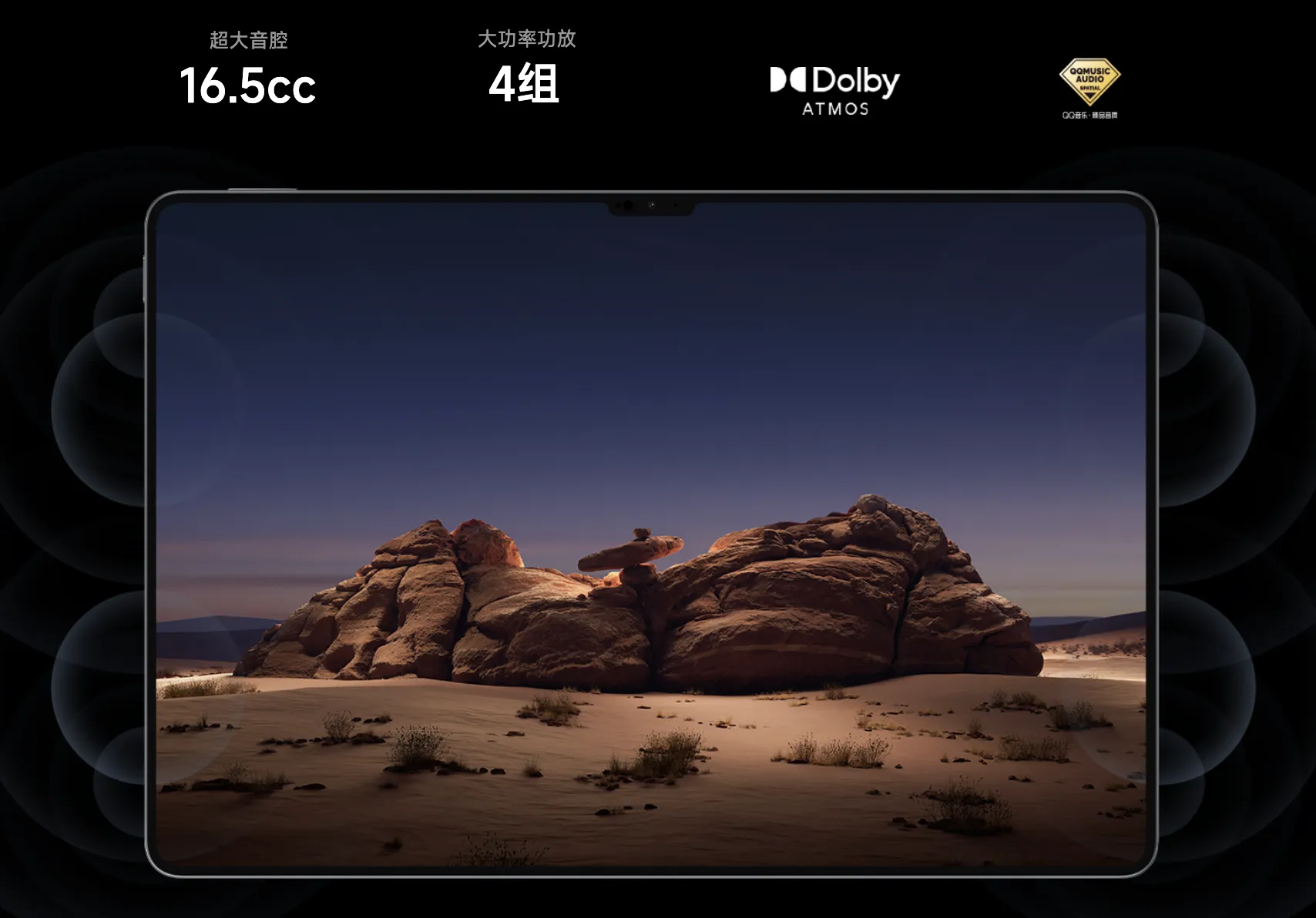
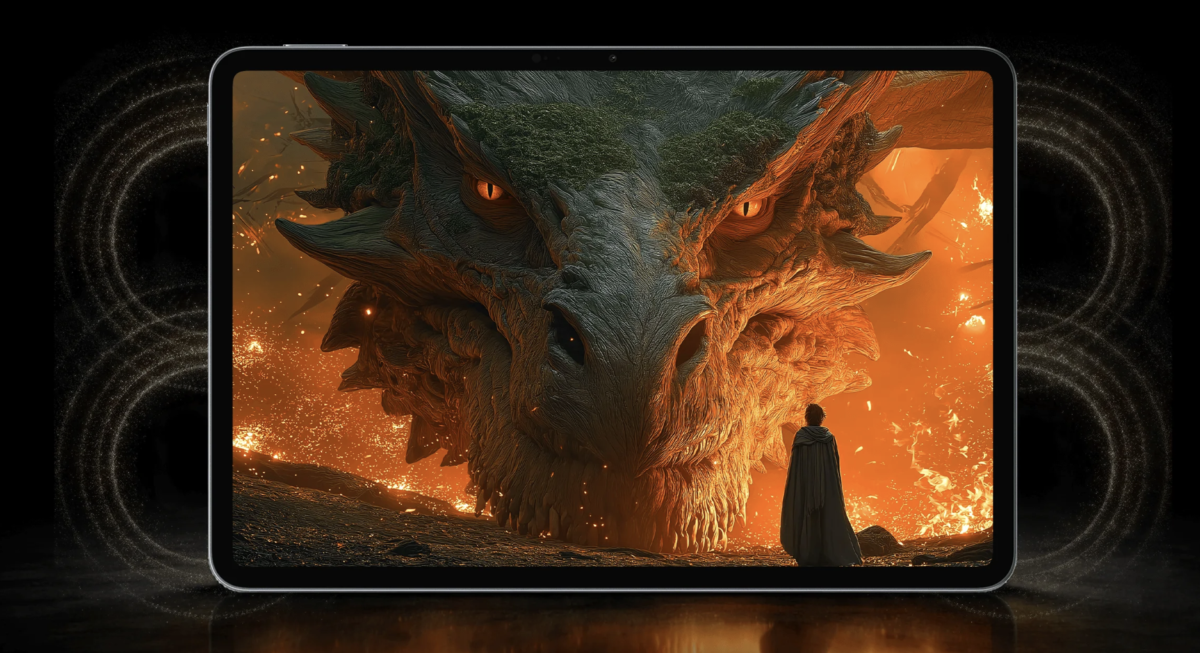
Another important part of the tablet is sound. Xiaomi Pad 8 features a system of four speakers positioned to create surround sound regardless of how the tablet is held. This is especially noticeable when watching movies, series, or videos on the large screen.
The company uses a specially tuned acoustic system that improves low-frequency reproduction and makes the sound more detailed. Combined with the large display, this creates a stronger immersion effect when watching content or playing games.
The tablet also supports Dolby Atmos technology. It allows the sound to become more spatial and immersive, with audio sources appearing to surround the user.
Snapdragon 8s Gen 4 processor
Xiaomi Pad 8 runs on the Snapdragon 8s Gen 4 chip. Qualcomm introduced this processor in 2025 as a more affordable alternative to the flagship Snapdragon 8 Gen 4. It is built on a 4-nanometer TSMC process and uses a new Qualcomm CPU architecture.
In performance tests, this processor scores around 2 million points in AnTuTu. This means its speed is roughly comparable to flagship smartphones of the previous generation.
In real use, Snapdragon 8s Gen 4 behaves stably. It is not one of the chips that quickly overheat and drastically reduce clock speeds. Even under prolonged load, performance drops only slightly.
The graphics part of the processor is also strong for a mobile device. It supports modern graphics APIs and can process complex scenes without sharp drops in frame rate.
Xiaomi Pad 8 after the launch in India: should we expect it on other markets?
Xiaomi Pad 8 has already appeared on the Indian market, but this does not necessarily mean that the exact same version will appear in other countries. Xiaomi often releases different Chinese and international versions of its devices.
Sometimes the battery capacity changes, sometimes the memory configurations, or even the display type. That is why a launch on one market does not always guarantee the same device will appear in Europe.
For Ukraine, the situation is even more complex, because official Xiaomi tablets usually arrive together with the European version. If the company releases a global version of Xiaomi Pad 8, its specifications may differ slightly from the Indian or Chinese versions.
Therefore, the launch in India can be considered the first stage of the tablet’s appearance on the international market.
More news on Telegram


More interesting articles
Більше новин в телеграмі