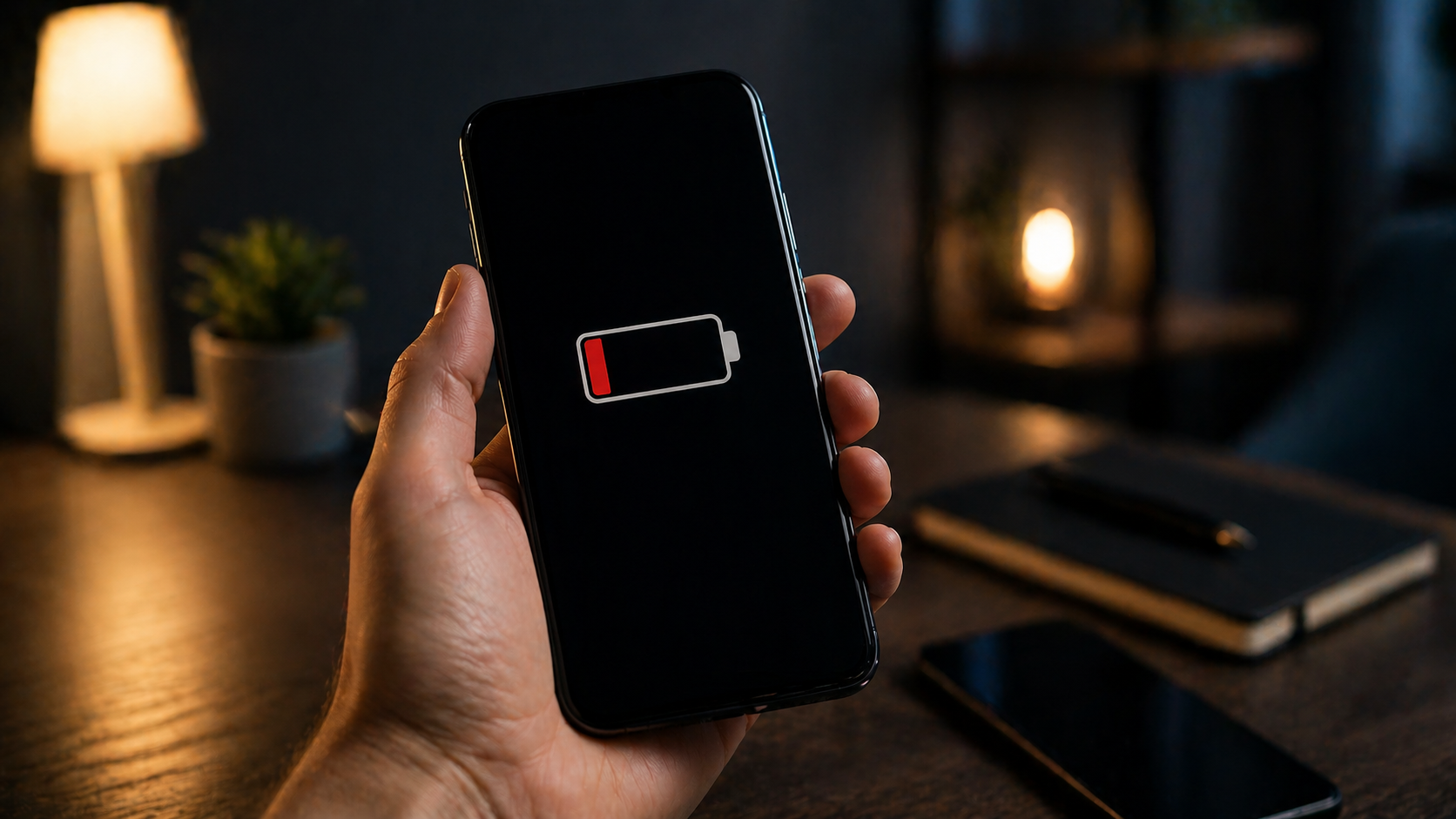
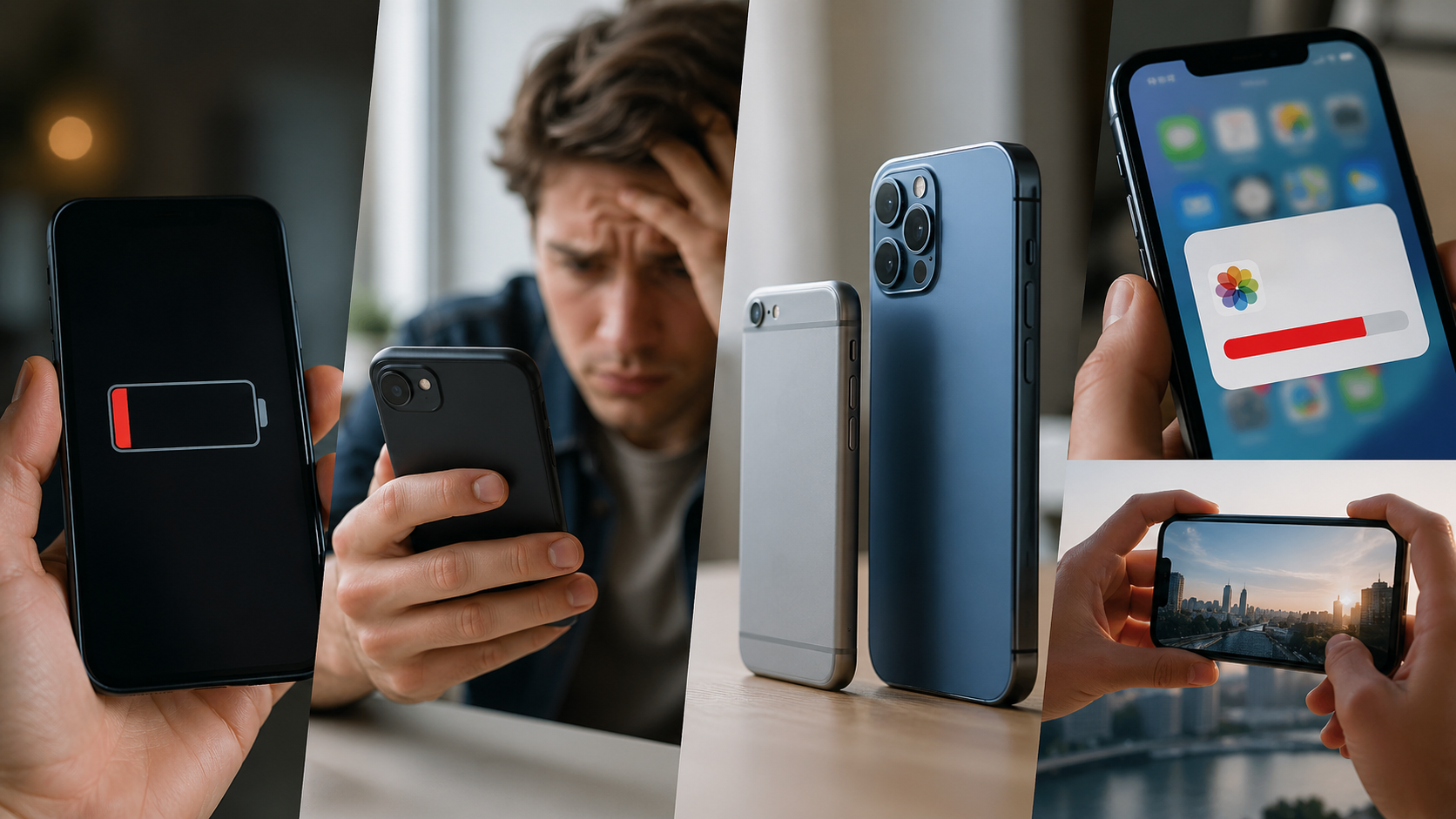
Your smartphone battery no longer lasts a full day and it ruins the entire experience
The battery is the only component that inevitably degrades over time. After 2–3 years of active use, even a flagship starts behaving differently: fast drain, shutdowns in cold weather, and unstable performance under load.
Many users try to ignore this, but the problem goes beyond convenience. A weak battery forces the system to limit performance, making the smartphone feel slower even in simple tasks.
- battery drains faster than a full day even without heavy use;
- the phone shuts down at 10–20% battery level;
- performance drops sharply under load;
- the device overheats even during basic tasks;
- you constantly need to carry a power bank.
In this scenario, upgrading is not about wanting something new, but about restoring a normal user experience. If a device can’t last a full day, it stops fulfilling its core function, regardless of camera or design.
Чому смартфон швидко розряджається: 7 реальних причин
Смартфон, який не доживає до вечора — це не норма. У 2026 році батарею «з’їдають» неочевидні процеси, які можна вимкнути за кілька хвилин.
Lack of updates and new features gradually makes your smartphone outdated
A smartphone is not just hardware — it’s software as well. When manufacturers stop updates, the device starts losing not only new features but also compatibility with modern services.
This becomes especially noticeable 3–4 years after release, when new versions of Android or iOS change how systems work. The device may still function, but it no longer fits modern usage scenarios.
- new system features are unavailable;
- banking apps may work inconsistently;
- device security declines;
- some apps stop receiving updates;
- bugs appear and are never fixed.
This is a gradual process that isn’t obvious at first. But over time, users realize their smartphone has become a limitation rather than a tool — and that’s the real reason to upgrade.
Not enough memory when your smartphone starts lagging
Lack of memory is one of the most underestimated problems. This includes not only storage for photos but also RAM, which directly affects performance.
When memory is insufficient, the system starts closing apps, restarting processes, and introducing delays. This creates the feeling that the device is “old,” even if the processor is still capable.
- apps constantly reload;
- the phone freezes when switching between tasks;
- multitasking becomes almost impossible;
- updates fail due to lack of storage;
- the camera takes longer to process photos.
In this situation, users lose speed and comfort. This is a valid reason to upgrade, because memory limitations cannot be fixed with software alone.

6 причин, чому ваш iPhone різко перегрівається
iPhone може перегріватися навіть без навантаження — і це не завжди проблема заліза, а результат сценарію використання.
Why the camera is not a reason to upgrade your smartphone in 2026
Most smartphone marketing revolves around cameras. But the reality is that the difference between generations is no longer about optics.
Modern smartphones rely more on processing than hardware. Algorithms, neural networks, and computational imaging shape the final image more than the physical sensor itself.
- night mode relies on software, not the sensor;
- portrait shots are generated computationally;
- HDR is entirely algorithm-based;
- sharpness and colors are adjusted after capture;
- video stabilization is mostly software-driven.
This leads to a simple conclusion: if your phone is 2–3 years old, the difference in real-world photos will be minimal. You’re paying not for the camera, but for new algorithms — many of which can be replicated with apps.
What actually changed in smartphone cameras and why it doesn’t feel different
Manufacturers improve sensors, but not enough to transform the overall experience. Most of the real progress happens in software.
Even mid-range smartphones now use the same computational techniques as flagships. There is a difference, but it’s only noticeable in edge cases most users never encounter.
- larger sensors improve low-light performance;
- algorithms balance colors regardless of hardware;
- AI enhances sharpness;
- processing corrects optical imperfections;
- final image quality depends more on software.
As a result, users get consistently good photos on most modern devices. That’s why upgrading purely for the camera rarely makes sense.
When you should upgrade your smartphone without hesitation
There are clear scenarios where upgrading is a rational decision, not an emotional one. These are not about design or trends, but real limitations.
These factors accumulate over time and directly impact everyday usage. Ignoring them leads to frustration and reduced productivity.
- The battery no longer lasts a full day and limits performance.
- The smartphone no longer receives updates and loses functionality.
- Memory limitations prevent normal operation.
If at least two of these apply, upgrading is justified. It’s not about desire — it’s about efficiency.
Why most people upgrade their smartphone for the wrong reasons
Marketing creates the illusion that every new generation is a breakthrough. In reality, changes have become evolutionary, not revolutionary.
People often focus on cameras, design, or trends, ignoring real limitations of their current device. This leads to situations where the upgrade brings little to no real benefit.
- upgrading for design doesn’t improve experience;
- camera improvements are rarely noticeable in daily use;
- new features are often unused;
- the old device could still perform well;
- cost doesn’t match the actual benefit.
That’s why it’s important to focus on real usage scenarios, not marketing. A smartphone is a tool, and it should be replaced only when it stops doing its job.
The real reason to upgrade your smartphone is not the camera, but stability
Modern smartphones have reached a point where the camera is no longer the main factor. The real difference is in performance, battery life, and stability.
If your device is fast, lasts all day, and supports new features, it remains relevant regardless of age. That’s what truly matters.
The right decision is not to chase new cameras, but to evaluate real limitations of your current device. Only then will an upgrade be justified — not emotional.
Більше новин в телеграмі