Travel Ecosystem 2026: How Google Turns Android into Your Personal Deal Hunter
Planning a vacation in 2026 is no longer a chaotic search across hundreds of browser tabs. Google’s latest summer update for Android is reshaping the online travel booking (OTA) space. Your smartphone is no longer just a screen for browsing hotel photos — it’s a powerful analytics hub that tracks price drops while you sleep.
The key update this season: Google has expanded price tracking from city-wide monitoring to specific properties. Behind this simple toggle is a complex system of neural networks and data aggregation algorithms every user should understand.
The Evolution of Google Hotels: From City Monitoring to Specific Rooms
Just a year ago, Google Hotels worked like a broad radar. You could subscribe to price updates for a city or region. That was useful when choosing a destination, but not for travelers who already knew exactly what they wanted.
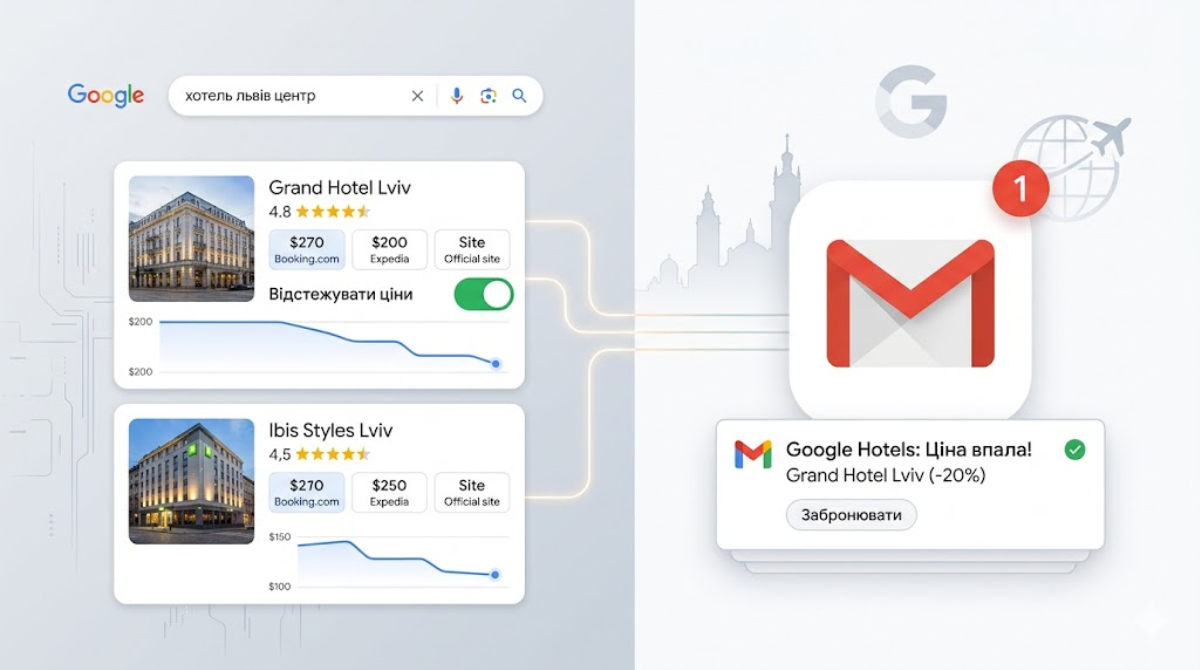
With the latest update, Google introduced precision tracking. Each hotel in Google’s database now has its own tracker. It works similarly to Google Flights: you select a specific hotel (for example, a beachfront Hilton or a boutique hotel in the city center), choose your dates, and enable the “Track prices” toggle.
From that moment, you’re free. There’s no need to refresh pages every morning or worry about missing a sudden 30% price drop due to a canceled booking.
Digital Memory: How Google Understands What You’re Looking For
One of the most important — and controversial — aspects of Google’s ecosystem is its ability to remember user behavior. While some see this as tracking, in the context of travel it becomes a major advantage.
Search as the Foundation of Recommendations
Every time you search on Google or browse in Maps, the system builds a temporary “traveler profile.” If you search for “best breakfasts in Lviv” or “hotels with a pool near the sea” multiple times, Google understands you’re planning a trip.
With the “Resume your journey” feature, when you open the hotels tab, Google already knows your preferences:
- budget. it won’t suggest luxury villas if you usually search for mid-range options;
- location. if you explored attractions in a specific area, hotels there will be prioritized;
- dates. Google automatically fills in dates you previously searched for or found in your Gmail flight confirmations.
This seamless integration allows the system to activate price tracking even if you forget about it. For example, you might receive a notification: “The price for a hotel you viewed yesterday has dropped by 15%.” That’s the power of a personalized ecosystem.
Get breaking news on WhatsApp
How Notifications Work: Why Emails Come from Google
It’s important to distinguish between hotel marketing emails and Google system notifications. When you enable tracking, you subscribe to analytics, not spam.
Google acts as an independent aggregator, collecting prices from multiple sources:
- Direct hotel links (Free Booking Links). Hotels provide their own prices via Google Hotel Center.
- Aggregators (Booking, Agoda, Expedia). All offers are compared on a single page.
- Historical data. Google tracks how much a room cost last week, last month, and the same time last year.
If the system detects a real price drop — not just artificial fluctuations — it sends a notification to your Gmail. You get a clear price history graph and a direct booking link. This helps you understand whether it’s truly the lowest price in the past 90 days or if it’s worth waiting.
Booking Psychology and Fighting Manipulation
The modern hotel booking market relies heavily on psychological pressure. Messages like “Only 1 room left!”, “15 people are viewing this hotel right now,” or “Prices may increase in 10 minutes” are classic scarcity tactics.
Google’s new Android features give control back to the user. Instead of reacting impulsively, you can make informed decisions. With access to historical price data, you can instantly recognize fake discounts.
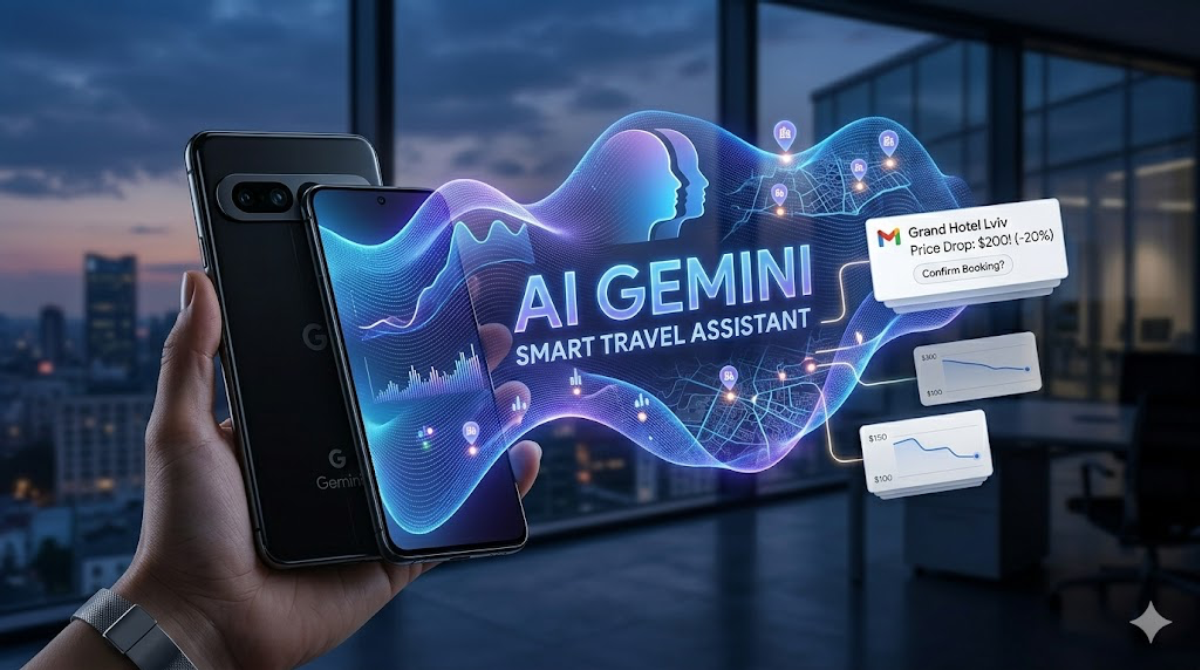
Additionally, integration with the Gemini AI assistant allows real-time analysis of thousands of reviews. You can ask: “Gemini, is this hotel really as quiet as reviews say, and should I wait for a discount next week?” Based on large-scale data, AI provides insights aligned with 2026 travel trends.
Technical Setup: How to Enable It on Android
Turning your smartphone into a money-saving tool doesn’t require third-party apps. Everything is already built into the system:
- Open Google or Chrome and search for a hotel.
- Settings. Go to the “Prices” section and select your travel dates.
- Activation. Enable the “Track prices” toggle and make sure you’re signed into your Google account.
- Management. You can view and manage tracked hotels anytime in the “Travel” section of your profile.
The Future of Travel: Google as Your Digital Assistant
The summer 2026 update is just part of Google’s broader strategy to simplify user experience. By combining data from Maps (where you go), Gmail (what you book), and Search (what you want), Google creates a powerful feedback loop.
For tech media and professionals, this marks the end of manual search. We are entering the era of predictive booking. Instead of searching for the best deal, the best deal finds you.
This update makes travel more accessible, transparent, and less stressful. In a world where every dollar and every minute counts, tools like this become essential for every Android user.
Tech Insights in Your Inbox
What About iPhone Users?
Although introduced as part of the Android ecosystem, iPhone users are not left out. Hotel price tracking is available in the Google app for iOS and in any mobile browser. The only requirement is an active Google account to receive price drop notifications.
Більше новин в телеграмі