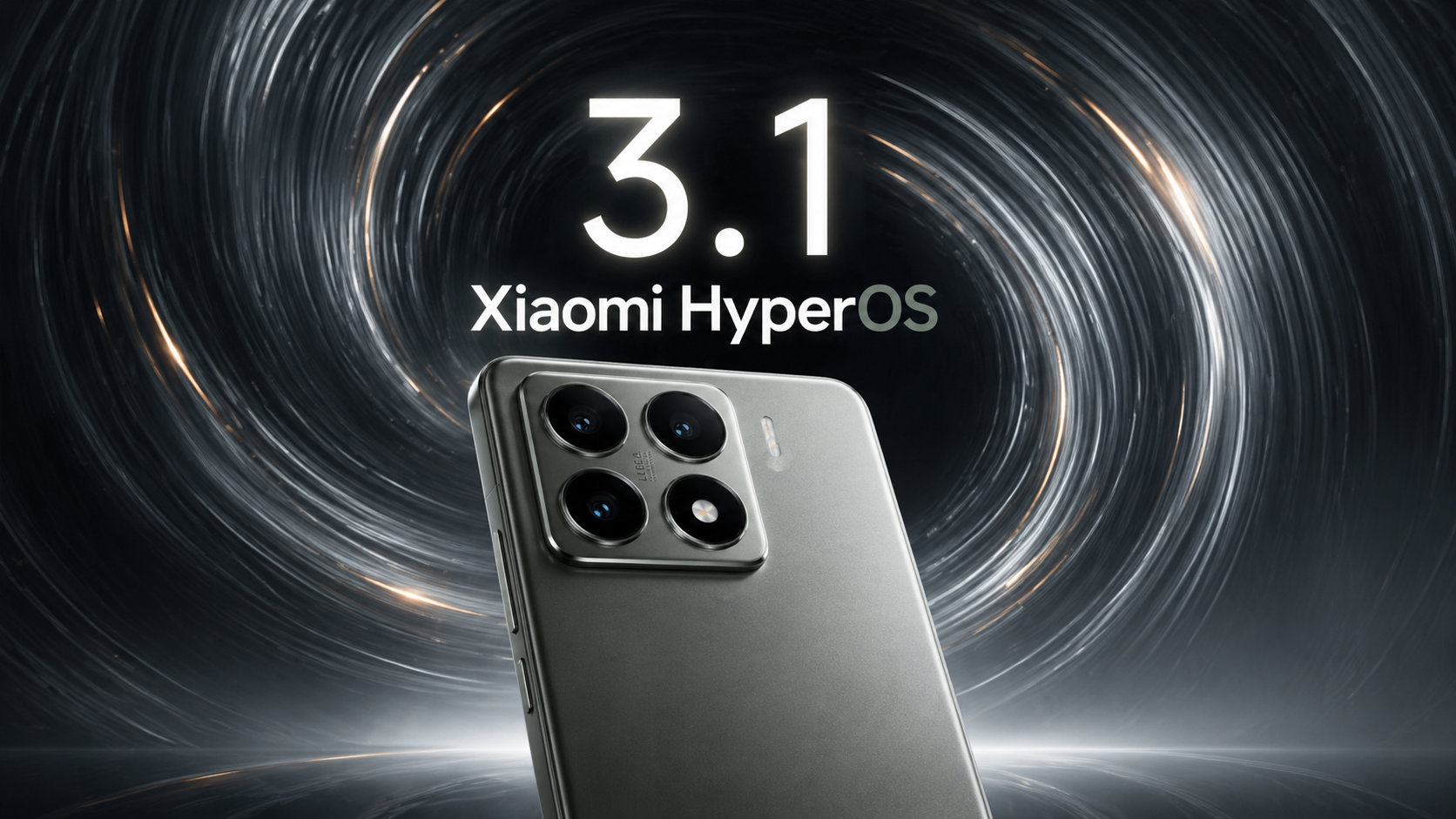
Xiaomi Expands HyperOS 3 Rollout to 25 Smartphones and Tablets
Xiaomi continues the global rollout of the stable version of its HyperOS 3 operating system. According to sources, at least 25 smartphone and tablet models under the Xiaomi, Redmi, and POCO brands are expected to receive the update by the end of 2026.
HyperOS 3 is a new user interface and system that combines Android improvements—most commonly based on Android 16, and in some cases Android 15—with Xiaomi’s proprietary solutions. The system includes more than a hundred changes in design, performance, tools, and overall functionality compared to the previous version.
What HyperOS 3 is and how it differs
HyperOS 3 represents the next major step in the development of Xiaomi’s software, built on Android 16 but featuring its own set of tools and functions. For many users, the key question is simple: what changes in everyday use once the update arrives.
In practical terms, HyperOS 3 aims to make the system feel cleaner, faster, and more consistent across apps and menus. Depending on the device, the update can arrive on Android 16 or Android 15, which affects the exact feature set you will see.
- updated interface — changes to the home screen layout, notification panel, on-screen elements, and menus;
- improved performance — optimization of system processes, faster app launch speeds, and smoother animations;
- new features and tools, including adaptive UI elements and other functions designed to make device interaction more convenient.
Xiaomi often positions HyperOS as a faster, smarter, and more energy-efficient platform compared to its previous software generation. What matters for users is that these changes are meant to be noticeable in daily navigation, multitasking, and overall system responsiveness.
However, the exact improvements depend on the model and region, because Xiaomi typically rolls out updates in waves and may limit certain features to newer hardware. That is why the device list and rollout timeline are as important as the feature headlines.
Which devices will receive the update
According to UNIAN and related sources, 25 models are set to receive HyperOS 3 by the end of 2026. The list includes flagship smartphones, mid-range models, and tablets, covering Xiaomi, Redmi, and POCO.
Some devices will receive the update based on Android 16, while others will be updated on Android 15, depending on technical specifications and support policies. In other words, “HyperOS 3” does not always mean the same Android base across the entire lineup.
- Xiaomi Pad 6 Max 14;
- Xiaomi Pad 6 Pro;
- Xiaomi 13T Pro;
- Redmi K60 Ultra and Redmi K60;
- Poco F5 Pro, Poco C75, Poco F6;
- Poco X6 Neo, Poco Pad M1, Poco M6 Pro 4G, Poco M7 4G;
- Redmi 15, Redmi 15 4G;
- Redmi Note 15, Redmi Pad Pro, and Redmi Pad 2 Pro/Pad 2;
- Redmi A4, Redmi Pad SE 4G, Redmi Note 13 Pro+, and Redmi Note 13 Pro 4G;
- Redmi 14C / Redmi A3 Pro.
This list complements an earlier announced update roadmap for several flagship models, such as Xiaomi 15 and the 15T series. Those devices reportedly began receiving HyperOS 3 based on Android 16 in 2025.
If you are tracking eligibility, the simplest approach is to match your exact model name and region to official support pages once Xiaomi publishes them. Unofficial lists can be useful for orientation, but they should not be treated as final until an OTA update is confirmed.
How the update rollout works
The HyperOS 3 update is being rolled out in stages and may depend on region, certification requirements, and the specifications of individual devices. This is standard for Xiaomi’s software releases, especially when multiple brands and regional variants are involved.
According to unofficial information, the approximate rollout schedule is split into waves, starting with flagships and high-volume models, then gradually expanding across the lineup. The practical implication is that two users with similar phones in different countries may receive the update weeks or months apart.
- October–November 2025: the first wave for flagship and popular models;
- December 2025–March 2026: broader distribution across various device lineups;
- by the end of 2026: the final wave for less common models and tablets.
This phased approach helps Xiaomi maintain rollout quality and reduce the risk of large-scale bugs across dozens of devices. It also gives the company time to address regional certification and carrier-related requirements that can slow down releases.
If you are waiting for HyperOS 3, your best indicator is the OTA notification itself, not early leak-based timelines. Xiaomi sometimes adjusts schedules based on stability, feedback, and production priorities.
Will all models receive support
Not every Xiaomi, Redmi, or POCO device will receive the HyperOS 3 update, especially among older and entry-level models. A common reason is that some devices reach the end of their official update lifecycle before the next major OS wave arrives.
For example, Redmi 12C and its international counterpart, Poco C55, have reportedly stopped receiving updates and security patches, which indicates their support lifecycle has ended. This is how Xiaomi typically signals that a model is no longer in the active update track.
- some older models may not meet the hardware requirements for newer Android bases;
- budget devices can exit the update cycle earlier than mid-range and flagship models;
- regional and carrier variants may have different timelines or limits.
For owners of compatible devices, HyperOS 3 can be a meaningful step forward, from faster system behavior to new features and longer software relevance. If you want to confirm whether your device will get the update, monitor official Xiaomi support pages and your phone’s OTA update screen.
With this update policy, Xiaomi aims to keep its modern lineup up to date, secure, and comfortable to use for several years after release, while gradually retiring models that have reached their support limit.
Більше новин в телеграмі