Project Atlas: Why Apple Abandoned the AR Display for Its First N50 Smart Glasses and Why It’s the Right Move
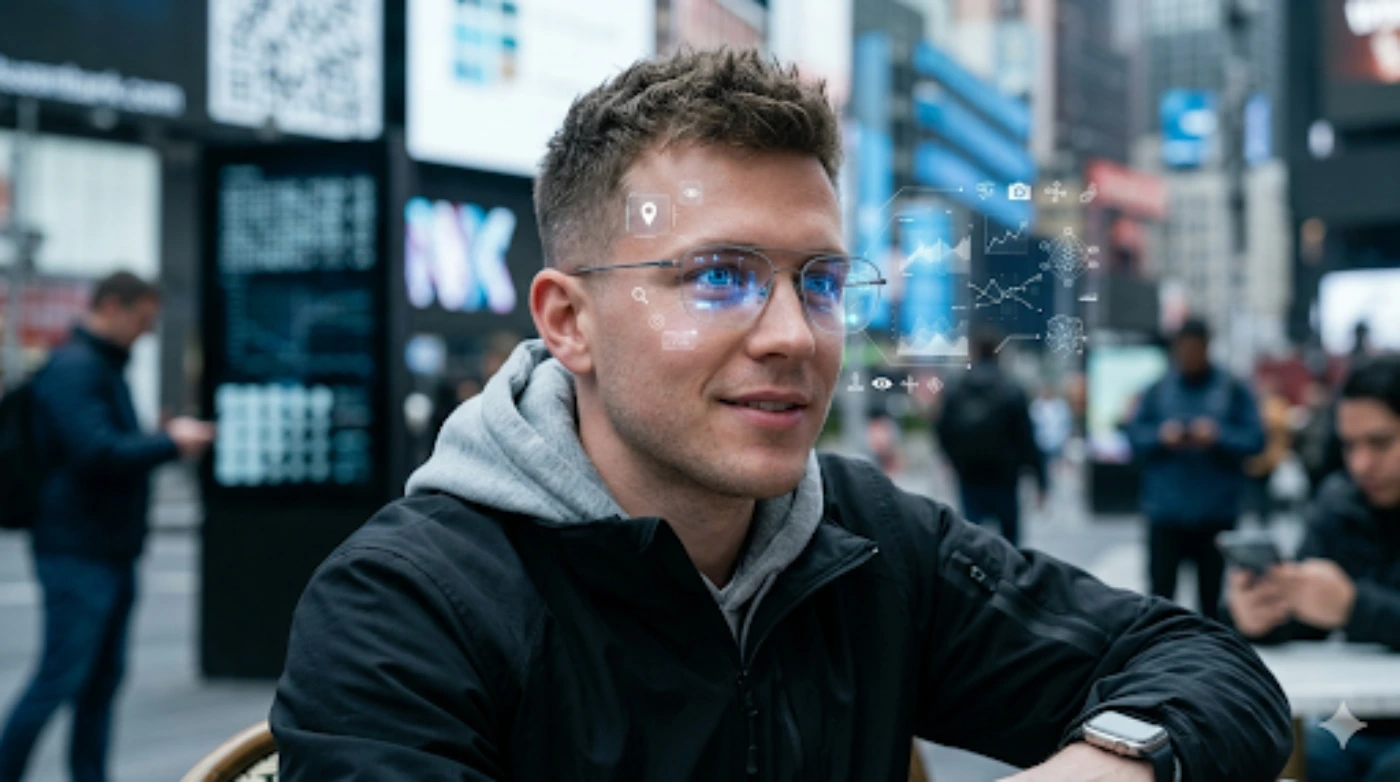
The main sensation of the development lies in the rejection of an integrated display or laser projectors in the first generation of the device. The lenses will remain completely transparent (or sun-protective). All interaction is built on the concept of an audio and visual interface driven by Apple Intelligence AI. This decision fundamentally changes the rules of the game for wearable gadgets, shifting the focus from technological redundancy to daily ergonomics.
Design and Architectural Challenges: Pros and Cons
Ecosystem and Pragmatism
The glasses will act as the “screen and ears” for the iPhone, where all heavy computing will take place. The absence of a display reduces power consumption drastically, allowing the batteries in the temples to hold a charge for up to 12–16 hours of mixed use while keeping the weight under 50 grams. The target price of $300–$500 hits the mass market of traditional optics perfectly, creating an ideal “entry ticket” into the ecosystem.
Risks and Delays
The release has slipped to late 2027 due to complex challenges with board miniaturization and dissipating heat from the camera. By that time, its main competitor, Meta, will have already released the third generation of its glasses, which are currently selling in millions of units. Furthermore, the display-less interface relies entirely on Siri — if Apple Intelligence fails to understand context perfectly and without delays, users will be disappointed.
Architectural Features: Technical Specifications
The main problem with modern smart glasses is heat dissipation and battery weight. Apple solved this by offloading the computing power. The frames will integrate an ultra-efficient SiP (System-in-Package) system, architecturally close to the Apple Watch processors (S-series). Its sole task is to collect raw data from sensors, manage audio, and encode the video stream from the cameras.
All heavy computing, generative AI models, and object recognition are offloaded to the user’s iPhone processor. Connection between the devices will be provided by a new-generation, energy-efficient Ultra-Wideband protocol, which guarantees minimal data transfer latency without overheating the glasses’ temples.
Below are the detailed technical specifications of the first-generation N50 device, sourced from the Foxconn component supply chain:
| Component / Function | Technical Specification According to Leaks |
|---|---|
| CPU | Custom energy-efficient SiP chip (analogous to Apple S-series), optimized for sensor operations. |
| Cameras | Dual ultra-wide-angle modules with low power consumption. Integrated physical recording LED indicator for the privacy of others. |
| Acoustic System | Directional micro-speakers with out-of-phase wave technology (like in AirPods 4). Sound is directed straight into the ear, minimizing external leakage. |
| Microphones | An array of 3 studio-quality directional microphones with intelligent wind and ambient noise cancellation. |
| Power and Autonomy | Two separate batteries split into both temples. Total capacity is designed for 12–16 hours of mixed operation. Charging via a proprietary case. |
Construction and Form Factor: Priority on Ergonomics
Apple abandoned futuristic glossy plastic in favor of classic premium materials from the traditional eyewear industry — high-quality cellulose acetate and lightweight titanium alloys for internal hinges. The device is designed to look like regular stylish glasses without drawing unnecessary attention on the street.
Currently, Cupertino is testing three key frame geometries to cover the maximum number of face types and style preferences of users:
| Frame Shape | Style Landmark | Target Audience and Features |
|---|---|---|
| Classic Rectangle | Ray-Ban Wayfarer | Massive acetate frame. Best suited for masking the thickness of the temples where boards and batteries are hidden. The basic mass-market option. |
| Thin Rectangle | Tim Cook’s Everyday Eyewear | Lightweight combined frame (titanium + plastic). Targeted for continuous wear in offices and indoors as classic prescription glasses. |
| Rounded Lenses | Panto Shape | Retro style with elegant lines. A more difficult engineering task, as it requires maximum miniaturization of the front cameras in the corners. |
Important! Apple does not plan to limit itself only to sunglasses. The glasses will have custom optical inserts for people with visual impairments. The company is developing a magnetic prescription lens attachment system, created in deep cooperation with the German optics giant Zeiss, repeating the experience of working on Vision Pro.
How Visual Intelligence Works Without a Screen
Since there is no display, the main interaction tool becomes contextual AI — Apple Intelligence, integrated with a significantly updated Siri voice model. The glasses see the same things as the user and stream the required information via voice in several scenarios:
• Spatial orientation and searching for items. The cameras scan the environment in the background. At the user’s request, the gadget can tell where the keys are in the room, or recognize the object the user is looking at (plant name, car model, text sign in another language with instant text-to-speech translation).
• Voice navigation. Instead of a map on a screen, the device uses pinpoint audio prompts utilizing Spatial Audio. The sound of a turn will subjectively feel like it’s coming precisely from the street you need to turn onto.
• Business Assistant. The facial recognition function (strictly adhering to local privacy protocols) will allow Siri to whisper a colleague’s name at a conference or read out a short summary of the last email from that contact in audio format.
UITech Media Forecast
The Vision Pro experience showed that the market is not ready for heavy $3500 headsets that isolate the user from the world. Instead, the success of the Meta and Ray-Ban collaboration proved the opposite: consumers want a familiar, lightweight, and relatively inexpensive accessory. By setting a target price range of $300–$500, Apple hits the mass segment precisely. They are not trying to replace a monitor or a TV. They are creating a new category of “invisible” companion.
Our forecast: Project Atlas is a future super-hit on the level of AirPods. Apple has an absolute advantage in the form of a monolithic ecosystem and the cult of its own brand, which will allow turning a technological gadget into an everyday style element that every iPhone owner will want to buy.
Більше новин в телеграмі