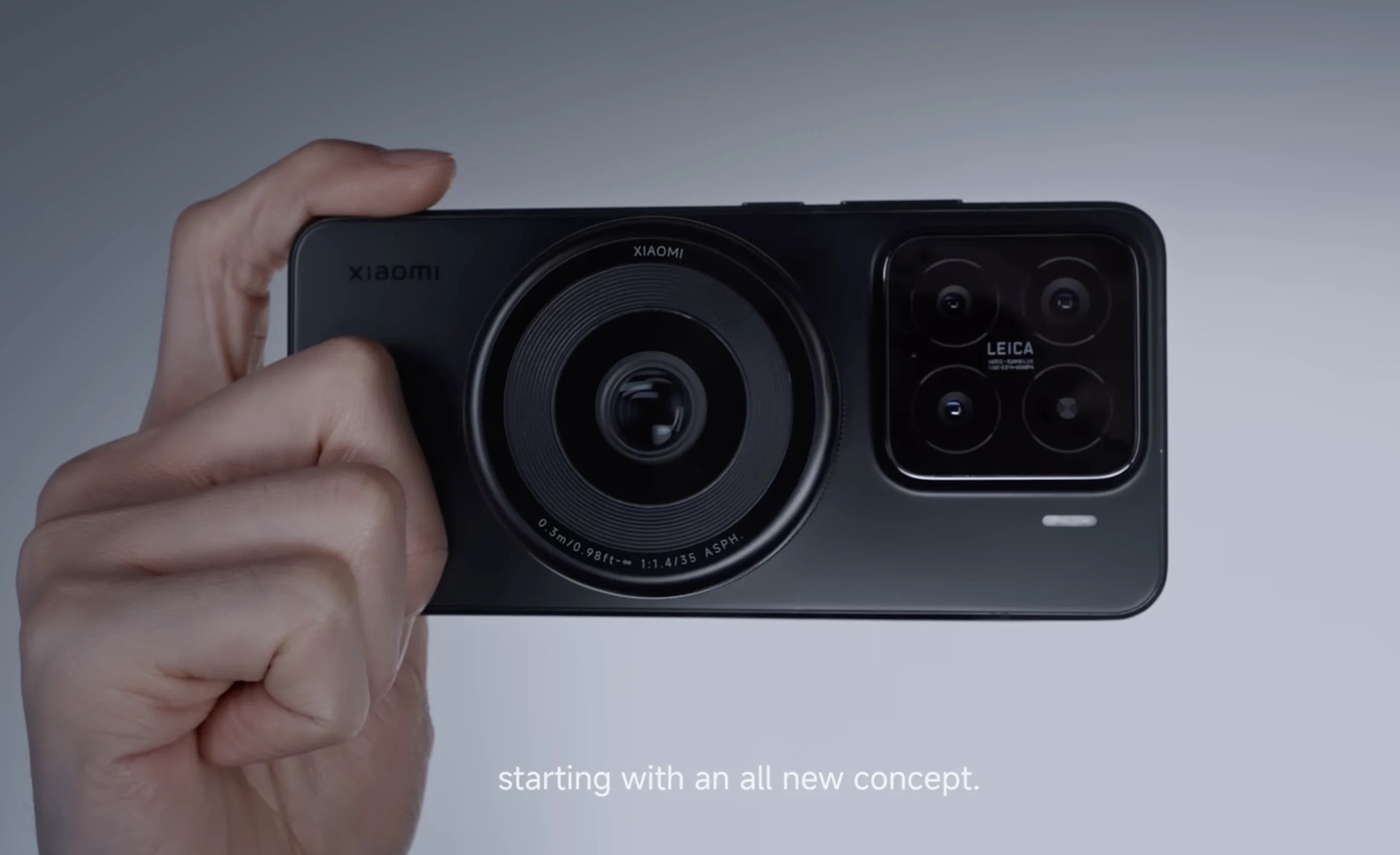
Xiaomi is preparing to move mobile photography beyond the physical limits of the smartphone body. After its debut at MWC 2025, the modular optical system no longer looks like a concept experiment and, according to industry insiders, is entering the production stage in 2026. The system is called Xiaomi Modular Optical System — a solution that allows a full-fledged camera module with a large sensor and dedicated optics to be attached to a smartphone, while all image processing remains handled by the phone itself.
What is Xiaomi Modular Optical System and how it works
Xiaomi Modular Optical System is an external camera module that connects to a smartphone magnetically and through physical contact pins. Unlike traditional camera accessories, the module does not include its own independent image processor and relies entirely on the smartphone’s hardware.
In this setup, the module captures the raw optical data, while the smartphone acts as the computational core, handling ISP processing, image algorithms, and the camera interface. The Xiaomi AISP (AI Image Signal Processor) inside the smartphone is optimized to recognize and calibrate this specific modular unit. Once attached, the device identifies the 35mm f/1.4 lens profile, allowing accurate depth-of-field calculation, color calibration, and optical correction in real time.
Key features of the system
- professional-grade optics using a large physical image sensor outside the smartphone body;
- LaserLink technology with direct data transmission without Wi-Fi or Bluetooth;
- power supplied directly from the smartphone via physical contact pins;
- full integration with the native camera application and Xiaomi ecosystem.
As a result, Xiaomi addresses one of the main limitations of mobile photography — the lack of space for large optics — while preserving the convenience and ecosystem users expect from a smartphone.
Technical characteristics of Xiaomi’s modular camera
According to leaks and reports from specialized media, the module uses a Micro Four Thirds image sensor. This is not simply a larger sensor compared to smartphone standards. The MFT format places Xiaomi closer to dedicated mirrorless systems and provides a clear optical advantage over the fixed 1-inch sensors used in current flagship devices.
The lens is fixed, without optical zoom, which suggests a deliberate focus on image quality rather than versatility. All image processing is performed on the smartphone using its own computing resources.
Expected specifications
- Micro Four Thirds image sensor with high resolution, reportedly up to 100 MP;
- 35 mm lens with a wide f/1.4 aperture;
- LaserLink optical data transmission channel with speeds up to 10 Gbps;
- no built-in battery to keep the module lightweight, approximately 100 grams.
Using a direct optical data link reduces latency compared to earlier external camera concepts. Final specifications will only be confirmed at the official launch.
How Xiaomi’s approach differs from previous solutions
The idea of external smartphone cameras is not new. Earlier attempts, including Sony’s QX series, were limited by Wi-Fi or Bluetooth transmission delays and weak system integration. Xiaomi takes a different approach by eliminating independent processing inside the module.
All shooting logic and post-processing remain on the smartphone, enabling the use of advanced computational photography algorithms and deeper system-level integration.
Main differences
- high-speed data transfer without reliance on Wi-Fi;
- full use of the smartphone’s ISP and neural processing units;
- a unified camera control interface with a physical focus ring;
- centralized power management using the phone’s battery.
This approach does not turn a smartphone into a professional camera in the traditional sense, but it significantly expands its capabilities in scenarios where sensor size and optics matter most.
Which smartphones will support Xiaomi’s modular camera
According to insiders, support for the Modular Optical System requires specific hardware preparation. This includes a magnetic mounting system and physical contact points for power and high-speed data transfer. Early compatibility is expected to be limited to next-generation flagship models.
Potential compatible devices
- Xiaomi Mix 5;
- Xiaomi 16 Ultra in a dedicated variant;
- a limited number of premium devices at launch;
- camera firmware-level support with AISP calibration.
Broad compatibility across multiple devices at launch appears unlikely. Xiaomi is expected to test demand within the premium segment first.
What this means for the mobile photography market
Xiaomi is not attempting to fully replace traditional cameras. Instead, it is creating an intermediate category between smartphones and mirrorless systems, aimed at content creators and enthusiasts who prioritize image quality while retaining smartphone connectivity.
This format may appeal to users who want better optics and a larger sensor without carrying a separate camera body. Xiaomi’s broader camera strategy is also reflected in upcoming devices such as the Xiaomi 17 Ultra.
Market impact
- increased pressure on entry-level compact and vlogging cameras;
- expanded use cases for professional mobile and street photography;
- emergence of a new category of high-end smartphone camera accessories;
- market success dependent on pricing and real-world usability in 2026.
The success of the Modular Optical System will depend not only on the technology itself but also on user willingness to adopt a modular shooting workflow. Market response should become clear throughout 2026.
Більше новин в телеграмі