For me, CES 2026 is all about anticipation. I like watching how the future takes shape and how competition pushes companies to search for new approaches and build technologies that didn’t exist before.
I see the show as a place where it becomes clearer what will actually reach regular people and turn into something used in everyday life.
I’m interested in products that can be genuinely useful. Not necessarily right away, and not necessarily for everyone, but the kind of devices where you can see the direction.
Something that, over time, can simplify daily routines, make tech easier to live with, or simply make it more understandable. That’s why I follow CES: to see how the next “normal” slowly comes together.
TVs
What started at last year’s CES, when Hisense showed its first RGB Mini LED TV and then shipped it officially this summer, could easily get a sequel at CES 2026.
It feels like many brands will want to show their own RGB LED-based approaches this year. Samsung and LG have already signaled their plans: Samsung is preparing a 2026 Micro RGB LED lineup with sizes from 55 to 100 inches, while LG plans to introduce its first Micro RGB evo models in three sizes: 75, 86, and 100 inches.
Last fall, TCL announced two RGB LED TVs for the Chinese market, and it’s logical to expect similar news for the US and Europe at CES.
There’s also hope that Hisense will expand its UX line and add smaller screen sizes. Personally, I really want to see a 55-inch option, because that’s the size I’m realistically considering for home.
If the price is reasonable, there’s a good chance CES 2026 will be the point where I finally decide on my next TV.
The big question is timing and cost. In 2025, the 115-inch Samsung Micro RGB LED and the 116-inch Hisense RGB Mini LED were priced at around $30,000, while Hisense listed its 100-inch model at $19,999.
Over the past year, RGB LED tech has clearly moved forward, and competition between brands has intensified.
I want to understand how close these TVs will get to more realistic, mainstream pricing in 2026.
Smart home
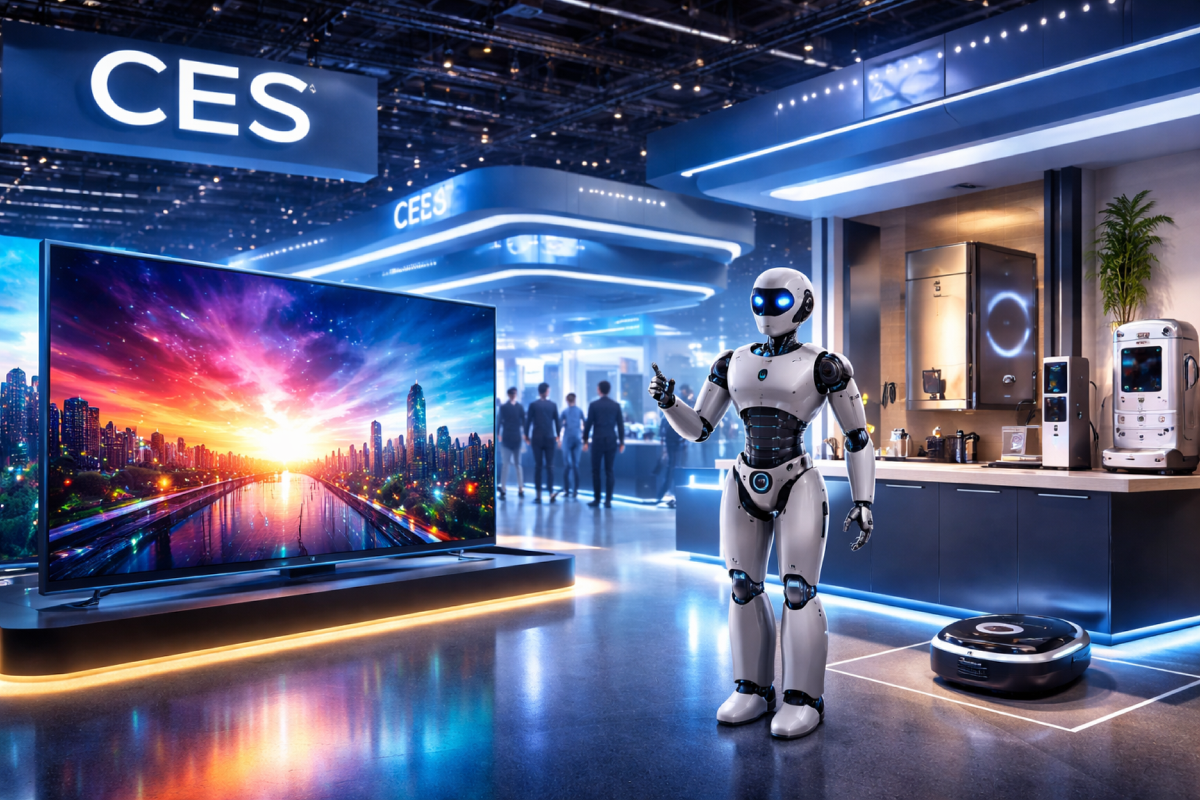
Smart home at CES 2026 will likely revolve around robots, locks, and AI. We’ll probably see a lot of robots, from more capable vacuums, pool cleaners, and robotic mowers to humanoid concepts with arms, legs, and more complex behavior logic.
Home robotics is slowly stopping being “exotic” and starting to move toward practical, everyday use.
At the same time, it’s unlikely that robots will fully take over household chores anytime soon.
This is more about gradually getting used to robotic helpers. Computer vision is a big part of that shift: devices navigate spaces better, recognize objects more reliably, and react more appropriately to what’s happening around them.
CES 2026 should show how these capabilities translate into normal, real-life scenarios.
AI is also changing home surveillance in a noticeable way. Cameras are increasingly becoming part of home automation, not just devices that record video.
The focus is on more meaningful analysis and added context that used to be missing.
Matter support for cameras looks like an important step, and CES is a likely place for new compatibility announcements, even if ecosystems are still evolving more slowly than many people would like.
Another clear segment is smart locks. Despite delays around the Aliro standard, smart locks remain one of the most straightforward and in-demand smart home products.
They’re an easy entry point into automation and a key component of a more complete system. At CES 2026, we can expect new models with palm unlocking, face recognition, and UWB support, along with calmer, more familiar designs that don’t look overly performative.
In everyday life, what’s interesting about AI at CES 2026 isn’t AI as a buzzword, but what it actually does. In TVs, that’s not “smart recommendations”, it’s solid image processing: upscaling older content without smear, automatic brightness and color correction based on room lighting, and proper HDR handling without constant trips into settings.
Ideally, it looks like this: you press play, and the TV adapts to the conditions you’re watching in.
In smart homes, AI is increasingly used to understand what’s happening, not just respond to a single command.
Cameras can tell a person from a pet and understand that it’s not just motion, it’s a specific event, like someone approaching the door or a child arriving home. The same applies to security systems: fewer false alerts and more useful scenarios that don’t require constant manual control.
In appliances, AI shows up in small details. Washing machines choose better programs based on the load type, robot vacuums map apartments more accurately and stop getting stuck in the same places.
Climate devices respond more sensibly to human presence instead of simply holding a target temperature. It’s not “wow features”, but these are the changes that make tech feel less intrusive.
The main question remains: which of these ideas will work every day, not just in a demo.
Many AI features still look great on stage but rarely become habits. That’s why CES 2026 will be most interesting in products where AI doesn’t demand attention and doesn’t force people to learn new behavior just to benefit from it.
Those products will show what practical, everyday AI will really look like in the real world, not on slides.
Subscribe to us on Telegram to follow all the new releases we’ll be tracking. You’ll be able to choose what’s most relevant to you and read the full story.
Більше новин в телеграмі