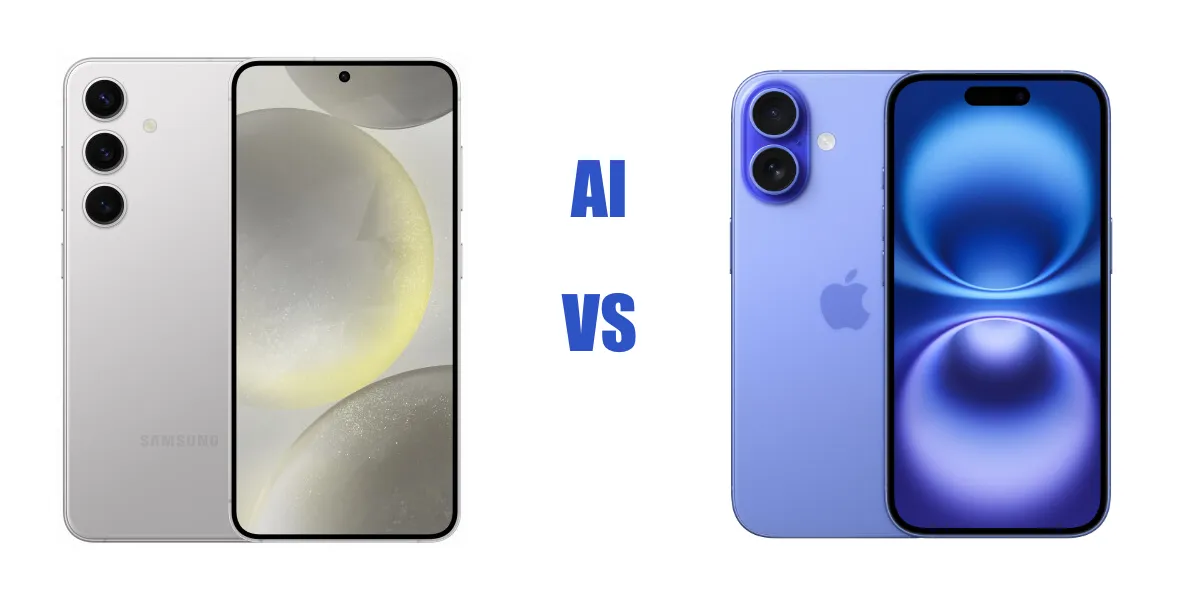
Artificial intelligence in smartphones has become a major topic in recent years. Apple and Samsung are both integrating AI into their devices, but is there a real difference? Does Samsung truly offer unique AI features, or is Apple falling behind? Let’s break it down.
Samsung: More Features or Just a Different Approach?
Samsung aggressively markets its AI capabilities as revolutionary. Some of its features are indeed impressive:
- AI-powered browser – analyzes web pages, summarizes articles, and translates content in real time.
- Live text translation – works surprisingly well, making it useful for travel.
- Automatic music recognition – identifies tracks even from short, lyric-free snippets.
- Smart note-taking – AI extracts key points from text or conversations and adds them to notes.
However, there are limitations. For example, Samsung’s AI can’t independently generate a list of nearby restaurants without Google’s help. This raises a key question: how autonomous is it?
Apple: Fewer Claims, But No Fewer Capabilities
Apple doesn’t aggressively market AI, but that doesn’t mean it lacks features:
- Built-in GPT – Apple has integrated AI into its ecosystem, enabling users to extract key information from YouTube videos and summarize it.
- Sticker generation – a feature found in both Samsung and Apple devices.
- Best Face feature – available on Samsung, absent on Apple. But how many people actually use it?
- Video editing on iPhone – worth checking how much Apple has expanded its AI-powered video tools.
- Safari with AI enhancements – Apple’s browser offers a set of useful AI-driven tools:
- Ad blocking without additional extensions.
- Real-time webpage translation.
- Article summarization – get key takeaways without reading the entire text.
These features make Safari’s AI more powerful than Samsung’s browser.
Does Samsung Offer Anything Truly Unique?
Fact: Google Gemini AI can be installed on iPhone. This means the same AI-powered features that Samsung presents as exclusive can also be accessed on iOS.
Customization and Samsung’s “Revolution”
Samsung often claims groundbreaking AI innovations, but are they truly unique? For example:
- Lock screen customization – first introduced by Apple, later adopted by Samsung.
- AI-powered photo and video enhancements – many of these features have existed in Apple’s ecosystem but weren’t labeled as revolutionary.
How many Samsung smartphones actually support full-fledged AI? The number is still relatively small. Additionally, Samsung’s AI tracks nearly all user activities, raising concerns about privacy.
Is AI Becoming Too Intrusive?
One unsettling aspect: Samsung has started suggesting where to go and what to eat, even when users haven’t asked for recommendations. This raises concerns—do we really want AI to be this deeply integrated into our daily lives?
Conclusion
Both Apple and Samsung are investing heavily in AI, but:
- Samsung emphasizes a wide range of AI features, which don’t always function independently.
- Apple avoids making bold AI claims but integrates powerful AI tools that seamlessly work within iOS.
Which is the better choice? That depends on personal preference. But is Samsung’s AI truly better than Apple’s? That remains up for debate.
Apple’s Major iOS 19 Update: What to Expect?
Xiaomi 16: What Will Change and Why It May Disappoint Compact Smartphone Fans?
Apple’s Budget-Friendly Innovations Could Disrupt the Market
Gemini Just Got One of ChatGPT’s Best Features – Now It’s Worth Trying
Більше новин в телеграмі