
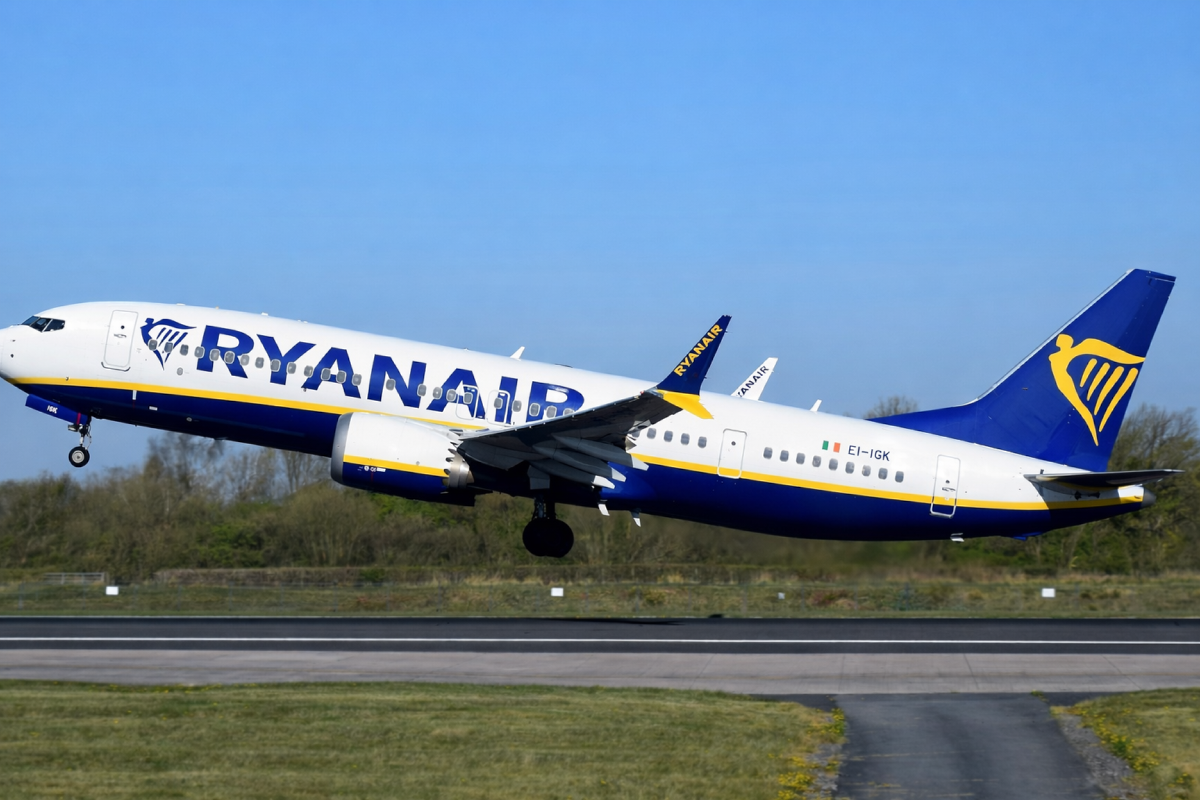
One of Europe’s largest low-cost airlines has found itself at the center of a major antitrust scandal. Italy has fined Ryanair more than €255 million, accusing the airline of systematically blocking travel agencies and abusing its market position. The case is one of the largest aviation competition decisions in Europe in recent years.
€255.8 million fine: why Italy penalized Ryanair
Italy’s antitrust authority announced on Tuesday that it had imposed a fine on Ryanair, citing abuse of a dominant market position. According to the regulator, the airline controls between 38 and 40 percent of passenger flights to and from Italy.
AGCM concluded that over a two-year period Ryanair implemented a consistent and targeted strategy aimed at restricting the sale of its airline tickets through travel agencies, including online platforms.
- the investigation covers the period from April 2023 to April 2025;
- the regulator described a “carefully designed strategy”;
- the objective was to make ticket sales via agencies difficult or impossible;
- the restrictions affected both online and traditional travel agencies;
- the result was a narrowing of competition in the market.
According to AGCM, these practices directly affected consumers’ access to alternative sales channels and reduced the ability to combine Ryanair flights with other travel services.
How Ryanair restricted travel agencies
During the investigation, the regulator outlined a multi-layered system of restrictions gradually introduced by Ryanair. The first measures appeared in mid-2023 and were subsequently strengthened.
AGCM said the airline’s actions were not isolated or technical, but formed a system that complicated the normal operation of travel agencies in the aviation market.
- the introduction of identity verification procedures for passengers booking through agencies;
- blocking payment methods commonly used by online travel agencies;
- mass deletion of accounts linked to agency sales;
- the signing of partnership agreements with restrictive conditions in early 2024;
- a ban on combining Ryanair flights with other carriers or travel services.
The regulator stated that these practices undermined consumers’ ability to purchase Ryanair tickets as part of bundled offers and effectively reduced choice in the market.
Ryanair’s position: the airline prepares an appeal
Ryanair said it will immediately appeal the decision of the Italian antitrust authority. Chief executive Michael O’Leary described the fine as “bizarre” and “legally unfounded.”
The airline referred to a ruling by the Milan Court of Appeal in January 2024, which Ryanair says confirmed the legality of its direct sales model as beneficial for consumers and supportive of lower fares.
- Ryanair considers the AGCM decision a violation of judicial precedent;
- the company argues that the regulator incorrectly defined the market;
- the calculation of Ryanair’s market share is being challenged;
- the direct sales model is presented as consumer-friendly;
- the appeal will be filed in accordance with legal procedures.
The €255.8 million fine remains in force pending the outcome of the legal proceedings and could serve as a benchmark for other cases in Europe.
Broader context: Europe tightens oversight of the aviation market
The Italian regulator’s decision comes amid increased scrutiny by European authorities of airline ticket distribution practices. Similar investigations are already underway or being prepared involving other carriers.
Regulators are increasingly viewing control over digital sales channels as a competition issue rather than merely an internal business model.
- the growing role of online sales channels;
- conflicts between platforms and travel agencies;
- a reassessment of dominant market positions;
- stronger antitrust oversight in the EU;
- potential impact on airlines’ pricing policies.
The Ryanair case may become a landmark for the European aviation market and could reshape the rules governing relations between airlines and travel agencies.
The €255.8 million fine against Ryanair is not just a local decision by an Italian regulator, but a signal to the entire European digital airline ticket market. The focus has shifted from fares to control over access to customers.
The further development of the case will depend on the outcome of the appeal, but it already shows that regulators are prepared to respond firmly to practices they believe restrict competition.
Більше новин в телеграмі