LG prepares a breakthrough for CES 2026: 5K monitors with built-in AI change the rules of the game
The monitor market is on the verge of a major shift. While graphics cards continue to rise in price, consume more power, and remain in short supply, LG is preparing an alternative that could fundamentally change the approach to image quality. In early 2026, the company plans to showcase a new UltraGear Evo lineup — 5K monitors with built-in artificial intelligence that takes image processing into its own hands.
The presentation is expected at CES 2026, with pricing and sales launch to be announced as early as January. However, current leaks already make one thing clear: this is not a minor cosmetic update, but an attempt to rethink how graphics processing works.
5K without stressing the graphics card — how it works
The core idea behind UltraGear Evo lies in its built-in AI processor. It analyzes the image in real time and enhances sharpness, detail, and micro-contrast to a level close to 5K, without requiring the graphics card to render native 5K output.
In practice, LG shifts complex image processing from the GPU to the monitor itself. This is especially important for gamers, designers, and anyone working with large displays who is not ready to invest thousands of dollars in a top-tier graphics card. For the user, it is simple: better image quality without a loss of performance.
Three models, three usage scenarios
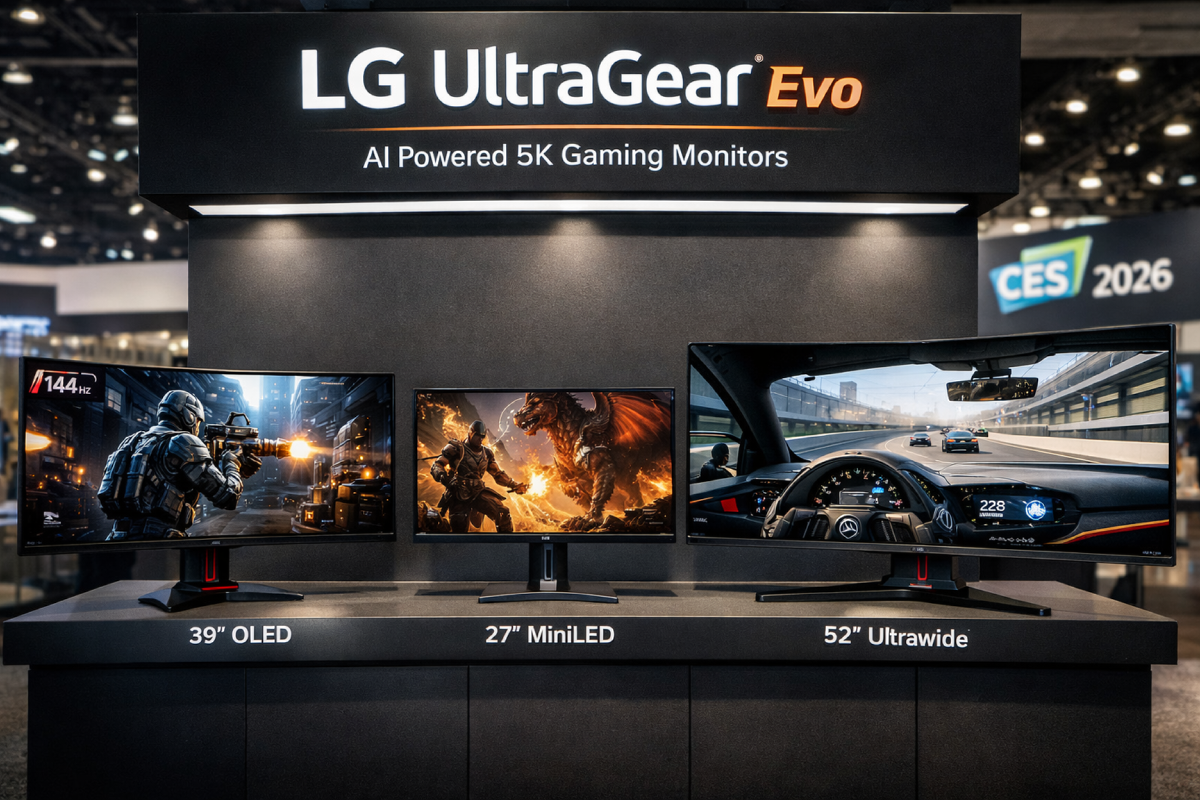
According to preliminary information, the UltraGear Evo lineup will include three different models, each with its own focus.
The first is a 39-inch OLED monitor. It will feature a mode switch between maximum image quality and a higher refresh rate for esports. This approach allows a single display to replace both a work monitor and a gaming monitor without compromises.
The second model is a 27-inch MiniLED monitor with extremely high brightness. It is designed for those working with HDR, video, or graphics who want maximum brightness and contrast without switching to OLED. MiniLED combined with AI processing could become a new standard in the professional segment.
The third is a flagship 52-inch ultrawide model. It effectively replaces two monitors, allowing users to work with multiple windows, timelines, or tables without bezels or breaks. This format targets traders, video editors, developers, and simulation gaming enthusiasts.
Why this matters right now
LG’s approach looks like a logical response to current market conditions. Powerful graphics cards have become expensive, power consumption is rising, and users are increasingly seeking a balance between image quality and the real capabilities of their PCs. Built-in AI inside the monitor helps offload part of the processing and deliver tangible improvements without upgrading the entire system.
Additionally, LG already has extensive experience with artificial intelligence in its TVs. Now, these technologies are naturally moving into the monitor segment, where competition continues to intensify.
When to expect it and how much it will cost
Official pricing has not been announced yet, but sources agree that UltraGear Evo will be positioned as a premium lineup. The announcement of prices and the start date for sales is expected in January 2026, right after CES. The actual launch is likely to happen in the second half of the year.
What this means for users
If the information is confirmed, LG could set a new trend for the entire industry. The monitor stops being a “passive screen” and becomes an active part of image processing. For users, this could mean lower upgrade costs and more freedom when choosing a work or gaming setup.
CES 2026 promises to be the place where we will see whether the market is ready for this approach. But one thing is already clear: LG is preparing one of the loudest announcements of the year in the world of displays.
Більше новин в телеграмі