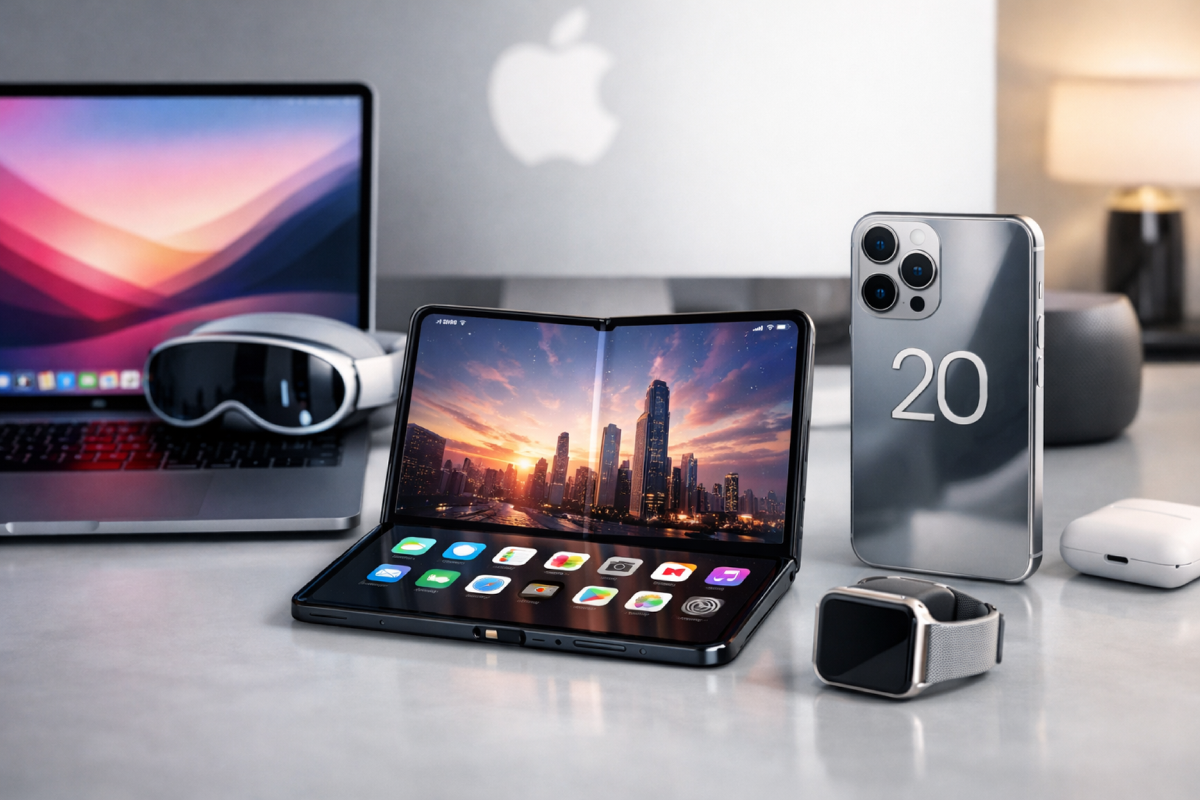
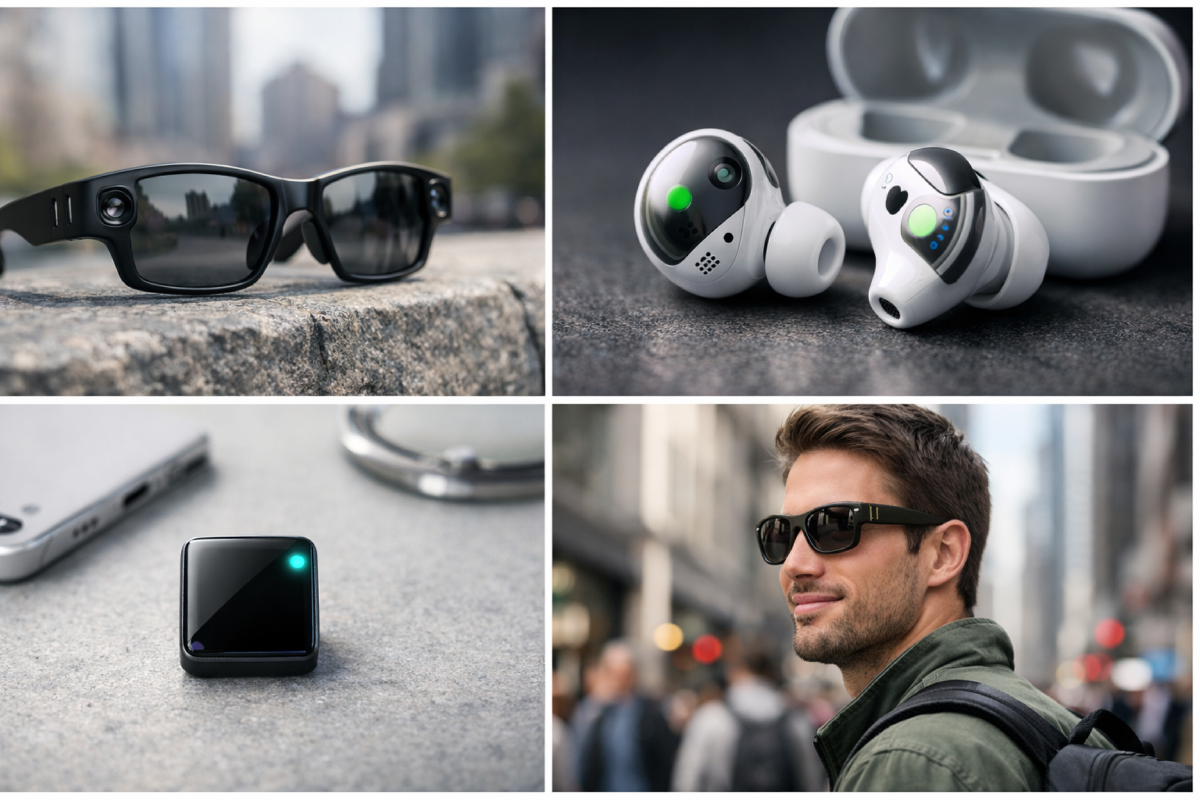
Imagine a world where the person standing next to you might be recording — without holding a phone. Apple’s rumored AI glasses, camera-equipped AirPods, and next-gen wearables could redefine assistive technology and everyday computing. But they also raise a harder question: are we ready for devices that can constantly see and interpret the world around us?
Is Reportedly Building: AI Smart Glasses, Vision-Enabled AirPods, and New Wearables
According to reports covered by TechRadar, Apple is exploring AI-powered smart glasses, upgraded AirPods with advanced sensors, and potentially a new wearable device category. The focus is not just on hardware, but on real-time AI processing tightly integrated with the iPhone ecosystem.
This would not be just another accessory launch. It would represent a shift toward ambient computing — devices that are always with you, always collecting contextual data, and capable of interpreting visual and environmental information on the fly. There are also indications that Apple may rely on its own camera and sensor technology rather than partnering with major optics brands.
Potential development directions include:
- ai smart glasses with built-in cameras and real-time object recognition;
- next-generation airpods with biometric tracking;
- wearable devices powered by on-device ai assistants;
- deep integration with iphone for data processing;
- accessibility features for people with hearing or vision impairments.
If implemented this way, Apple would control the full stack — from sensor hardware to AI algorithms. For investors and tech enthusiasts, that’s strategic vertical integration. For regulators and privacy advocates, it’s a new layer of scrutiny.
AirPods That Measure Heart Rate — and Possibly “See”
Apple has already expanded AirPods beyond simple audio playback. Health tracking and biometric monitoring are becoming core pillars of the wearable ecosystem. Heart rate sensing through the ear canal is technically plausible and already being explored in the industry.
The more controversial idea is AirPods equipped with environmental awareness through embedded cameras or spatial sensors. Even if the camera were low-resolution or limited to contextual scanning, it could feed data to an iPhone for object recognition, text translation, or spatial guidance.
Possible capabilities could include:
- heart rate monitoring via in-ear sensors;
- head movement and spatial orientation tracking;
- object and text recognition through miniaturized cameras;
- real-time translation and contextual assistance;
- audio descriptions for visually impaired users.
For accessibility, this could be transformative. Real-time object recognition and environmental narration could dramatically improve independence for people with limited vision. But once visual data capture becomes mainstream in earbuds, public perception changes fast.
The Legal Question: Are AI Glasses With Cameras Even Allowed?
Smart glasses with built-in cameras are not new. The industry has seen previous attempts, some of which struggled due to privacy backlash rather than technical failure. The difference now is AI — automated interpretation of what’s being recorded.
In the United States and Europe, the legality of recording in public spaces varies by jurisdiction. In many states and countries, filming in public is allowed, but covert recording or biometric data processing can trigger legal complications, especially under regulations like GDPR in the EU.
Key risk factors include:
- recording individuals without clear consent;
- facial recognition in real time;
- storage of biometric data in cloud services;
- cybersecurity vulnerabilities and data breaches;
- misuse for stalking or surveillance.
For a company like Apple, privacy positioning will be critical. Clear visual indicators of recording, strong on-device processing, and minimal cloud dependency could reduce backlash. Without those safeguards, regulatory pushback would be inevitable.
Assistive Breakthrough or Social Risk?
There is a strong case for AI glasses and sensor-enhanced AirPods in assistive technology. Real-time scene description, obstacle detection, and environmental awareness tools could empower millions of people with visual or hearing challenges.
At the same time, widespread adoption changes social norms. If cameras are embedded in everyday wearables, the boundary between private and public interaction becomes less clear. People may not know when they are being captured, analyzed, or streamed.
Likely usage scenarios include:
- visual assistance for low-vision users;
- instant translation of text and speech;
- hands-free content creation;
- contextual navigation support;
- potential misuse for discreet surveillance.
Technology itself is neutral. The framework around it determines its impact. If data processing stays local and transparent, trust may grow. If monetization or data aggregation expands, public resistance could follow.
Could This Define Apple’s Next Era?
Apple historically enters categories late but reshapes them when it does. If AI glasses and camera-enabled AirPods move beyond prototype stage, the company would be signaling a transition from smartphone-centric computing to always-on wearable AI.
That shift would not just change product strategy. It would alter how users interact with information — moving from screens in hands to devices on faces and in ears. It would also force lawmakers, developers, and consumers to renegotiate the rules of privacy in everyday life.
Technologically, this evolution feels inevitable. Socially, it remains unresolved. The success of such devices will depend not only on innovation, but on how carefully Apple balances capability with control.
Більше новин в телеграмі


More interesting articles
Більше новин в телеграмі