As of 2026, the US mobile market continues to be dominated by three national infrastructure owners — commonly referred to as “The Big Three” — along with numerous MVNOs (Mobile Virtual Network Operators) that lease access to their networks. While pricing remains an important factor, real-world performance depends heavily on regional coverage, 5G spectrum deployment, hotspot limits, and bundled services.
Below is a structured and detailed overview of the most popular carriers in the United States, including subscriber numbers, pricing comparisons, and regional network strengths.
1. The Big Three National Carriers
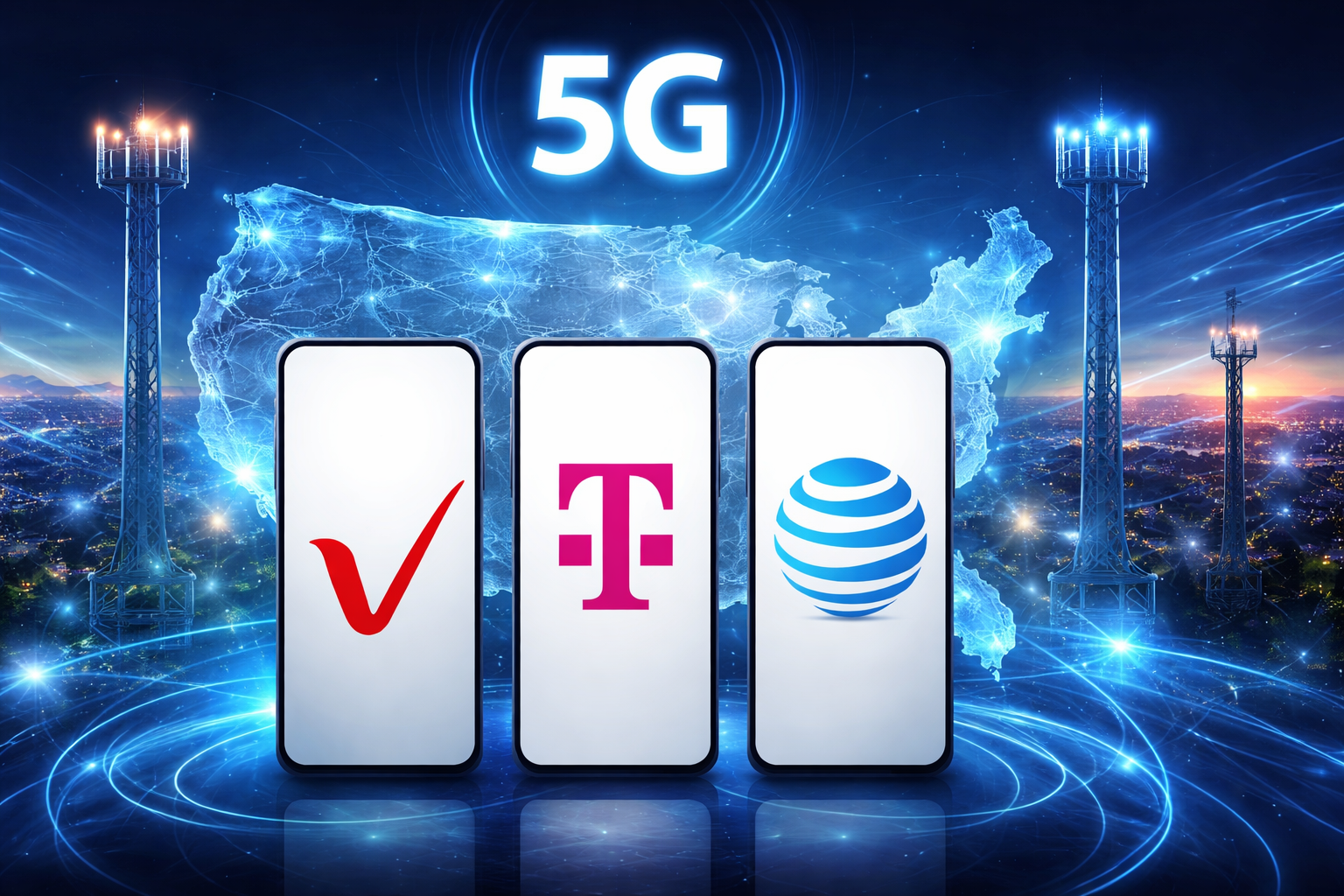
The Big Three control nationwide infrastructure, spectrum assets, and the majority of subscribers. They operate their own 5G networks and provide both consumer and enterprise services.
| Carrier | Approx. Subscriber Base | Core Strength |
|---|---|---|
| Verizon | ~146 million | Leader in reliability and rural coverage |
| T-Mobile | ~142 million | Fastest 5G and strong price-to-performance ratio |
| AT&T | ~120 million | Stable network, strong business presence |
Verizon is widely considered the most dependable carrier in rural America and along highways. Its Ultra Wideband 5G network delivers strong performance in metro areas, while low-band spectrum ensures broad coverage outside cities. In 2026, Verizon has significantly expanded its 5G C-band footprint to semi-rural areas.
T-Mobile leads in mid-band 5G speeds in many major cities. It has positioned itself aggressively in terms of value and bundled services, recently introducing satellite-to-cellular capabilities for emergency messaging in “dead zones.”
AT&T remains a stable and consistent choice, particularly strong among enterprise customers and in southern states. Their network is noted for high reliability during peak congestion due to their FirstNet infrastructure.
2. Popular MVNOs (Mobile Virtual Network Operators)
MVNOs lease network access from the Big Three but offer lower monthly prices. They are ideal for users who want cost savings without needing premium priority access during peak congestion.
- Mint Mobile (T-Mobile network) — Popular for low pricing, typically $15–30 per month when prepaid. Now owned by T-Mobile but maintaining its separate budget identity.
- Visible (Verizon network) — Offers truly unlimited data and hotspot on Verizon’s network at highly competitive flat rates ($25-45).
- Google Fi Wireless (T-Mobile network) — Flexible billing and industry-leading international roaming integration, making it the top choice for frequent travelers.
MVNOs generally work best in urban areas, where network capacity is stronger and congestion management is less noticeable for everyday users.
3. Unlimited Plan Comparison (2026 Pricing)
The following table compares flagship unlimited plans from each major carrier. Prices reflect approximate monthly cost for one line.
| Plan / Carrier | Verizon (Unlimited Ultimate) | T-Mobile (Better Value / Go5G Plus) | AT&T (Unlimited Premium PL) |
|---|---|---|---|
| Price | ~$90 | ~$90 | ~$85-90 |
| 5G Data | Unlimited (Ultra Wideband) | Unlimited (Highest priority) | Unlimited (No deprioritization threshold) |
| Hotspot | 60 GB | 250 GB (Better Value Plan) | 60 GB |
| Perks | “MyPlan” custom perks ($10/ea for Disney+, Netflix, etc.) | Apple TV+, Netflix, & Hulu included | Free roaming in 20+ Latin American countries |
Family plans significantly reduce the effective cost per line. For example, four-line plans in 2026 may lower the per-line cost to approximately $25–45 depending on the carrier, multi-line discounts, and AutoPay promotions.
4. Network Quality by Region
Carrier performance in the United States is highly regional. The best choice often depends more on location than on pricing.
West & East Coast (New York, Los Angeles, San Francisco, Seattle)
Leader: T-Mobile
In dense urban areas, T-Mobile’s mid-band 5G (Ultra Capacity) delivers some of the fastest average speeds in the country, often exceeding 600 Mbps. Verizon also performs well with mmWave/Ultra Wideband, although performance may fluctuate in very dense high-rise districts.
Midwest & Rural States (Wyoming, Montana, Kansas)
Leader: Verizon
Verizon remains the gold standard for rural reliability. In areas where T-Mobile may lose signal, Verizon often continues to provide service via their robust low-band LTE and 5G network. AT&T also maintains strong and stable central-state coverage.
Southern States (Texas, Florida, Georgia)
Leader: AT&T
AT&T traditionally maintains a strong infrastructure footprint in the South and near the Mexican border. They are often cited as the most consistent provider for suburban and semi-rural coverage in these regions.
Final Recommendation
There is no single best carrier nationwide in 2026. The right choice depends on where you live, how much data you use, and whether you travel frequently.
- For major cities: T-Mobile or Mint Mobile provide the best 5G speeds and overall value.
- For road trips and rural travel: Verizon or Visible offer the most reliable coverage maps.
- For families: All three major carriers offer significant discounts on multi-line plans, often making premium service cheaper than budget MVNOs.
Before choosing a carrier, always verify coverage maps for your specific city or state and compare hotspot limits and included streaming services. Coverage quality in the US can vary dramatically even within the same state.
More interesting articles
Більше новин в телеграмі