GoPro Mission 1: once again a “Lexus” in the world of cameras
For me, GoPro is like Lexus among cars. It is not just a gadget, but a feeling of maximum performance and comfort. Buying such a camera now is like getting an iPhone 17 Pro Max in the top configuration in the first days of sales. We have been waiting for this release with anticipation, and this update is the most powerful in the last two decades.
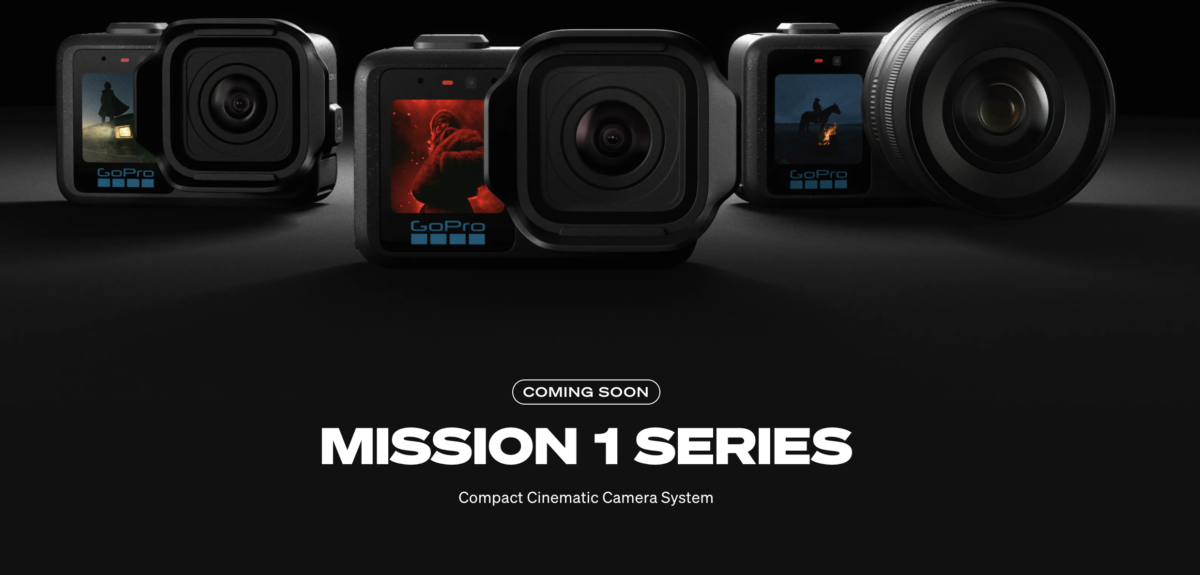
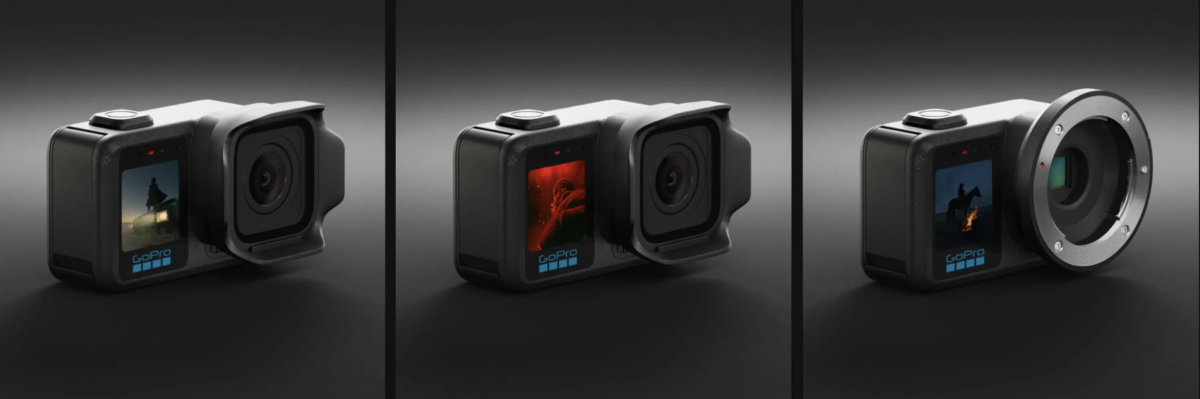
The main change: GoPro Mission 1 Pro ILS has received an interchangeable lens. And not just a lens, but professional optics in a camera the size of a matchbox. The lineup consists of three cameras — the base Mission 1, the flagship Mission 1 Pro, and Mission 1 Pro ILS. All models received an identical sensor base, however, the Pro version supports a higher frame rate in 8K resolution.
1-inch sensor and GP3 processor
At the core of the new lineup is a 1-inch 50 MP sensor. For compact cameras, this is a critical threshold that changes the way light is handled. The increased sensor area allows shooting in low-light conditions without the characteristic digital noise that was previously the main compromise of action cameras.
A new GP3 processor is responsible for data processing. Its power is enough to support stable recording in 8K at 60 frames per second. GoPro is not the only one on the market with 8K, but it becomes the first to combine 8K 60fps, a 1-inch 4:3 sensor, and interchangeable MFT optics in a body of this size. Most competitors (smartphones and Insta360) achieve 8K 60fps through aggressive processing algorithms, while GoPro in the Mission 1 series focuses on sensor physics and a bitrate of 240 Mbps.
What is common and how Mission 1 and Mission 1 Pro differ
Both cameras are built on an identical architecture, which makes the base model just as capable in terms of image quality as the flagship. Both models support open gate shooting, 10-bit color depth, HLG-HDR color profiles, and GP-Log 2, and also feature an increased bitrate of up to 240 Mbps.
Frame rate in 8K
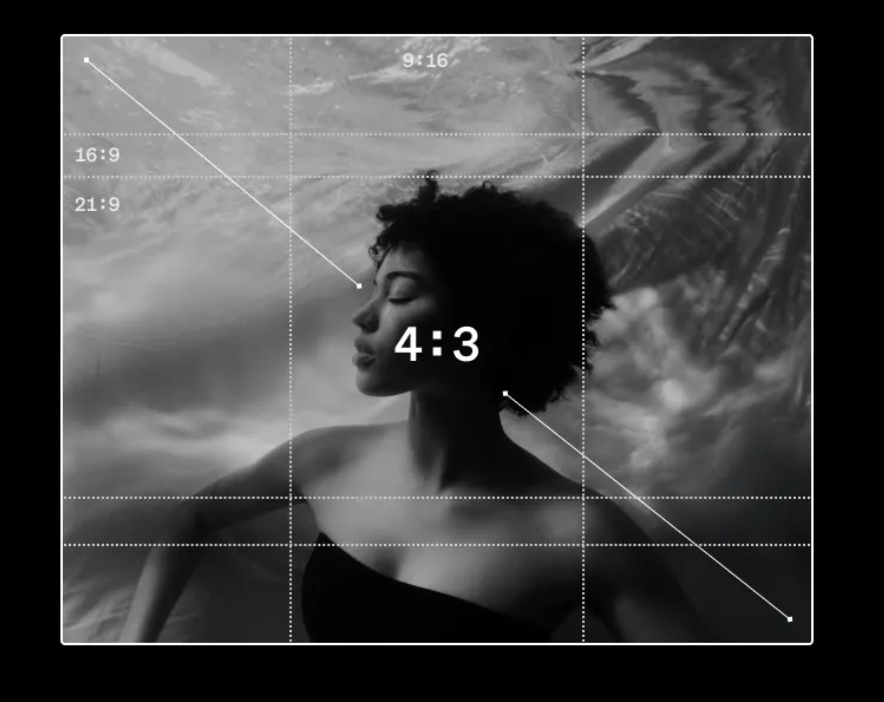
The main technical difference lies in the video stream speed. The base Mission 1 records 8K video at 30 fps, while the Pro version supports up to 60 fps in 8K.
Interchangeable optics (Pro ILS)
Only the Mission 1 Pro ILS version is equipped with a Micro Four Thirds (MFT) mount, which allows replacing the standard lens with professional lenses from Olympus, Panasonic, or Sigma. The base model and the standard Pro have fixed optics with a 159° field of view.
The Mission 1 Pro ILS model generated the most hype after the presentation. The abbreviation ILS (Interchangeable Lens System) speaks for itself — this is the first GoPro camera in history with interchangeable optics. Instead of a classic fixed lens, a Micro Four Thirds (MFT) mount is installed here.
This solution essentially turns an action camera into a compact cinema camera, allowing the use of hundreds of professional lenses from Olympus, Panasonic, or Sigma. However, this versatility comes with two important trade-offs:
- Unlike the standard Pro version, which can withstand immersion up to 20 meters, the ILS model only has weather protection (rain, snow, dust). Due to the mount design, it is not fully waterproof.
- Crop factor and optics. There is an interesting technical nuance here. The 1-inch sensor of GoPro Mission 1 is slightly smaller than the standard Micro Four Thirds sensor. As a result, we get a crop factor of 2.7x (instead of the standard 2x for the MFT system).
For the user, this means that any lens on the Mission 1 Pro ILS will have a longer focal length (more “zoom”). On one hand, this limits ultra-wide-angle enthusiasts, but on the other — it opens incredible opportunities for telephoto shooting with bokeh (background blur), which was previously unavailable for action cameras.
If you plan to shoot vlogs with a blurred background or use the camera as an additional angle on a film set — the ILS will be an ideal choice. But for surfing or diving, it is better to stick with the classic Mission 1 Pro with its sealed body.
Slow-motion specifications
Thanks to higher processing power in the Pro version, it has an advantage in high frame rate modes at maximum resolution.
The interface and camera response have become instantaneous, bringing the GoPro experience closer to the experience of using the latest generations of iPhone.
Here is the updated table and the following sections of the article, written in the professional language of a technical publication.
Comparison table of Mission 1 series specifications
| Specification | GoPro Mission 1 | GoPro Mission 1 Pro / Pro ILS |
|---|---|---|
| Maximum 8K video | 8K 30 fps (Open Gate) | 8K 60 fps (Open Gate) |
| Slow motion | 4K 120 fps / 1080p 240 fps | 4K 240 fps / 1080p 960 fps |
| Optics | Fixed (159°, hydrophobic) | Pro: Fixed (159°) Pro ILS: Micro Four Thirds mount |
| Protection | Waterproof up to 20 m | Pro: Up to 20 m Pro ILS: Weather-resistant |
| Display | Rear 2.59-inch OLED screen | |
| Audio recording | 4 microphones, 32-bit Float, Bluetooth 5.3 support | |
| Battery | Enduro 2 (up to 5 hours in 1080p / over 3 hours in 4K) | |
Battery life, audio, and durability: the 2026 standard
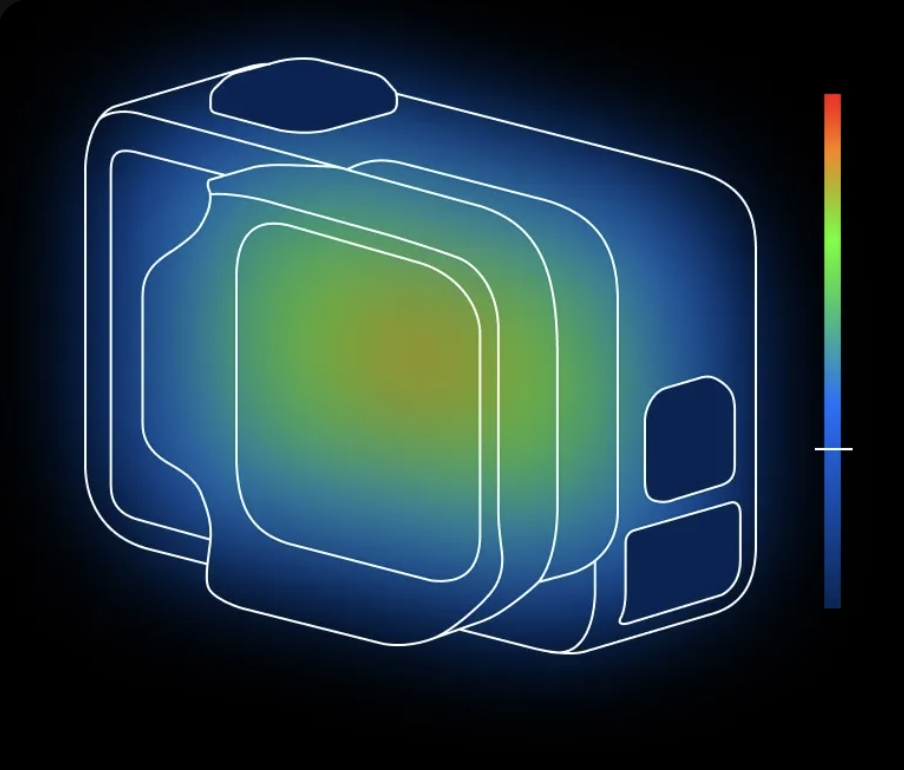
One of the key achievements is the new Enduro 2 battery (compatible with Hero 13 Black). Thanks to it and the energy efficiency of the GP3 processor, recording time is now at least five hours (1080p/30) and over three hours in 4K/30. These are the most durable cameras in the brand’s history.
The rear panel is now occupied by a bright 2.59-inch OLED display, and the body has become even more durable, withstanding immersion up to 20 meters (for models with fixed optics).
Special attention should be paid to the audio system. The four-microphone setup supports internal 32-bit Float recording. This is a professional feature that allows avoiding audio clipping without manual level adjustments. Bluetooth 5.3 support enables connection of external microphones, including a new wireless kit from GoPro.
Is GoPro reclaiming leadership?
After collaborating with NASA on the Artemis II mission, GoPro has returned to the market with its most масштабное обновление за десятилетие. The Mission 1 series is a direct response to challenges from DJI and Insta360. The use of a 1-inch sensor and a professional Micro Four Thirds mount pushes the brand beyond a simple sports accessory into the category of serious filmmaking tools.
We are looking forward to testing the ILS model in real-world conditions to see how the additional 2.7x crop factor affects practical lens usage.
At launch, several bundle options will be available: Grip Edition, Creator Edition, and the Ultimate Creator Edition.
The main thing! How much GoPro will cost is unknown. At the moment, GoPro is keeping the intrigue. Official prices will be announced at the NAB Show, which will take place from April 19 to April 22.
Більше новин в телеграмі