
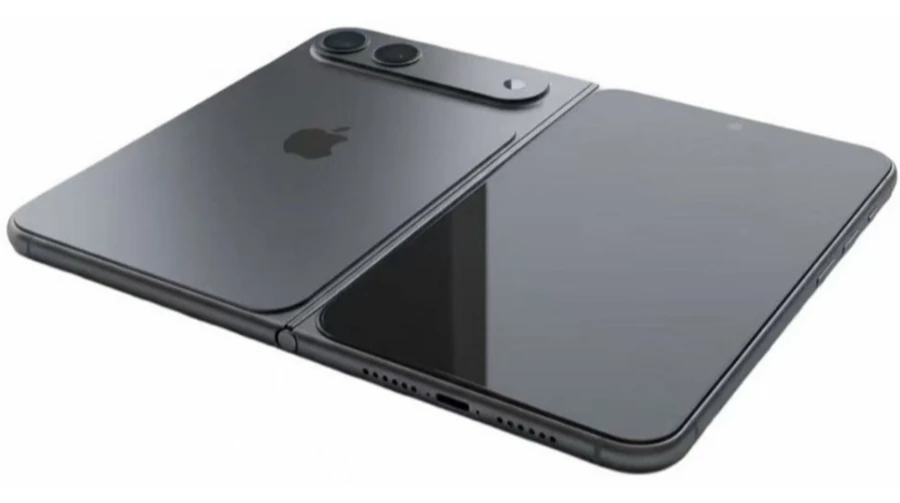
Apple is gradually preparing to enter the foldable smartphone market, and new details about the future iPhone Fold focus not on the display or exterior design, but on the materials used in its construction. According to industry sources, the company is considering liquid metal and a specially processed form of titanium. These materials could be key to addressing the main challenge of foldable devices — long-term hinge durability.
For Apple, this is not simply an experiment with exotic alloys. The company has long prioritized how a device feels in everyday use, and materials play a critical role in that experience. With the foldable iPhone, the emphasis appears to be on reliability and structural stability over many years, rather than short-term visual impact.
Liquid metal in the hinge: why Apple is considering a complex alloy
Liquid metal, also known as an amorphous metal alloy, is well known for its high strength and resistance to wear. In the context of the iPhone Fold, it is primarily being considered for the hinge — the most vulnerable component of any foldable smartphone. The hinge is responsible for smooth folding, the absence of looseness, and maintaining the geometry of the display.
Using this type of alloy can reduce the number of moving parts while increasing the overall rigidity of the mechanism. This is particularly important for a device that may be opened and closed thousands of times over its lifespan. Apple already has experience working with similar materials, but their role becomes significantly more important in a foldable form factor.
- high resistance to wear and deformation;
- the ability to create thin yet strong components;
- fewer mechanical joints within the hinge;
- stable hinge performance over extended use.
If these properties are successfully implemented, the iPhone Fold could stand out from competitors not through design, but through a tangible sense of durability. For Apple, this approach is consistent with its history of entering new categories only when it can deliver a mature solution.
Advanced titanium: more than just a frame material
In addition to liquid metal, leaks also reference a specialized form of titanium. After transitioning to titanium frames in flagship iPhone models, Apple has demonstrated its ability to work with this material at scale. For a foldable iPhone, titanium is not about status, but about achieving the right balance between strength and weight.
A foldable smartphone is inherently more complex than a conventional one and contains more internal components. Titanium helps reduce overall device weight without compromising structural rigidity. This is especially important for a form factor designed for everyday carry.
- lower weight compared to steel;
- high resistance to bending and mechanical stress;
- improved long-term durability of the foldable chassis;
- compatibility with Apple’s existing manufacturing processes.
The combination of titanium and liquid metal suggests an attempt to create a highly rigid internal framework for the foldable display. In theory, this could reduce the risk of gaps, misalignment, and premature wear over time.
What this reveals about Apple’s approach to the iPhone Fold
Material-related leaks offer more insight into Apple’s strategy than concept renders ever could. The company does not appear to be rushing toward an announcement and instead seems focused on fundamental engineering challenges. This aligns with Apple’s traditional approach: launching later, but with an emphasis on stability and long-term usability.
The market already includes numerous foldable smartphones, yet durability remains a key concern for mainstream users. If Apple can meaningfully address this issue through new materials, the iPhone Fold could become a fully realized product rather than a niche experiment.
- a focus on reliability rather than early market entry;
- the use of advanced materials for critical components;
- an emphasis on long-term ownership;
- a cautious and deliberate entry into a new category.
For now, all information about the iPhone Fold remains at the level of supply chain analysis and industry leaks. Even so, these details suggest that Apple is preparing not just another foldable smartphone, but a device built around a distinct engineering philosophy. Materials may ultimately be the factor that sets the iPhone Fold apart from existing models on the market.
Source: based on reporting from MacRumors and industry supply chain leaks regarding Apple’s plans for a foldable iPhone.
Більше новин в телеграмі