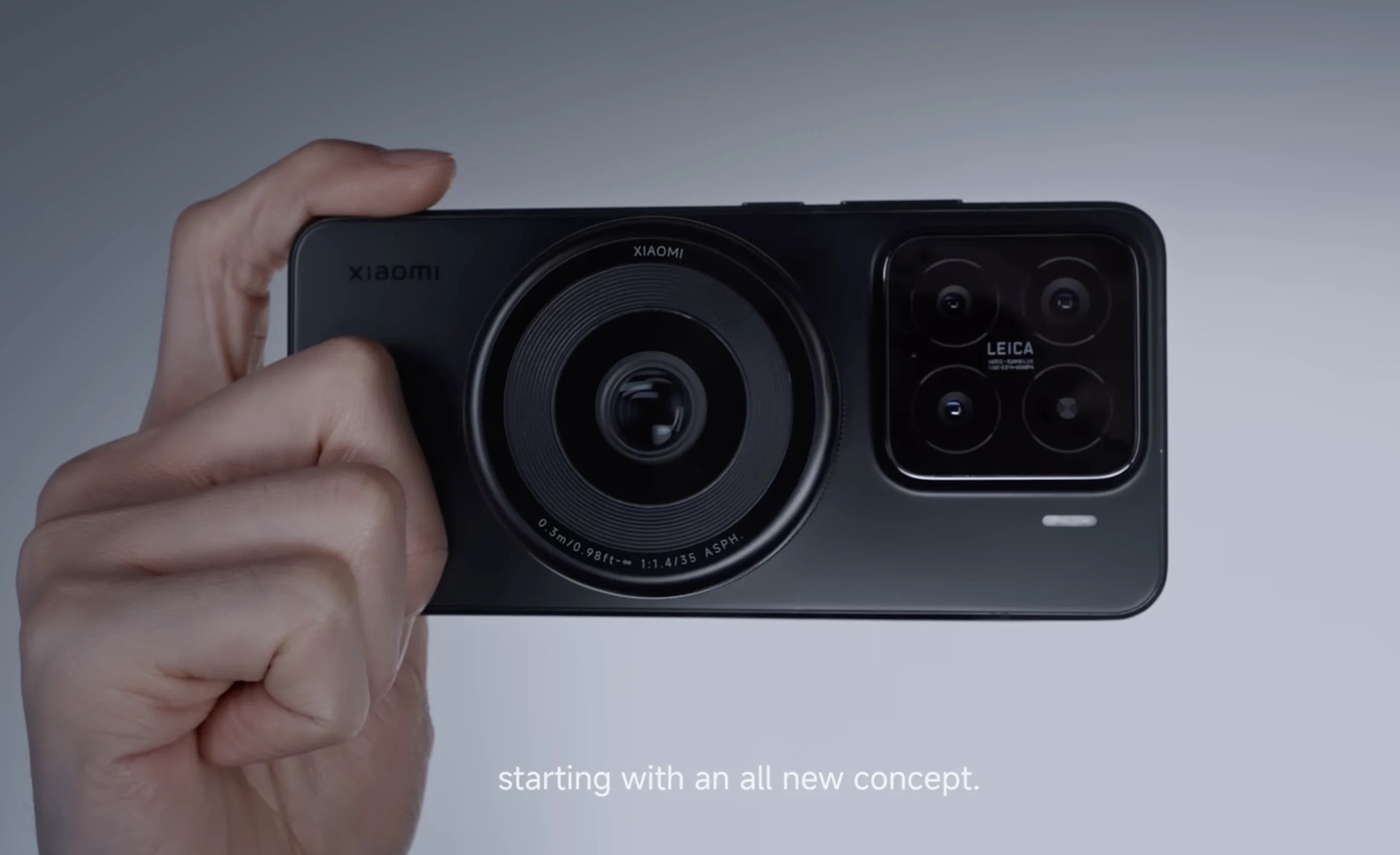
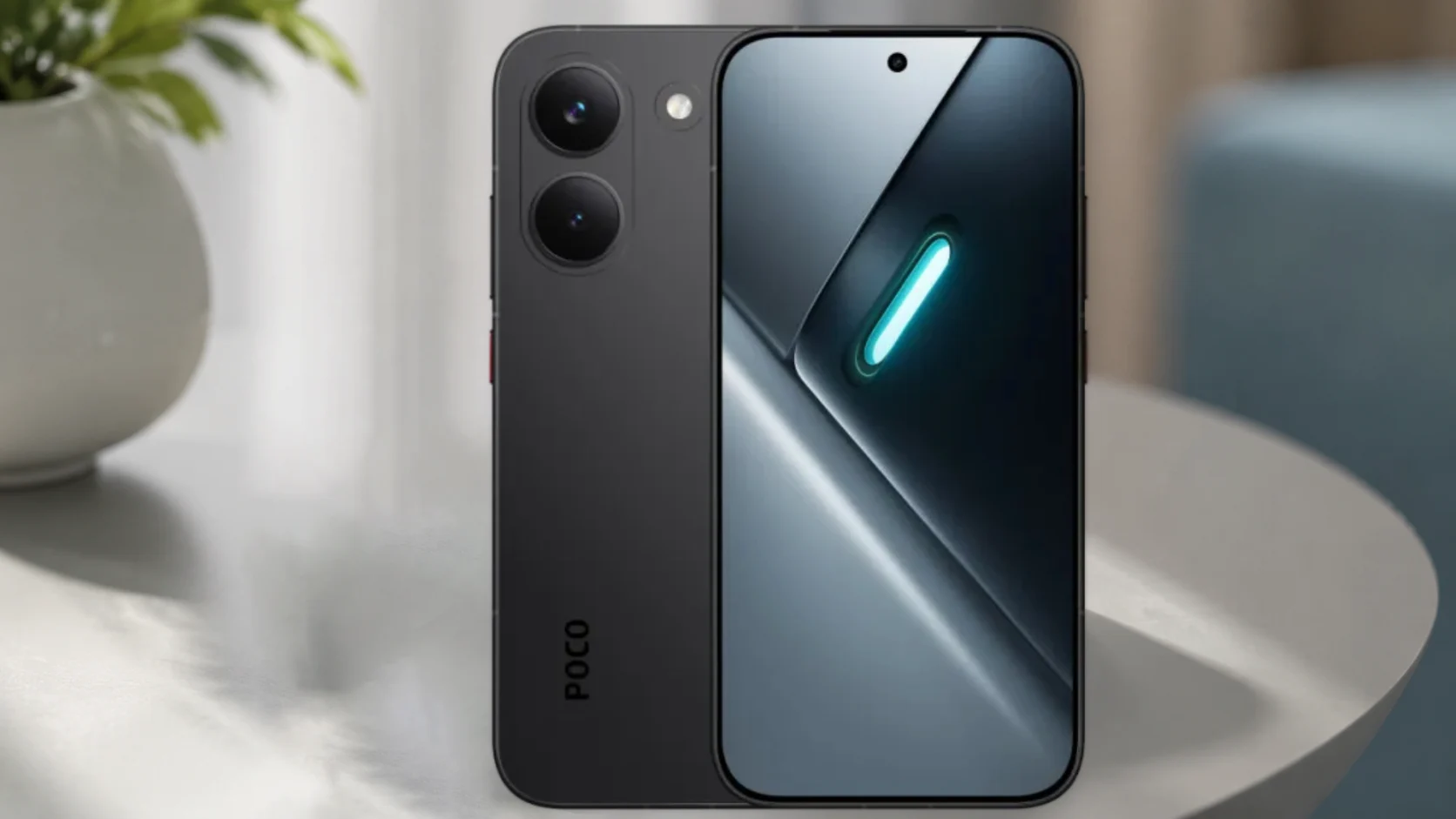
The official end of software support and the addition of the once-popular POCO X5 to the obsolete device list has forced millions of users to look for a worthy successor, with the new POCO X8 Pro sub-flagship becoming the primary choice for making a clean technological leap.
Architecture and Logic of the Xiaomi Hyper AI Submenu
The main engineering achievement of the updated software platform lies in the strict organization of neural network functions. Instead of scattering AI tools across various standard applications, developers consolidated them into a single hardware ecosystem centered within the dedicated Xiaomi Hyper AI submenu. This step not only simplified user navigation but also optimized the allocation of computing resources between the CPU and the dedicated NPU block.
The Hyper AI submenu functions as an intelligent dispatcher and is divided into three key data processing modules:
- Live Translation and Text Processing: The system integrates into any messenger or email client, performing local analysis of incoming messages. The AI provides contextual smart replies, corrects stylistic errors, and can instantly generate a concise summary of a long text document or web page. Crucially, all processing occurs directly on the device without sending data to external servers.
- Contextual Image Processing: The built-in AI photo editor features generative frame-filling algorithms. When removing unwanted objects or random passersby from a shot, the neural network does not simply blur the area; it textures it by analyzing surrounding pixels, depth of field, and the direction of light.
- Predictive Power Management: The AI analyzes the owner’s activity schedule, logging the exact time of heavy app launches, rest periods, and location-based triggers. Based on this data, the system preemptively puts unused background processes into deep sleep and prepares cache memory for priority software.
The old POCO X5, with its Snapdragon 695 platform, lacks an integrated neural processing unit of the required performance class. Running such algorithms locally on it is technically impossible, as it would cause immediate overheating and interface frame drops. The new POCO sub-flagship overcomes this barrier by optimizing both memory architecture and the computing blocks of the chipset.
Super Island Functionality and RGB Lighting Mechanics
Visual interaction with the interface has been completely redesigned to reduce unnecessary clicks and window transitions. The central element of the updated screen is the Super Island—a hardware zone surrounding the front camera cutout that features flexible software logic. Unlike static drop-down notification windows, this element smoothly integrates into the overall graphical layout of HyperOS.
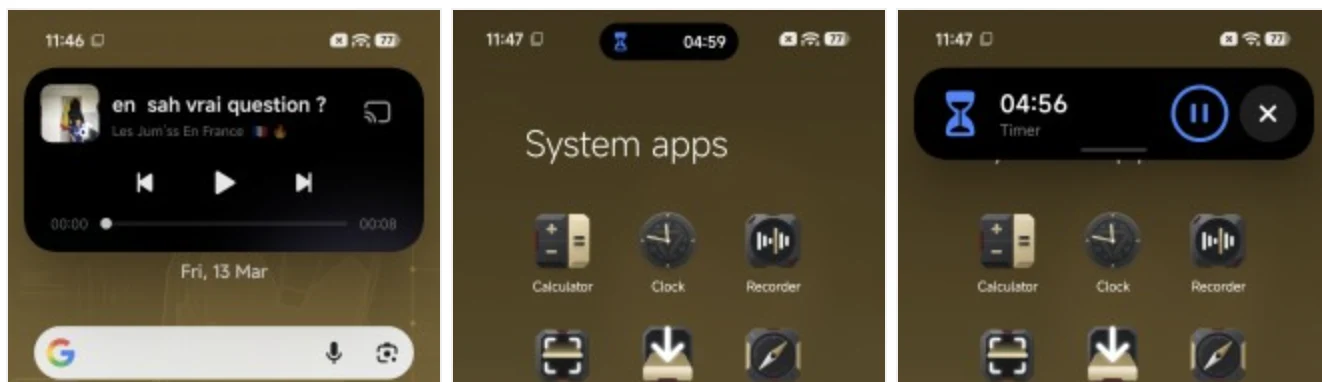
The mechanics of the Super Island are based on task prioritization. When a background process requiring monitoring starts on the smartphone (such as the pedometer, an active voice recording, a countdown timer, or navigation prompts), the camera area visually expands to form a clean capsule. A quick tap on this zone opens a miniature control widget without interrupting the active application. A long press expands it into a full control panel with a complete set of buttons. This allows users to switch tracks in a media player or track a taxi status while continuing to read an article in the browser or edit spreadsheets.
Parallel to the interface changes, the device received an advanced hardware notification system utilizing an updated **RGB lighting** setup. Developers completely overhauled the logic of the LED elements, embedding them directly into system firmware events. Users have access to deep customization tools divided into several distinct categories:
| Lighting Trigger Mode | Light Profile Behavior | Functional Purpose |
|---|---|---|
| Priority Contacts | Directional pulsed blinking of a specified color spectrum | Identification of urgent incoming calls or alerts when the screen is face down |
| Gaming Triggers | A dynamic color wave synchronized with the game’s tempo | Visual accompaniment for in-game events (combo streaks, critical health drops) |
| Power Monitoring | Smooth gradient filling transitioning from red to green | Visual representation of the active fast-charging stage without waking the main display |
Expanded Support for Cross-Device Interoperability Features
A modern smartphone can no longer exist as an isolated island. That is why in the current firmware update, Xiaomi expands support for cross-device interoperability features, turning the phone into a core node of a seamless digital environment. At the heart of this technology lies the updated HyperMind communication protocol, which leverages Wi-Fi 7 and next-generation Bluetooth to establish a ultra-low-latency local network between user devices.
The practical implementation of cross-device interaction includes two primary scenarios:
- Cross-Device Clipboard and Drag-and-Drop: Text copied on the smartphone is instantly available for pasting on a compatible Xiaomi tablet or laptop. Furthermore, you can open the phone’s gallery directly on your laptop screen and simply drag and drop a photo into a working document or graphics editor.
- App Continuity: If you start reading a long log or reviewing a report on the POCO X8 Pro screen, a single upward swipe can cast the session to a tablet. The application opens exactly where you left off, eliminating the need for re-authentication or searching for the specific section.
Owners of obsolete models are left out of these advancements. Since the official end of support for the POCO X5 locked the device to legacy software versions, it physically lacks the architecture to run HyperMind protocols. The older hardware cannot exchange data with the brand’s new tablets and laptops at high speeds, leaving it isolated from modern smart home infrastructure.
Comparative Technical Analysis of the Hardware Platforms
To understand why a POCO X5 replacement has become a necessity, one must push aside marketing taglines and compare the hardware components at the physical standards level of their architecture. The generational gap extends far beyond a cosmetic refresh of the chassis design.
| Hardware Module | Base POCO X5 (EOS) | New POCO X8 Pro Sub-Flagship | Technological Value for the User |
|---|---|---|---|
| Node and Die | 6nm TSMC, Snapdragon 695 | Second-generation 3nm, Dimensity 9400 | Massive drop in thermal output, zero throttling under sustained heavy workloads |
| RAM Standard | LPDDR4X (peak bandwidth up to 17 GB/s) | LPDDR5X (peak bandwidth up to 68 GB/s) | Instant switching between 20+ heavy apps without background memory eviction |
| Storage Standard | UFS 2.2 (read speeds up to 1000 MB/s) | UFS 4.0 (read speeds up to 4200 MB/s) | Four times faster app installations, instantaneous loading of heavy games and gallery cache |
| Camera & Image Processing | 48 MP sensor, no OIS, legacy ISP processor | 50 MP matrix, Optical Image Stabilization, 14-bit ISP with AI denoiser | Sharp photos in total darkness without hand-shake blur, smooth 4K video while walking |
| Structural Protection | Plastic frame, entry-level IP53 ingress rating | Metal chassis, high-tier IP68/IP69 environmental sealing | Complete dust protection, ability to withstand water immersion and high-pressure hot sprays |
By making the switch from the POCO X5, you completely eliminate the chronic pain points of the older platform. Laggy camera responses when trying to snap a quick photo, interface micro-stutters when rendering widget updates, slow rendering times for video clips, and the rapid degradation of plastic body elements become things of the past.
Display Technologies and Power System Parameters
Components responsible for direct sensory interaction have undergone a comprehensive modernization. Evaluating the POCO X8 Pro screen, GSMArena hardware testing confirmed a shift to a new-generation LTPO OLED matrix. The primary advantage of this technology is its dynamic refresh rate adaptation, scaling from 1Hz up to 120Hz. When viewing a static photo or reading an e-book, the screen drops its refresh rate to the absolute minimum to preserve power. When scrolling lists or during high-action scenes, the frequency instantly ramps up to 120Hz to ensure fluid motion. The panel also features a hardware-level eye protection system that minimizes the pulse-width modulation (PWM) flicker coefficient at low brightness, preventing eye strain during late-night work sessions.
Simultaneously, laboratory benchmarks verified that the actual battery life of the POCO X8 Pro has claimed a leading position within its market tier. Implementing a new silicon-carbon battery structure allowed engineers to maximize energy density without increasing the physical footprint of the smartphone. The device delivers the following endurance metrics:
- Over 16 hours of continuous runtime in heavy web browsing stress tests;
- More than 19 hours of high-definition stream video playback;
- A full working day under extreme load conditions (navigation, active 5G background data toggles, maxed-out brightness).
The bundled 90W power brick charges this battery from 0% to 100% in just 36 minutes, with the smartphone pulling its first 50% of capacity in the initial 15 minutes on the outlet. This completely removes any dependency on portable power banks.
Conclusions and Strategic Value of the Upgrade
Summing up this architectural breakdown, the eighth-generation sub-flagship stands as a mature and rational product. The device delivers not just spec bumps, but a fresh interaction philosophy implemented via the Hyper AI submenu, the interactive Super Island, and advanced cross-device interoperability tools. Official, long-term software support for the POCO phone—which guarantees 4 years of major Android updates and 5 years of security patches—ensures the hardware remains current and secure for years to come.
For owners of models that have officially landed on the EOS list, delaying a hardware refresh no longer makes sense. The older device can no longer adapt to modern security requirements or software performance baselines. Upgrading to the new Pro version is a logical, financially sound, and forward-looking decision that secures long-term digital stability and premium mobile comfort for the next five years.
Get breaking news on WhatsApp
Більше новин в телеграмі